
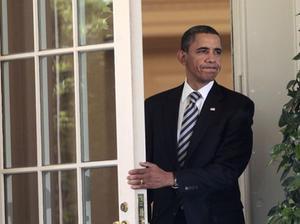
Thanks to the debt ceiling deal that sailed through Congress and was signed Tuesday by President Obama, the federal government will spend slightly less on domestic discretionary programs in 2012 than it did in 2011. This will be the first such annual decrease in federal outlays since the Korean War. There are many reasons for conservatives to be unhappy with the increase in the debt ceiling, but they ought not overlook the very real possibility that it is a milestone in the recognition of the liberal welfare state’s unsustainability.
Make no mistake: It is impossible to balance the budget on discretionary spending cuts alone. Even after cutting $2.1 trillion, if spending cuts are implemented, the federal government will still spend almost $2 trillion more in 2021 than it did 2011. The causes of this unrelenting spending growth are the Social Security, Medicare and Medicaid entitlement programs. In 2011, the federal government will spend $2.1 trillion on these three programs alone. By 2021, that number will reach $3.3 trillion.
Real journalism.Trusted by millions.
Unlimited access to in-depth reporting, expert analysis, and the stories that shape our country.
Already a member? Log in