

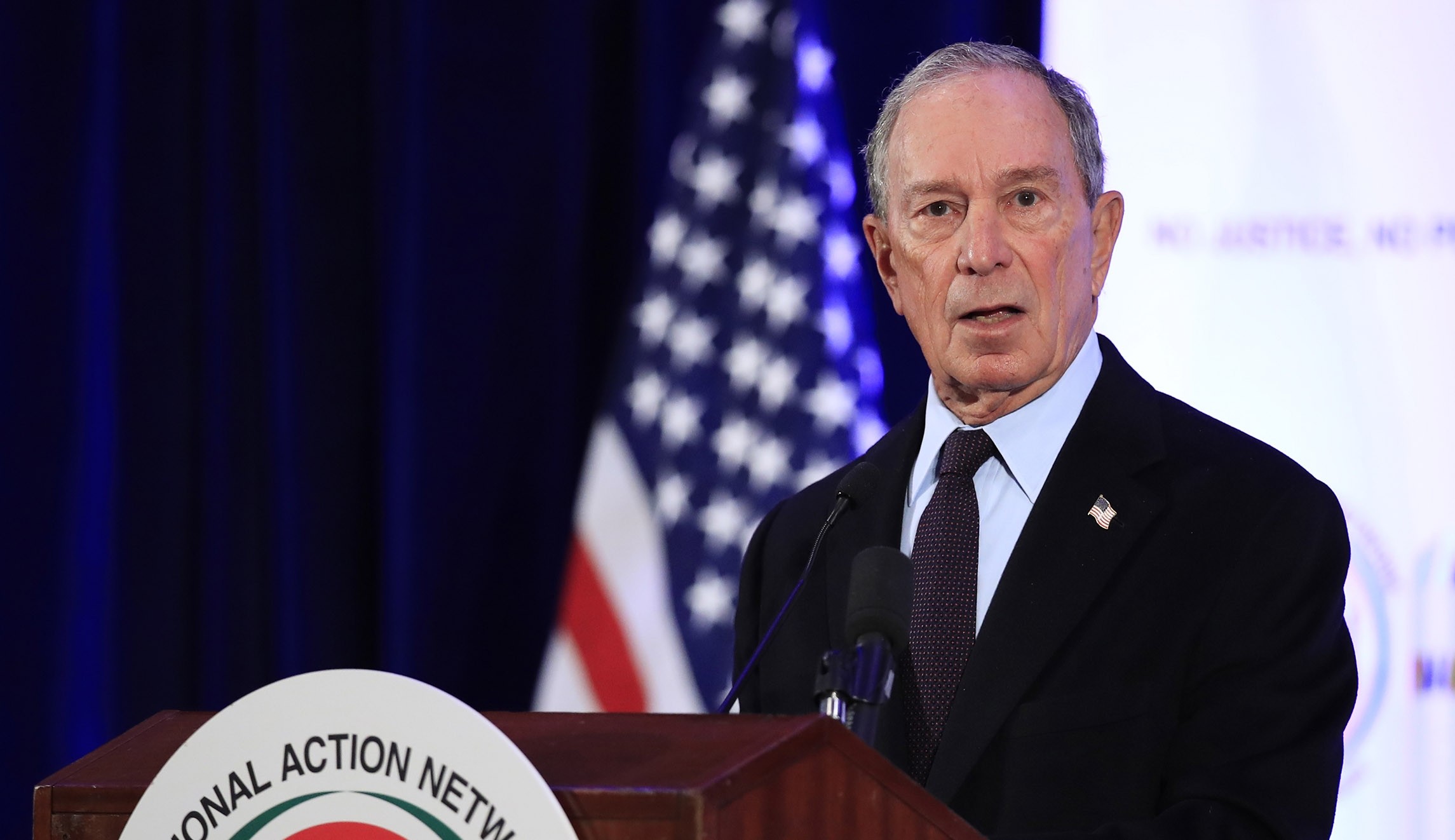
Former New York City mayor and climate change crusader Michael Bloomberg announced Friday he is giving $500 million to a campaign to finish killing coal and start killing oil and gas.
“The largest coordinated campaign to tackle climate change” ever to occur in the U.S., Bloomberg says, aims to close all of the nation’s coal plants by 2030, and put the country on track discontinue fossil fuel use altogether.
Recommended Stories



“We’re in a race against time with climate change, and yet there is virtually no hope of bold federal action on this issue for at least another two years. Mother Nature is not waiting on our political calendar, and neither can we,” Bloomberg said in a press release before giving a commencement address at the Massachusetts Institute of Technology. “Beyond Carbon will respond to this crisis with the urgency and ambition that it requires, by taking the fight to the states and turbo-charging current on-the-ground efforts.”
The campaign, called “Beyond Carbon,” is an expansion of the the “Beyond Coal” campaign that Bloomberg has partnered on with the Sierra Club and other environmental groups that has helped retire more than half the nation’s coal plants, 289 out of 530, since it began in 2010.
But while Beyond Coal has benefited from piggybacking off coal’s existing market-driven economic challenges, Bloomberg will have a harder time with his secondary goal of preventing the construction of new gas plants.
It’s natural gas, which emits half the carbon of coal, that has mostly replaced coal in the electricity sector, supplying 28% of current United States energy, compared to about 11% from renewable sources.
Natural gas was the fastest-growing energy source in the world last year, according to a new International Energy Agency report.
Climate experts, however, note that most forecasts, including one last year by the United Nations Climate Change panel, say the world must get off fossil fuels entirely by 2050 and reach net-zero carbon emissions by that time to avoid the worst consequences of climate change.
Beyond Carbon will employ a similar strategy to Beyond Coal, funding lobbying efforts by environmental groups that send members and lawyers to meetings of state utility commissions, which regulate utilities and approve or reject where they generate electricity from based on cost.
“There is no substitute for federal policy, but in the absence of that, every day decisions are made in utility commissions on whether we should put scrubbers [pollution controls] on a coal plant, or retire it. Or whether we should continue running a coal plant indefinitely, or make this transition to wind or solar with storage,” Sierra Club’s Mary Anne Hitt, the director of the Beyond Coal campaign, previously told the Washington Examiner.
The Sierra Club and other environmental groups have begun to more aggressively contest natural gas as renewable alternatives have become cheaper and more prevalent, especially wind, solar, and energy storage technologies that carry excess power for use when the sun sets and wind is still.
A number of Democratic presidential candidates have set goals of reaching 100% clean energy and net-zero greenhouse gas emissions by 2050.
One candidate, Washington Gov. Jay Inslee, has proposed closing all coal plants by 2030.
Bloomberg wants Beyond Carbon to bypass the federal policy arena and work with environmental groups to enact 100% clean energy laws at the state and local level, and to help elect state and local candidates “who are climate champions.”
The campaign will also focus on promoting electric vehicle use, low-carbon manufacturing, and reducing emissions in buildings.
