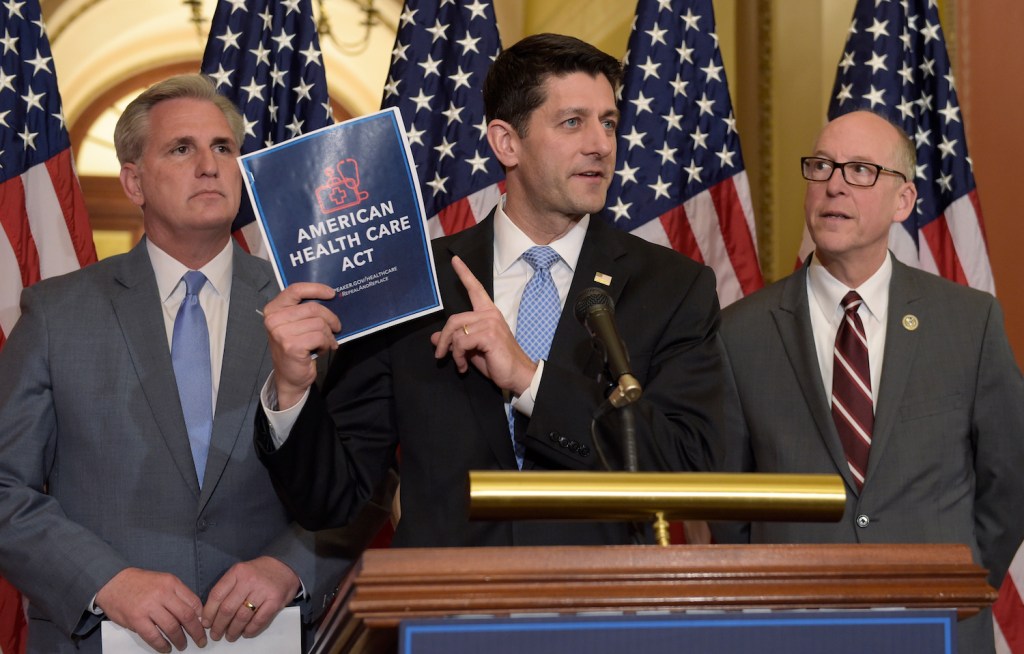
While Congress is on recess for the next two weeks, they’ll have an opportunity to consider a little-discussed constitutional concern raised by the House Republican healthcare bill, namely, whether the AHCA replacement for the individual mandate is unconstitutional.
When the ACA passed in 2010, it was seen by many as a landmark overreach by the federal government. The primary cause of this concern was the ACA’s “individual mandate,” which required individuals to either purchase an approved health insurance plan, or pay a 2.5 percent tax penalty. Opponents of the mandate argued that punishing people for not buying insurance exceeded Congress’ authority under the Commerce Clause. Five justices of the Supreme Court ultimately agreed with that observation. Nonetheless, the Court upheld the individual mandate as a constitutional exercise of Congress’ “taxing power.” According to the Court, the penalty for violating the individual mandate could be characterized as a tax, rather than a punishment, because it was collected by the IRS “in the same manner as a tax” and deposited in the treasury.