

Lower-class bitterness for the powerful and elite; citizens feeling threatened and angered by an intrusive, aggressive central government; inflammatory news media; rising prices amid growing poverty. These are themes of outrage and frustration across America today, just as they were over 160 years ago during the Civil War. And they drove opposition to the war in both the North and South.
When Americans think about the Civil War, they usually picture two opposing camps: a Union determined to preserve the nation and a Confederacy determined to secure its independence and its slave economy. However, substantial opposition to the conflict grew out of issues and experiences that were common to both sides.
Stay informed.Stay ahead.
Join Washington Examiner for unlimited access to the news, analysis, and commentary that matter most.
Already a member? Log in
One of the issues that angered people most was military conscription. As the number of casualties grew, both the Union and the Confederacy relied on draft laws to replenish their armies. These laws seemed deeply unfair to many people. In the Confederacy, the “Twenty Negro Law” of October 1862 allowed large slaveholders to keep one white man home for every 20 enslaved people they owned — an exemption built on the very institution poor white soldiers were dying to defend. In the North, the Enrollment Act gave drafted men the option to avoid service by paying a $300 fee or hiring someone else to take their place.
The phrase “a rich man’s war and a poor man’s fight” emerged from this frustration and spread widely on both sides. Poor farmers, laborers, and immigrants increasingly questioned a system that seemed to distribute sacrifice unevenly.
After the Southern attack on Fort Sumter, support for the Union cause was very high in the North, and many were optimistic that the conflict would be resolved quickly. But as the war continued and the death toll climbed, support in the North began to weaken. There was a growing concern, too, especially after the Emancipation Proclamation of Jan. 1, 1863, that the purpose of the war was no longer just the preservation of the Union but also the elimination of slavery throughout the nation.
In the North, many immigrants and working-class laborers worried that emancipation would increase competition for jobs and depress wages. Combined with resentment of the draft, these fears contributed to confrontations with draft efforts in the Midwest and western Pennsylvania in 1862 and the violent draft and race riots in New York, Boston, and Detroit in 1863.
In the South, many nonslaveholding farmers saw little reason to risk their lives for a society dominated by wealthy planters. As wartime shortages and inflation worsened, public frustration spilled into the streets. In April 1863, hundreds of desperate women and workers participated in the Richmond Bread Riot, protesting soaring food prices and the inability of ordinary families to feed themselves. The riot exposed the growing gap between Confederate leaders’ promises and the hardships endured by civilians. As the war continued, desertion increased dramatically, and resistance to Confederate authorities became more common.
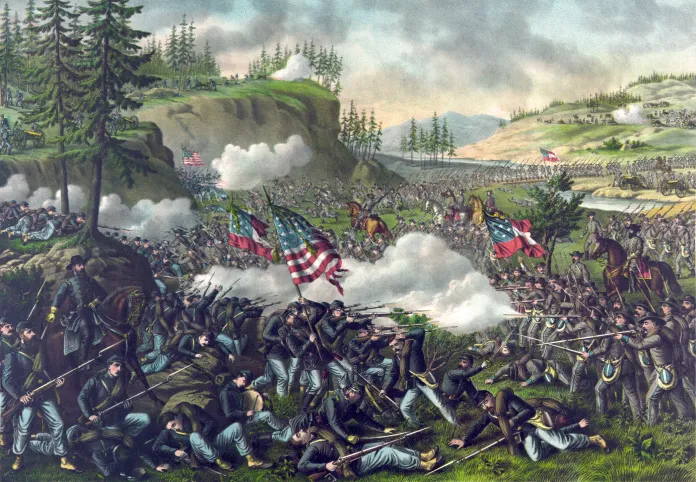
Opposition to the war was also generated by the growing concentration of power in both Washington and Richmond. For the North, financing the war required unprecedented federal action, including the nation’s first federal income tax. Many citizens who had long favored limited government viewed these new taxes as an example of Washington extending its reach into everyday life. Along with inflation and other wartime economic disruptions, the tax burden contributed to growing dissatisfaction in some communities and strengthened support for antiwar political movements.
Southern civilians faced a different kind of growing governmental power: impressment. As supplies dwindled, Confederate authorities frequently seized food, livestock, wagons, horses, and other private property of civilians for military use. Although compensation was promised, many citizens believed they were receiving inadequate payment, or no payment at all. Farmers who had already lost sons to military service watched government agents claim the products of their labor as well. With the war being justified for the preservation of states’ rights, chiefly the right to preserve slavery, this concentration of power in a central government that was becoming increasingly intrusive fostered growing skepticism and opposition.
Political dissent created additional divisions. In the North, Peace Democrats, often called Copperheads by their critics, argued that the war should end through negotiation rather than continued bloodshed. They condemned President Abraham Lincoln’s suspension of habeas corpus and other wartime restrictions on civil liberties. In the South, peace movements emerged in states such as North Carolina and Georgia, where critics accused Confederate President Jefferson Davis of concentrating too much power in Richmond through conscription, martial law, and centralized control.
Newspapers played a large role in amplifying these debates. Copperhead editors attacked the administration’s wartime policies and called for a negotiated settlement. Southern newspapers, many of which had enthusiastically supported secession at the outset, became increasingly critical of government policies and leadership as military defeats mounted and economic conditions worsened.
Underlying much of this opposition was crushing, exhausting poverty. The Union blockade and the capture of the Mississippi River intensified hardship throughout the South. It also severely harmed upper Midwest farmers who depended on the Mississippi to get their goods to market. The blockade forced them to use the Northern railroads, and the farmers’ resentment toward rail barons and industrialists deepened. For increasing numbers of Americans, their focus was not on who would win but how much longer the conflict would continue.
THE INTERNET HAS NO IDEA WHAT ELON MUSK BEING A ‘TRILLIONAIRE’ ACTUALLY MEANS
So many of the experiences shared by Americans during the Civil War were not demarcated by state boundaries. In both the North and South, ordinary people struggled with unfair class treatment, government intrusion, biased and provocative news media, expansive poverty, and the growing human cost of the war. Behind the battles and politics, they fought to survive during one of the most difficult periods in American history.
And today, the same themes and forces still breed frustration and outrage. Now, as then, policy crafted by distant elites, whether in Washington, on Wall Street, or in the boardrooms of media and industry, collides with the lived reality of ordinary people asked to bear its costs, and that collision still produces the same populist backlash it did 160 years ago. Perhaps these themes continue to both compel and constrain us because they are inherent in an America that, from its founding, has sought to balance a desire for freedom and a passion for fairness.