Restoring America

Conservative values, National renewal

Menu

The US is at risk of losing leverage over a crucial UN agency

Published August 20, 2026 12:26pm ET | Updated August 20, 2026 12:26pm ET


The World Meteorological Organization (WMO) is not the most well-known organization in the United Nations system. The lack of notoriety is a feature, not a bug. Unlike some other parts of the U.N., the WMO mandate is to focus on data rather than policy advocacy. Specifically, the WMO is a technical agency for coordinating and sharing atmospheric and oceanic data used to forecast weather events, track freshwater availability, and support civil aviation, marine navigation, and industry. Data from member states is shared and used to aid industry, facilitate transportation, and save lives through early warning systems.

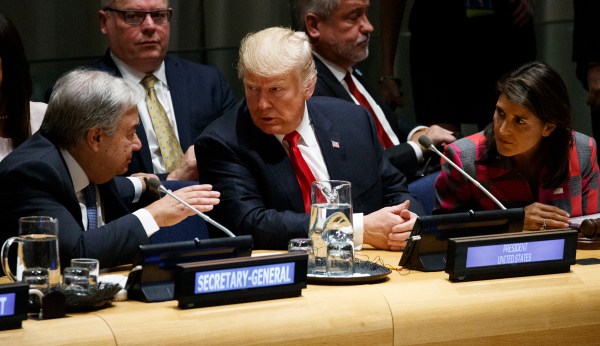
Nonetheless, as with other organizations, the WMO has seen mission creep. Advocates, including United Nations Secretary-General Antonio Guterres, have pressed the organization to be more active in the climate change debate. As the WMO responded to these pressures, its budget increased by over 18% in the past decade.  
This trajectory was disrupted when U.S. payments were halted in 2025 and 2026. The United States has, historically, been the largest supporter of the WMO, providing 22% (about $19 million) of its annual revenue from governments on average over the past decade.

To the credit of the WMO leadership and the member states, instead of fighting to maintain the status quo, the WMO used the funding suspension to implement reforms and restructure personnel and programs.

The WMO has reduced staff and addressed a top-heavy bureaucracy. Overall, 68 posts were abolished, over 18% of WMO staff. Subsequently, 49 new vacancies were announced to fill necessary jobs, but often at lower grades. A net reduction of 19 posts and reclassifications resulted in $6 million in savings (7.5% of the total 2026 budget).  

An additional 3% of the annual budget was cut by curtailing business class travel, shifting to online meetings, terminating unnecessary consultancies, outsourcing payroll, and collaborating with other U.N. organizations to reduce licensing, data security, insurance, and other costs.

The U.S. should reward international organizations for implementing, not just promising, reforms. But, as of May 2026, the U.S. owed the WMO over $55 million in current and past assessments. If the U.S. does not make a payment, it will lose its vote in the WMO at the beginning of 2027.

While the Trump administration informed the WMO of its intent to pay arrears, it has not notified Congress of its intent to do so. This is a mistake. With budgetary and structural reforms implemented, nonpayment of arrears will impede the U.S.’s ongoing efforts to guide the policy direction of the WMO.

This influence matters for addressing a broader U.S. policy concern. Weather data is necessary to assess climate change, but there is a distinction between reporting and verifying data versus interpreting it. Unfortunately, the WMO crosses the line too often.

Publications like the WMO State of the Climate Update are less a factual report of data than a call to arms on climate policy — echoing how the Intergovernmental Panel on Climate Change “Summary for Policymakers” makes claims beyond what is justified by the science reported in the underlying report.

Similarly, the U.N. secretary-general cited the WMO to falsely claim, “The number of weather, climate and water-related disasters has increased by a factor of five over the past 50 years.” As noted by AEI scholar Roger Pielke Jr., the increase is due to improved reporting, not an increase in the number of disasters.

The WMO has an important mission. Coordination of weather observations, data sharing, and research is fundamental to weather forecasting. It also is critical to the operations of the U.S. military around the world. Weather is global, and participation in WMO activities supports the U.S. economy, defense, and public safety.

The U.S. needs to press the WMO to focus on its core technical mission — hydro-meteorological services in support of the member states. This includes strengthening early warning services, improving sector-specific (hydrological, marine, cryosphere) service provisions, weather prediction, and data sharing.

When the WMO ventures away from its core mission into advocacy and political agendas, it intrudes into the space of other international organizations focused on climate policy and raises questions about the objectivity of its data and commitment to its technical mandate.

The U.S. needs to exercise maximum influence, including the prospect of withdrawal or reapplication of withholding, if necessary, to counter pressure from advocates and other governments. A useful WMO is one that focuses on sourced, transparent, and unbiased data and eschews the advocacy of organizations like the U.N. Framework Convention on Climate Change from which the U.S. withdrew in 2026.

The intent of U.S. withholding is not to create financial stress for no purpose. It is to use U.S. financial leverage to elicit policy, managerial, and budgetary changes in organizations that have value but need reform.

By paying arrears, the U.S. is recognizing implementation of reforms at the WMO. Engaging in good faith bolsters U.S. credibility and signals to other international organizations and governments that addressing U.S. concerns will unlock U.S. funding. It also strengthens U.S. leverage as it aims to refocus the WMO on its core mandate, where financial withholding could again be useful. Following through, both negatively and positively, is critical.

Brett D. Schaefer is a senior fellow at the American Enterprise Institute (AEI), where he focuses on multilateral treaties, peacekeeping, and the United Nations and international organizations