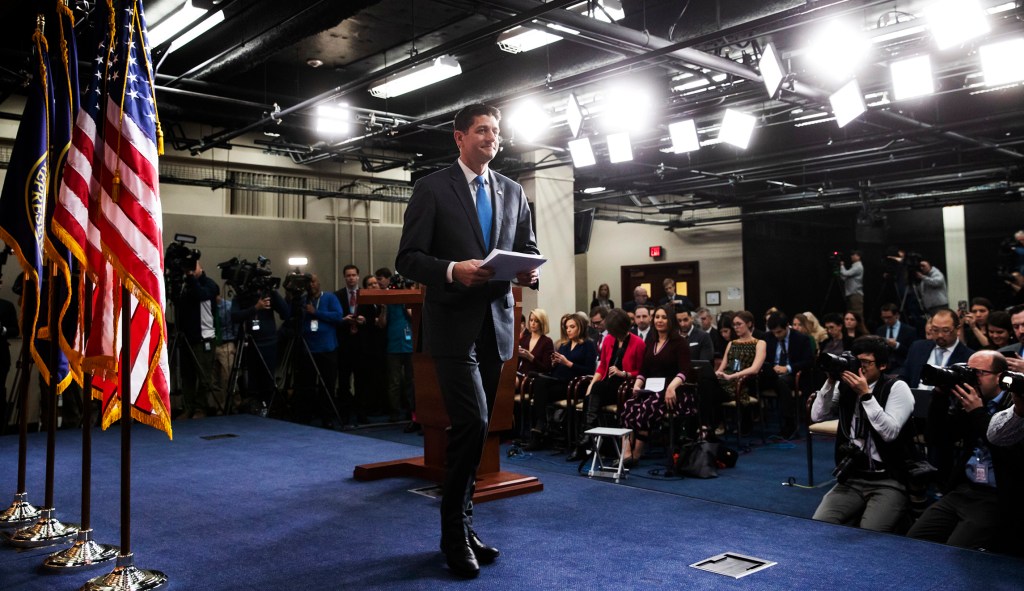
In 2012, when Paul Ryan accepted the Republican vice presidential nomination in front of the Battleship Wisconsin in Norfolk, Va., it was seen as a unifying moment for the party, bringing together conservative elites who respected his policy chops and grassroots activists who cheered his crusade against the profligate ways of Obama era Washington.
When Ryan leaves Congress at the end of the year, he will be doing so as a much more divisive figure in a radically changed party. By embracing President Trump in hopes of advancing his policy agenda, Ryan alienated a lot of conservative intellectuals, while at the same time, his overtures did not win him fans among those who tagged him with the dreaded “globalist” label in the face of a populist tide on trade and immigration.