
Gov. Gavin Newsom (D-CA) and his social media team have been savagely mocking President Donald Trump for the past few weeks, taking aim at his all-caps posts and signature sign-off and using AI-edited content to generate meme-storms.
The tone has been combative, crass, and what’s been defended as fighting fire with fire.
Recommended Stories
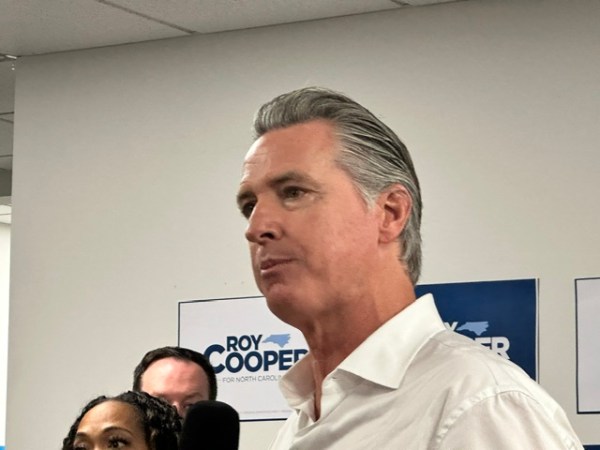
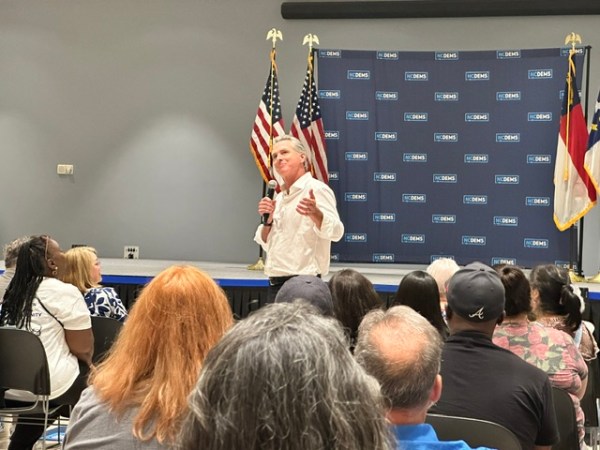
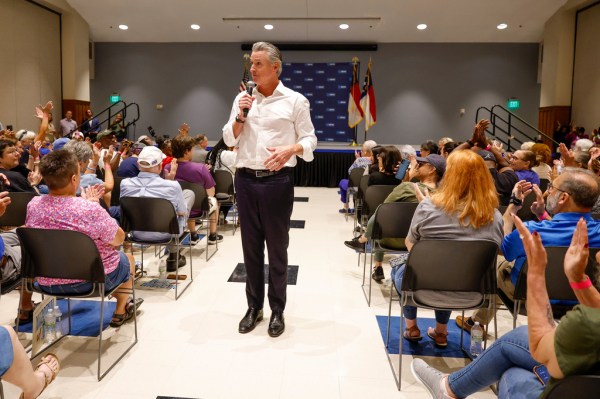

They’ve poked fun at Trump’s complaints about not being awarded the Nobel Peace Prize or a Kennedy Center Honor, his hand size, polling numbers, and more. They’ve also gone after Vice President JD Vance and other members of the Trump administration, firing off responses and insults in real time.
“I’m just following his example,” Newsom recently said. “If you have issues with what I’m putting out, you sure as hell should have concerns with what he’s putting out as president.”
Newsom’s take-no-prisoners social media strategy has gone viral. In August alone, his office tracked 1 billion impressions over X, TikTok, Facebook, and other social media, with millions of new followers, CNN reported.
“This approach is 100% geared toward the Democrat base that is desperate for someone — anyone — to offer an aggressive counter to President Trump’s multifront war on many Democrat Party priorities,” California-based political strategist Matt Clink told the Washington Examiner.
While Newsom’s posts are undoubtedly popular, political strategists like Ryan White warn Newsom could be overplaying his hand.
“It’s somewhat ironic that Governor Newsom seems to be taking a page straight out of President Trump’s playbook,” White, vice president at Think Big, told the Washington Examiner. “The ‘loud and obnoxious’ style, operating on the premise that all press is good press, certainly got Trump plenty of attention and dominated the political conversation for years. Newsom appears to be borrowing that same fire-fights-fire approach: generating headlines through sheer volume and provocation.”
White cautioned that the challenge with that type of “political theater” is that it “feels increasingly tired.”
“What once worked for Trump, capturing eyeballs and shaping the narrative through spectacle, may now read more as noise than novelty,” he said. “Audiences are quicker to tune out the outrage cycle, and the risk for Newsom is that he ends up amplifying the fatigue rather than commanding the stage. This strategy is about six years too late.”
Digital media Newmedia.com founder Steve Morris credited Newsom’s team more, saying memes, especially snarky ones, can make people feel validated, smart, and on the right side of an issue.
“It’s a combination of confirmation bias with a side of gamification,” he told the Washington Examiner. “They tap into powerful psychology and chemistry, triggering chemical surges in the brain like dopamine and serotonin that trigger the reward and pleasure centers of the brain. But the issue is that when people get a rush from a meme, while it’s fun for the moment, that’s where it ends. There’s nothing further, no meaningful action.”
Morris said that when his company reviewed digital campaigns to measure actual outcomes, the memes that went viral for being witty, sarcastic, or mocking the opponent didn’t increase attendance at events or move the needle for new volunteers.
“Neurologically, once you get the satisfaction of the meme itself, it removes any drive to take a step in support of a cause,” he said. “This is called ‘slacktivism.’ When we’ve run even small tests for clients, these results were consistent, with funny memes attracting thousands of interactions, but almost never leading to meaningful actions like voter sign-ups or donations.”
He added that the social media algorithms worsen matters because hostile content generates more engagement.
“But because the algorithm can’t distinguish between playful teasing and actual extremism, it just boosts whatever keeps people angry and glued to the platform, and I’ve actually seen some memes designed to mock opponents end up firing up their supporters instead by creating outrage loops that only serve to deepen divisions, simultaneously boosting the exposure for both sides,” he said.
Jamie Krenn, an adjunct professor of media, technology, and psychology at Columbia University, believes Newsom’s social media accounts reflect a broader political trend of embracing a mean social media meme culture, rapid-fire posts, and echoing Trump.
“Social cognitive theory reminds us that repeated, emotionally charged messaging — like fast-paced memes — can influence how people think and react — because they are social examples to model for both style and content,” she told the Washington Examiner. “So while Newsom’s team may succeed in reaching audiences, the long-term resonance is perhaps more complicated.”
Krenn, who also teaches a social media class at Sarah Lawrence College, said what Newsom posts can shape the public’s trust in him.
“Some people may find it fresh and authentic; others may see it as performative, shocking, or jarring, especially coming from an official government account,” she said. “And after some time, keeping it at this level, we have to question the sender’s authenticity, which happens as of late. And in a moment when institutional trust is already fragile, the how of communication often matters as much as the what.”
NEWSOM TROLLS TRUMP IN ALL-CAPS POSTS, CALLING HIM ‘TINY HANDS’ AND ‘LOW IQ’
One person who is all in on Newsom’s social media war against Trump is entrepreneur Stephen Cloobeck, a Democratic candidate for governor.
“Governor Newsom is doing the right thing by fighting fire with fire,” he told the Washington Examiner. “I’m also battling with Trump using our ads to call him what he is, ‘a cheater,’ but what Californians need is affordable housing, stable insurance, and jobs. Trump is all about tearing everyone down and serving himself.”