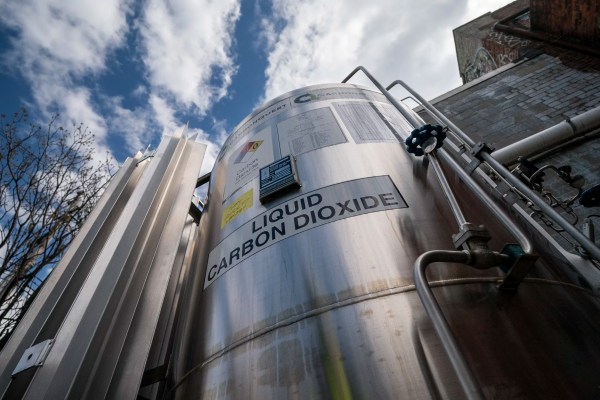
For years, it has seemed that policymakers were far more focused on lining the pockets of climate activists than they were about actually helping the environment. The “45Q” tax credit, created by the Energy Improvement and Extension Act of 2008, and increased by the Inflation Reduction Act, is one of many examples, and one of the more egregious.
Originally, 45Q gave companies a tax credit for deploying technologies capturing CO₂ directly at the source of emissions, such as from industrial facilities where the release of carbon is dense. The economic value of “carbon capture and sequestration” (CCS) has its own skeptics, but CCS looks valuable compared to the concept known as “direct air capture” (DAC), for which a subsequent expansion of the 45Q credit provides nearly twice the subsidy given for CCS.