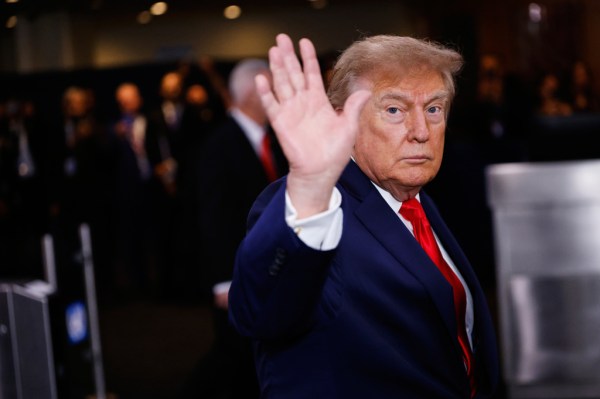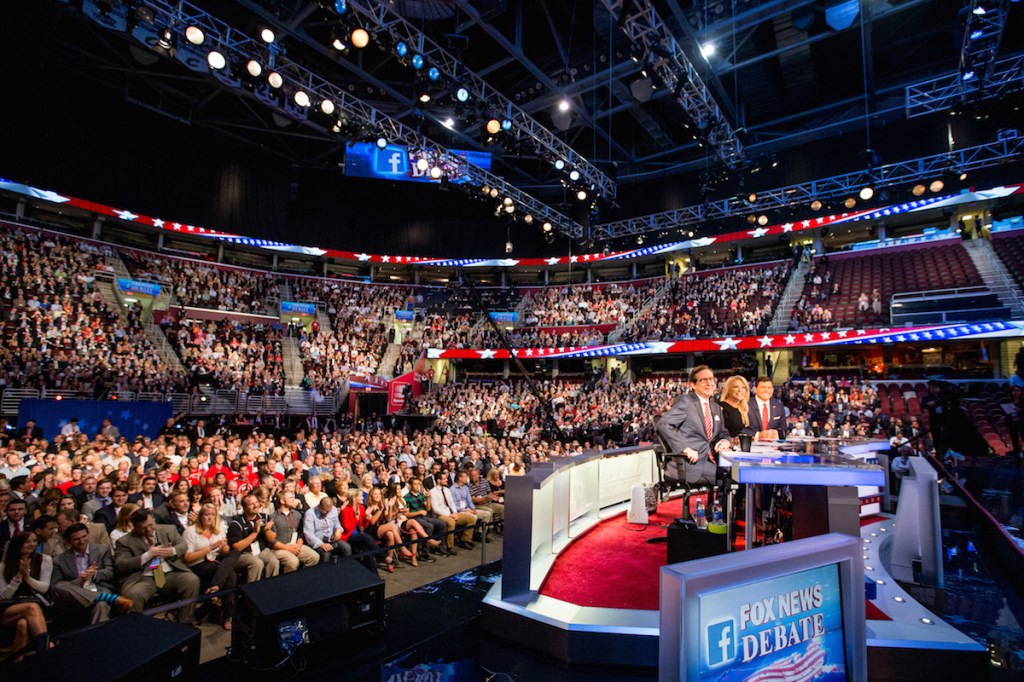
Astonishing is the best word I can think of to describe the size of the audience for Fox News’s Thursday night Republican presidential debate. Some 23 or 24 million viewers tuned in, the largest audience by far for any presidential primary debate and the largest audience for any non-sports cable news program. Ever. Undoubtedly the celebrity of Donald Trump caused many viewers to tune in and give the debate a 16.0 Nielsen rating audience. But Trump may not be the only reason for the draw. The 5 p.m. Eastern Time happy hour debate featuring the seven candidates not included in the 9 p.m. primetime debate got a rating of 6.1 — with no Trump on hand. That was the second highest rating of any presidential primary debate in history, for three hours, until the primetime debate’s 16.0 pushed it back to third place.
What does this huge surge — tsunami — of viewership mean? My hypothesis is that it represents a surge of interest in the race for the Republican nomination, much though not all of it the product of the Trump candidacy. And that could have consequences not only to determine who gets nominated at the July 2016 convention in Cleveland’s Quicken Loans Arena, but also for the general election in November. Primary and caucus turn out is one indicator of enthusiasm for a party, and in the last year in which both parties had seriously contested nominations, 2008, some 37 million Americans participated in Democratic primaries and caucuses but only about half as many, 19 million, participated in Republican contests. (I take the figures from Dave Leip’s U.S. Election Atlas website, and the numbers for contests before 1992 in the table below from America Votes 20.) In the table below, I give the total primary and (starting in 1992) turnout for Republicans and Democrats, rounded off to the nearest million. Further precision is unnecessary and the contests are not necessarily commensurate: The number of primaries varies from cycle to cycle, and some nominations (Democrats in 2000) are clinched early, resulting in lower turnout in later contests, while some continue until the end of the primary schedule (Democrats in 2008). I have not included numbers for Democrats in 1996 and Republicans in 1984 and 2004, when incumbent presidents were in effect renominated without opposition.