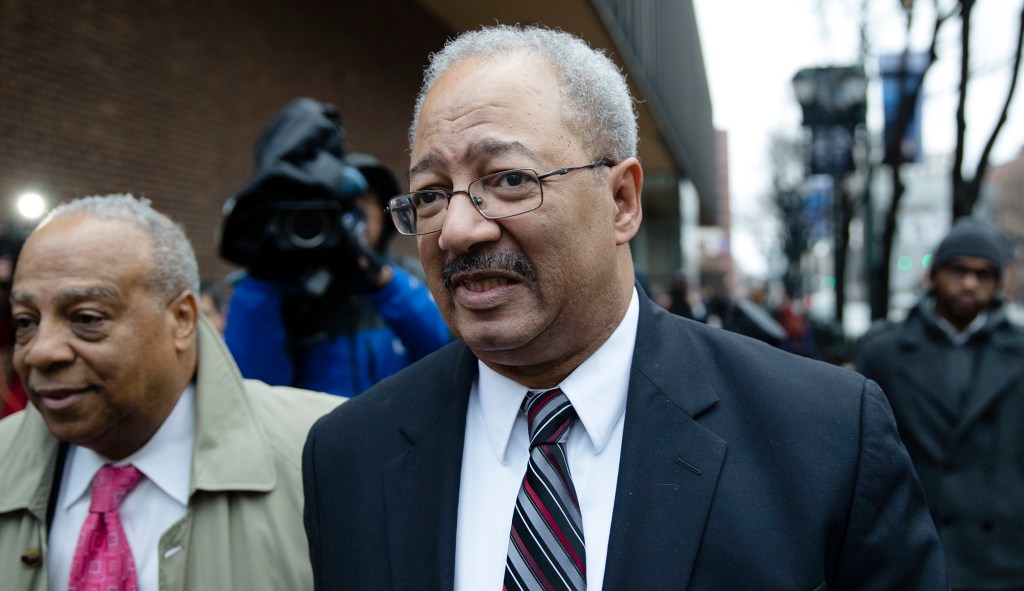
For his 22 years serving in Congress, former Rep. Chaka Fattah, D-Penn., was eligible for a $55,000 pension, assuming he opted for the maximum level of benefits. Then in June 2016, he was found guilty on 23 charges of corruption and resigned from office. At the time, it looked like he would become the first member of Congress to forfeit his congressional pension under a 2007 ethics reform law, barring those convicted of certain crimes from collecting. But, nearly a year and a half after his conviction, Fattah remains eligible for the generous perk thanks to a loophole in the law.
After Fattah was convicted on federal charges of racketeering, money laundering, bribery, and fraud, he was sentenced to 10 years in prison and ordered to pay $614,000 in restitution. He joined a list of disgraced former members of Congress, including Jim Traficant, D-Ohio, William Jefferson, D-La., Bob Ney, R-Ohio, and Randy “Duke” Cunningham, R-Calif., who were sent to jail for corruption.