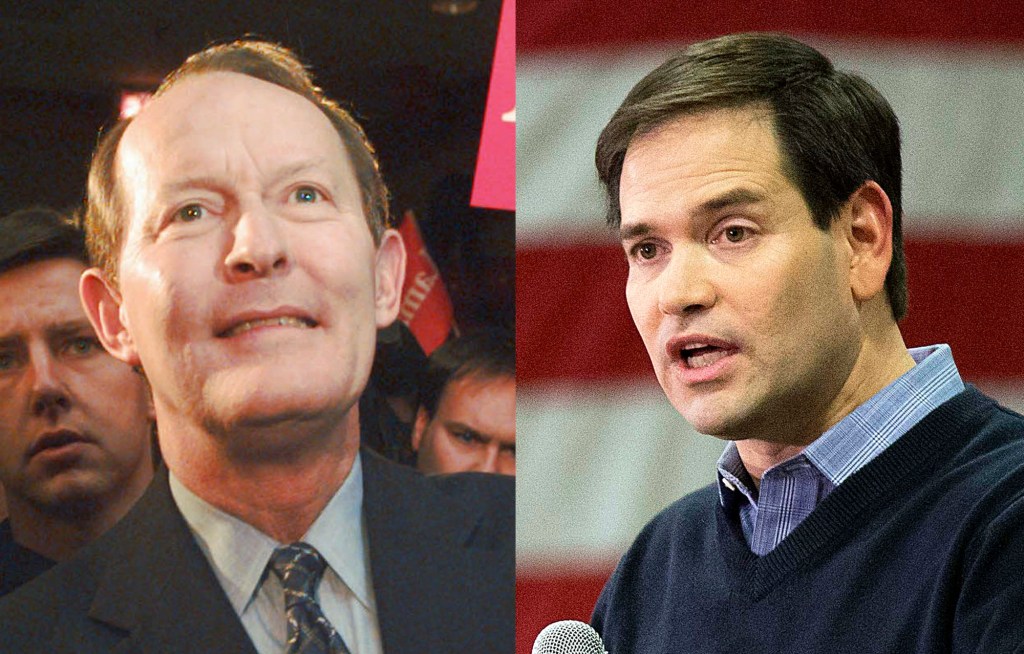
In 1996 Lamar Alexander steamed into New Hampshire after a respectable third-place finish in the Iowa caucuses, with hopes that a first or second place finish might pave his way to the Republican nomination. He fell just short. Pat Buchanan won the primary with 27 percent of the vote, Bob Dole finished second with 26 percent and Alexander was third with 23 percent. If Alexander had won just 7,591 more votes — which would have amounted to 0.84 percent of the votes cast later that year in Florida’s Republican primary — he might have ended up as the chief opponent of Pat Buchanan, and as such would have won the Republican nomination. He would not have beaten Bill Clinton in November, but he might have run well enough to make him a strong candidate for the Republican nomination in 2000 and the 43rd president of the United States. Don’t think he has never mulled over this counterfactual.
And don’t think it hasn’t crossed the minds of the Republican candidates who according to current polling have between are getting between 10 and 15 percent in New Hampshire and thus have plausible hopes of finishing second or third behind Donald Trump—Marco Rubio (15 percent), John Kasich (13 percent), Ted Cruz (13 percent) and Jeb Bush (10 percent). Especially Rubio, whose close third place finish in Iowa helped get him a bump in New Hampshire polls up through the debate on Saturday night.