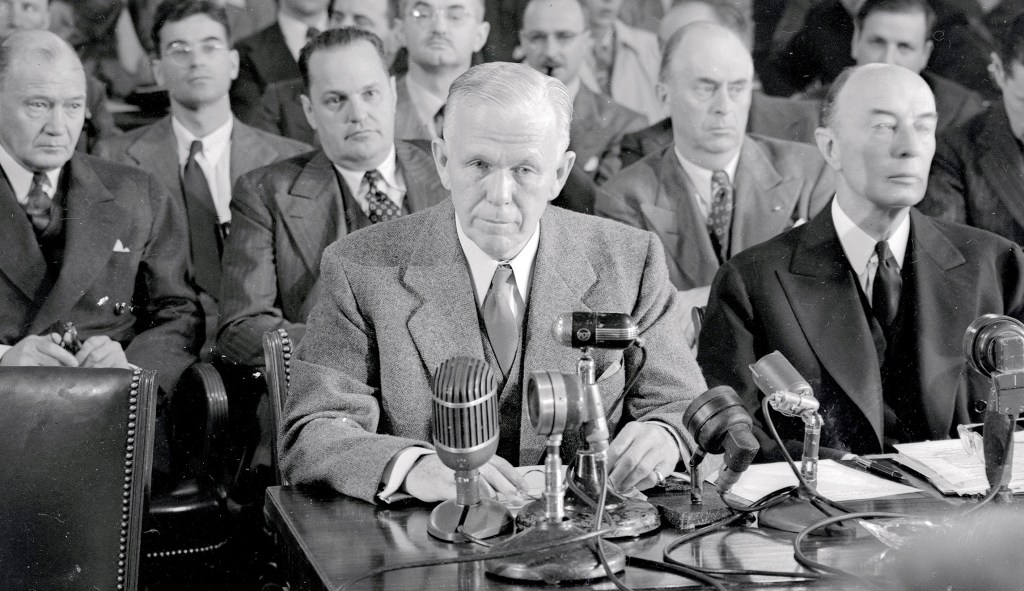
Last month marked the 75th anniversary of the launch of the Marshall Plan — by any reasonable metric, the most successful aid program in history, as well as the most celebrated of all American diplomatic initiatives. The legislation authorizing large-scale economic aid to 16 nations under what was called the European Recovery Program, passed by Congress and signed by President Harry Truman, led to a remarkable revival in output over the subsequent four years and enabled the recipient nations to resist foreign and domestic pressures to turn to extremist political ideologies — most notably, in the context of the period, communism.
Though it was at the time attacked by both the Right (as socialism) and the Left (as imperialism), its achievements in resurrecting Europe and laying the foundations for Cold War American alliances are taken for granted now. Not surprisingly, there have, over the decades that followed, been repeated calls to launch new “Marshall Plans” for war-torn nations and troubled regions around the globe. Syria and Ukraine are only the most prominent of the many recently proposed beneficiaries.