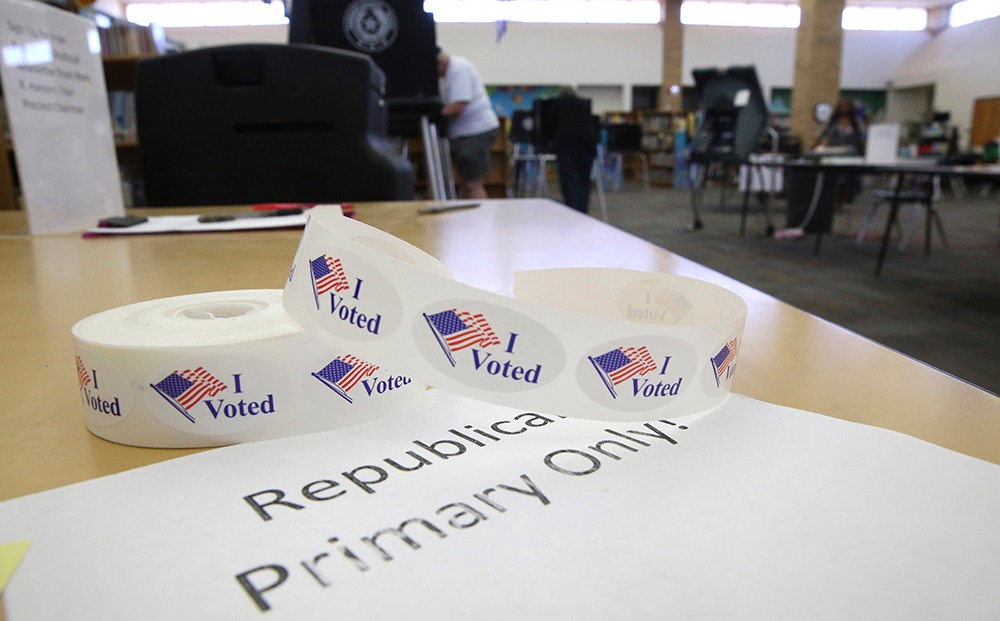
The window of opportunity for an independent candidate to mount a challenge to Donald Trump and Hillary Clinton narrowed Monday as the deadline to get on the Texas ballot passed.
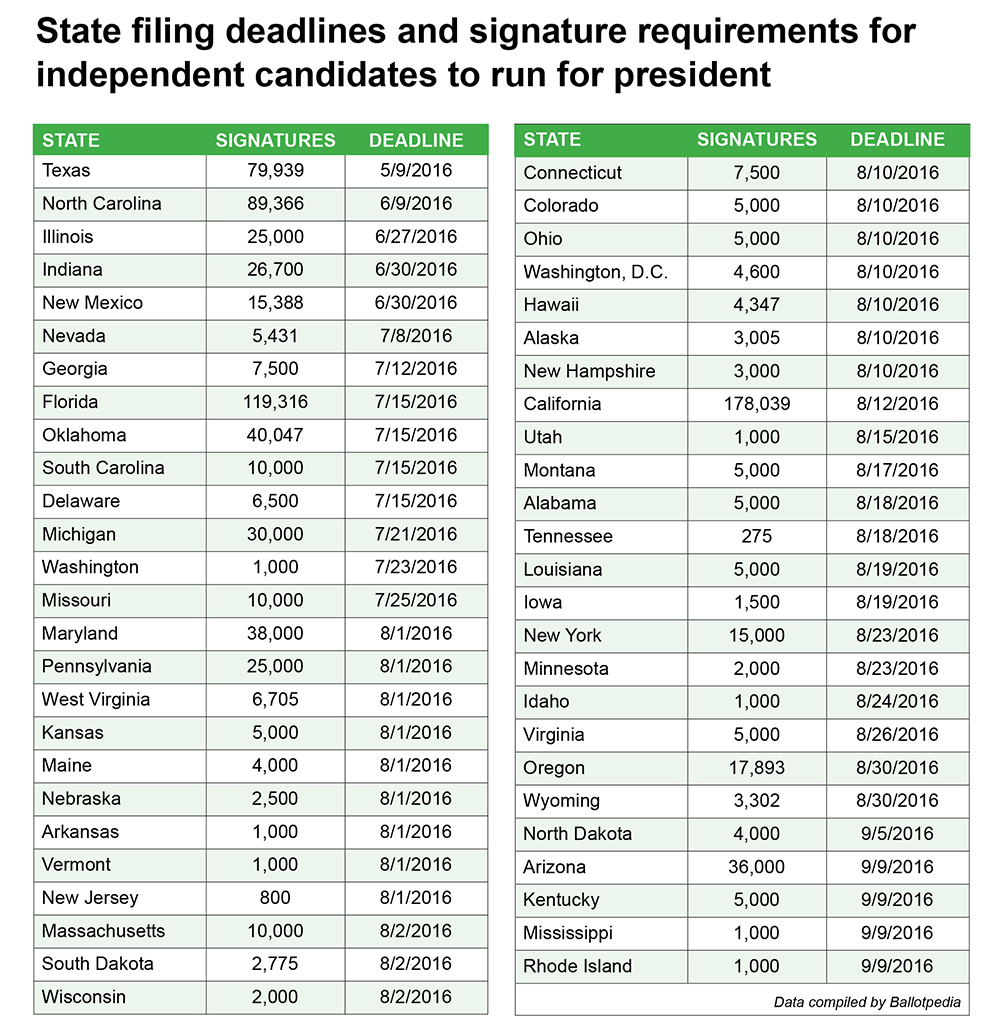
An independent candidate would have needed nearly 80,000 signatures by Monday to place his or her name on the Lone Star State’s ballot as an independent candidate in November.
Recommended Stories

Trump’s controversial candidacy has touched off talk of a conservative alternative to run against him in the general election, but the clock is ticking for such a bid as deadlines loom across the country for candidates to file as an independent or as the representative of a new party.
Richard Winger, a ballot access expert and publisher of Ballot Access News, said Texas and North Carolina are the two most difficult states in which to launch independent bids because the deadlines are earliest and signature requirements are highest.
“Our laws are such a mess that people running for president typically need to sue, but they typically win,” Winger said of candidates who run outside the traditional parties. If an independent candidate were to enter the 2016 fray, he said, he or she would have to file a lawsuit against the state of Texas to challenge the laws that prevent independent presidential hopefuls from registering as a candidate later in the season.
Winger said many states have different criteria for candidates filing as an independent and candidates creating a new party, but noted candidates in the past have simply registered for whichever category has the later deadline and lower signature threshold in each state.
Joseph Uscinski, a political science professor at the University of Miami, said it would be “very impossible” for an independent candidate to get on ballots across the country at this stage in the election. Because national elections are implemented by individual state governments, candidates must prepare to have their names placed on ballots “long in advance,” Uscinski said.
“These problems are exacerbated for independent candidates because they don’t have the party’s resources behind them,” he said. “And they don’t have all the connections behind them that would help ease the process of doing this.”
Some of these problems may be ameiloriated if senior Republicans and seasoned operatives support an anti-Trump candidacy, however.
See the filing deadline for such a candidate in each state.