

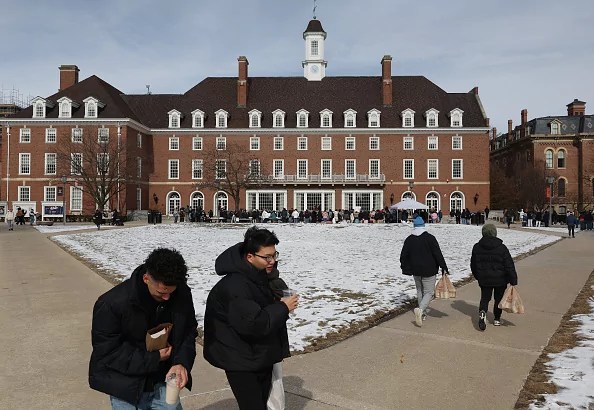
Last week, Georgia became the 10th state to protect a student’s right to free speech on campus by banning colleges from establishing select zones where students would need to enter in order to express free speech.
In a win for college students across the state, outgoing Republican Georgia Gov. Nathan Deal signed Senate Bill 339 into law, which, among other things, ensures that a student’s right to free speech applies to all locations on a college campus, instead of select, confined zones. According to the text of the bill, this law will prevent colleges and universities from unlawfully shielding individuals on campus from speech that is protected by the First Amendment
Recommended Stories

“To assure that each such institution does not shield students, staff, or individuals on campus from speech protected by the First Amendment of the United States Constitution, including ideas and opinions which such students, staff, or individuals on campus find unwelcoming, disagreeable, or even offensive;” the bill reads.
Additionally, the new law requires state colleges and universities to submit annual reports that document any and all incidents that involve an individual disrupting or violating the free speech rights of another individual on campus, as well as what actions the campus administration has taken to discipline the individuals responsible for the free speech violations.
The new law comes amidst multiple lawsuits against Kennesaw State University, a member of the University of Georgia system that has faced growing scrutiny over its handling of several free speech violations on campus. Earlier this year, Kennesaw State was sued by the Alliance Defending Freedom, on behalf of the Kennesaw State University Young Americans for Freedom chapter, over the school’s decision to impose security fees on a lecture by Katie Pavlich merely because school administrators deemed it to be controversial.