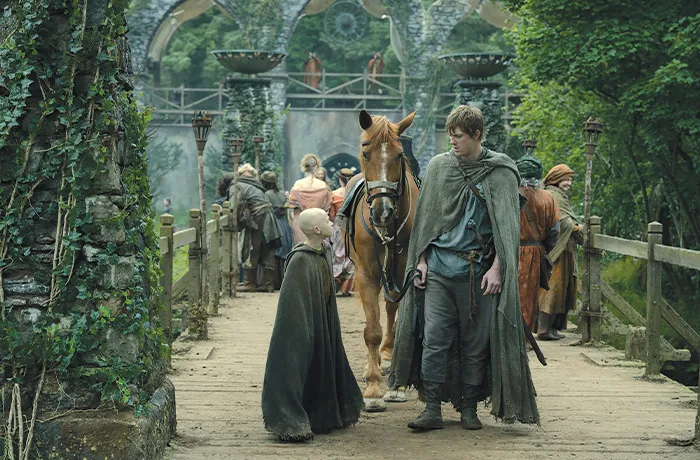
HBO’s latest expansion of George R.R. Martin’s Westeros adapts his novella A Knight of the Seven Kingdoms, a smaller and more intimate tale than its sprawling predecessors. Inspired by subversions of medieval chivalric literature, the series follows a budding knight, Ser Duncan — “Dunk” — the Tall, played by the appropriately towering Irishman Peter Claffey, a former professional rugby player cast with uncanny precision. Among the overlooked triumphs of the broader Game of Thrones franchise is its knack for discovering talent rather than leaning on established names, and Claffey continues that tradition triumphantly.
His physical presence is imposing, but his performance is marked by restraint and a lightly comic awkwardness. Claffey’s Duncan is demure and reticent, a man of quiet charisma who, despite lacking refined swordsmanship, earnestly strives to live up to the ideals of knighthood. He comports himself with such refreshing authenticity that it makes him a natural leader. He is kind, instinctively protective, and stubbornly decent — virtues which, in the cruel and transactional world of Westeros, seldom yield dividends. In Duncan’s case, they culminate in his punching a (deserving) Targaryen prince squarely in the face.