

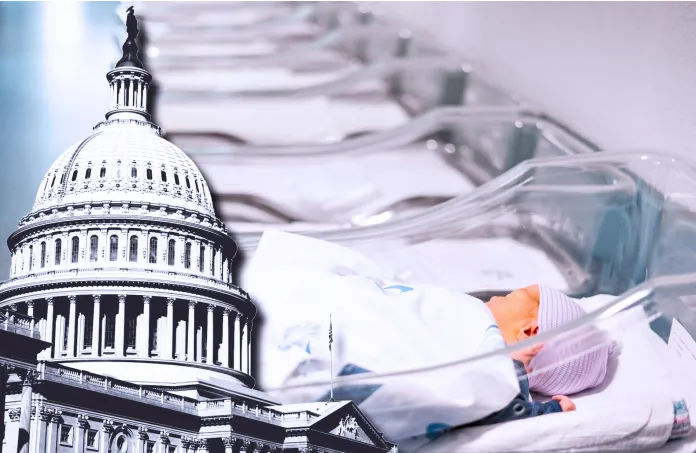
A bipartisan group of lawmakers recently introduced the Supporting Newborn Parents Act of 2026, which would provide parents up to $2,000 when a child is born. The impulse is understandable. Babies are expensive, and many of the bills arrive immediately: hospital costs, diapers, formula, cribs, car seats, and lost wages from time away from work.
But Congress does not need to create another newborn benefit program to address that problem. It should first make existing family benefits more flexible, starting with Trump Accounts, the newborn subsidy Congress enacted just last year. Giving parents better access to existing benefits when they are most needed would help new families without driving the federal government further into debt.
Recommended Stories


Federal support for families with children is already large and fragmented, and it is not always timed to families’ needs.
The Child Tax Credit reduces federal income tax liability by up to $2,200 per child each year, and the Child and Dependent Care Tax Credit partially offsets childcare costs. New parents may benefit immediately by adjusting their withholding, but neither credit provides an automatic lump-sum payment when the child is born. Refundable credits such as the refundable portion of the Child Tax Credit and the Earned Income Tax Credit can provide thousands of dollars at a time, but they do not arrive until the family files their taxes the following year.
Lower-income families qualify for government benefit programs tied to childbirth. When a married couple welcomes their first child into the household, their food stamp benefit will typically rise by roughly $2,800 per year. Medicaid covers 41% of all births and offers expanded eligibility for parents. The Special Supplemental Nutrition Program for Women, Infants and Children provides food and infant formula benefits to lower-income families. Childcare subsidies, housing assistance, cash welfare, and energy assistance offer higher subsidies and easier qualification for families once they have children.
Despite kicking in when babies are born, advocates of newborn subsidies would argue that these programs are not a clean substitute for lump-sum cash at birth for low- and middle-income families. The Supporting Newborn Parents Act tries to fix that problem by creating a new pot of money for each child that could be used immediately. The price tag would be an additional $71 billion of federal spending over the next decade, according to the Tax Policy Center.
Adding another newborn subsidy would continue Washington’s habit of solving every problem by creating another program. The federal government already faces a large and growing debt. More government spending on families today will saddle future generations with higher taxes while slowing economic growth. Policies intended to help children may unintentionally make them worse off in the long run.
The fiscally responsible way to address the financial strain of parents with newborn children is to repurpose existing programs instead of creating new ones.
At the top of the list should be Trump Accounts. The program provides a $1,000 federal contribution for eligible newborns, deposited into an investment account for the child’s future. The problem is that the money is locked away until adulthood, even though many families face their greatest financial strain when the child is born. Parents should be allowed to choose whether to leave the federal contribution invested in their Trump Account for their child’s adulthood or receive some or all of it immediately to help cover newborn expenses.
Another option would be to offer families an advance payment of the Child Tax Credit as soon as their child is born. Families would receive a cushion of a couple of thousand dollars for their newborn right away, rather than receiving the benefit gradually through lower withholding or later as a refund after filing. Lower-income families would still receive the entire Earned Income Tax Credit for which they qualify when they file their taxes.
HOPE FOR NEW MOMS IN BABY BONUS BILL
Many families already receive tax relief or government benefits when they welcome a newborn, but those supports often arrive too late or in forms that do not match families’ immediate needs. What parents require is more flexibility to access resources when they are most needed. For one family, it may be immediate assistance to help pay for essentials or to cover unpaid leave. For others, it may be a larger tax refund or a deposit into a long-term investment account. Parents are better positioned to make that choice than federal lawmakers.
Congress should stop trying to help families by adding new spending programs that inadvertently hurt the children they seek to help by burdening younger generations with higher taxes. The better solution is to repurpose existing programs, give families more flexibility, and maintain support for children without going further into debt.
Kevin Corinth is the Daniel C. Searle chairman and a senior fellow at the American Enterprise Institute.