

The recent U.S. indictment of Cuba’s 94-year-old former leader, Raul Castro, is far more than a symbolic legal gesture. It is the clearest sign yet that the Trump administration is reviving the same pressure campaign it used against Venezuela and is attempting to apply it to Havana.
The federal charges stem from a 30-year-old tragedy: the 1996 shootdown of two civilian aircraft operated by the Miami-based Brothers to the Rescue organization, which killed four men, including three U.S. citizens. Prosecutors allege that Castro, acting as Cuba’s defense minister at the time, directly authorized the attack.
Stay informed.Stay ahead.
Join Washington Examiner for unlimited access to the news, analysis, and commentary that matter most.
Already a member? Log in
But the timing is meaningful. The administration has already shown how criminal indictments can be turned into instruments of regime pressure and political transition. Earlier this year, U.S. forces captured former Venezuelan dictator Nicolas Maduro in a rapid operation and transferred him to New York to face drug-trafficking and weapons charges.
Now, Havana fears it is next. The rhetoric out of Washington increasingly mirrors the early stages of a forced transition strategy. While President Donald Trump has publicly suggested that escalation may not be necessary, he has also warned that the United States will no longer tolerate a “rogue state” just 90 miles from Florida’s coast. Some lawmakers have gone even further. Sen. Rick Scott (R-FL) openly suggested that what happened to Maduro should also happen to Castro.
Yet Washington may be making a fundamental miscalculation. Cuba is not Venezuela.
Some in Washington appear to believe Havana could eventually produce its own version of acting Venezuelan President Delcy Rodriguez — a regime insider willing to negotiate political and economic concessions in exchange for preserving the system. But Cuba’s political structure functions very differently from Venezuela’s more fragmented power arrangement.
In Venezuela, Maduro’s removal did not dismantle the state. The ruling apparatus remained largely intact, allowing Washington to work through a successive leadership that preserved institutional continuity while shifting political direction.
Cuba’s communist system, by contrast, is far more centralized, deeply ideological, and historically resilient to internal fragmentation. The revolutionary state has survived for more than six decades precisely because power is woven into interconnected party, military, intelligence, and economic structures, rather than concentrated in a single autocrat.
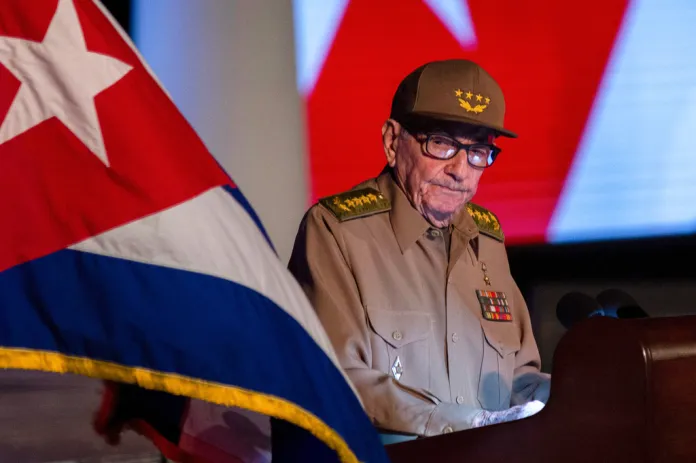
Furthermore, removing Castro accomplishes little operationally. Even after stepping down from the presidency in 2018, Castro functioned more as a symbolic patriarch than an active commander. His influence has long been historical and ideological rather than administrative. Taking him off the board would not automatically trigger regime collapse, nor would it create a clear “day-after” pathway toward democracy or economic liberalization. Unlike Venezuela, Cuba lacks a visible opposition figure or insider faction capable of quickly taking control while keeping the country stable.
That is the core dilemma facing American policymakers. There is no Cuban equivalent of Rodriguez waiting in the wings, and no identifiable faction in Havana has shown any willingness to negotiate terms with Washington.
Unlike Panama in 1989 or Venezuela in 2026, Cuba occupies a uniquely sensitive place in the historical memory of Latin America. Any overt U.S. military intervention would carry enormous domestic and international risks. Even many of the Cuban government’s fiercest critics remain deeply wary of America’s long history of intervention in the region.
RESTORING AMERICA: IRAN TURNS CUBA INTO A DRONE FOOTHOLD JUST 90 MILES FROM US
Ultimately, the Venezuela-style military option relies on a dangerous assumption: The structural collapse of a government automatically yields a cooperative successor. By treating Havana like Caracas, the Trump administration risks triggering a chaotic vacuum rather than a managed transition. If Washington forces a collapse without a viable, internal partner to manage the aftermath, it may not get a democratic Cuba.
It may instead face an uncontrollable humanitarian and security crisis just off the Florida coast.
Imdat Oner is a former Turkish diplomat who served in Caracas, Venezuela, and he currently works as a senior policy analyst at the Jack D. Gordon Institute for Public Policy.