

When some politicians are inconvenienced by the Constitution, they may seek to change the court that interprets it. Packing the Supreme Court was once agreed to be a radical measure, one that threatens the sanctity of the institution as a politically impartial branch.
For over 150 years, Congress has not altered the number of justices on the court, helping to preserve its independence as an institution that renders decisions based on law, not politics. Once in 2021 and again in 2023, Democrats proposed to increase the number of justices on the Supreme Court to 13. With the prospect of Democratic majorities in the House and even the Senate in January, the threat to judicial independence is urgent. These proposals would politicize the court and reshape its ideological makeup for partisan gain.
Stay informed.Stay ahead.
Join Washington Examiner for unlimited access to the news, analysis, and commentary that matter most.
Already a member? Log in
Seeing the danger, the House Judiciary Committee, chaired by Rep. Jim Jordan (R-OH), passed a resolution that, if passed by two-thirds of both the full House and the Senate, would be sent to the states as a proposed amendment fixing the number of justices on the court at nine. To ensure that the Supreme Court is not weaponized for one party’s gain, it is imperative that Congress pass and the states ratify this constitutional amendment.
The court’s authority and independence depend on public confidence that its structure will not be altered for partisan gain. If a congressional majority, in pursuit of its political agenda, expanded the court, Americans would predictably come to see the court as nothing more than a tool of political power. Once the court is politicized, politicians will find it easier to dismiss unfavorable rulings, and citizens who see the court as a partisan actor will be more willing to tolerate lawless defiance.
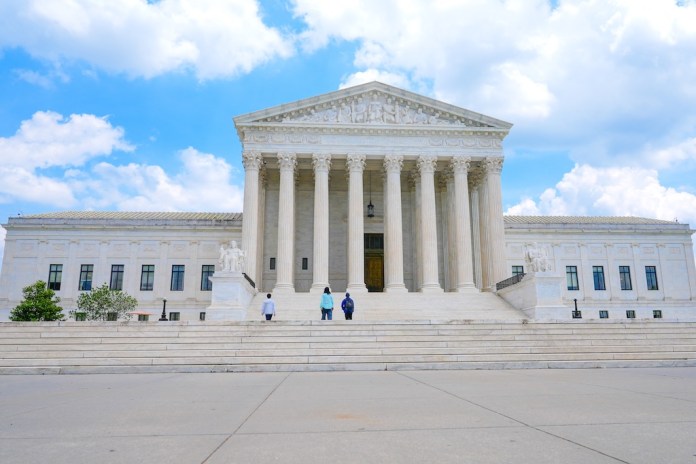
The first round of court-packing would also likely set off a cycle of retaliation, in which each new congressional majority would seek to increase the number of justices to offset those added by its predecessor. With every new expansion of the court, its ability to check the excesses of the political branches would atrophy. Those who would keep the door to court-packing open demonstrate that they prize political power over the rule of law.
Past plans to pack the court generated bipartisan controversy and were thus unsuccessful. In 1936, President Franklin D. Roosevelt attempted to expand the court to pave the way for his New Deal programs. Roosevelt’s plan would have expanded the court by as many as six members, but it faced harsh criticism from Republicans and Democrats alike. A Democrat-controlled Senate Judiciary Committee stopped the president’s plan before it even reached the House floor, writing in its final report on the proposal, “It is a measure which should be so emphatically rejected that its parallel will never again be presented to the free representatives of the free people of America.”
RESTORING AMERICA: THE REVOLUTIONARY VIRTUE OF PROCESS
History has shown that court-packing only exacerbates government corruption. In 2004, Venezuelan President Hugo Chavez expanded the Supreme Tribunal of Justice, Venezuela’s highest court, from 20 to 32 members, reducing it from a judicial to a legislative body. The court became a crucial tool for Chavez and later for Nicolas Maduro’s regime, enabling them to consolidate power while marginalizing political opposition and the rule of law.
Enshrining a nine-justice Supreme Court in the Constitution is essential to ensure the independence and reliability of the judiciary. Alexander Hamilton believed the judiciary to be the “least dangerous” branch of government, exercising “neither force nor will but merely judgment.” The Supreme Court’s role as a final backstop against government abuse of power, a last bastion of constitutional liberty against majoritarian whims, will not be regained once lost. Congress must pass the proposed constitutional amendment and send it to the states for ratification.
Marc Wheat is general counsel at Advancing American Freedom.
Connor Bolster is an intern at Advancing American Freedom.