

Nearly every voter in the nation believes that the U.S. Supreme Court impacts their everyday life, but a majority can’t name a single justice on the all-important bench, according to a new survey.
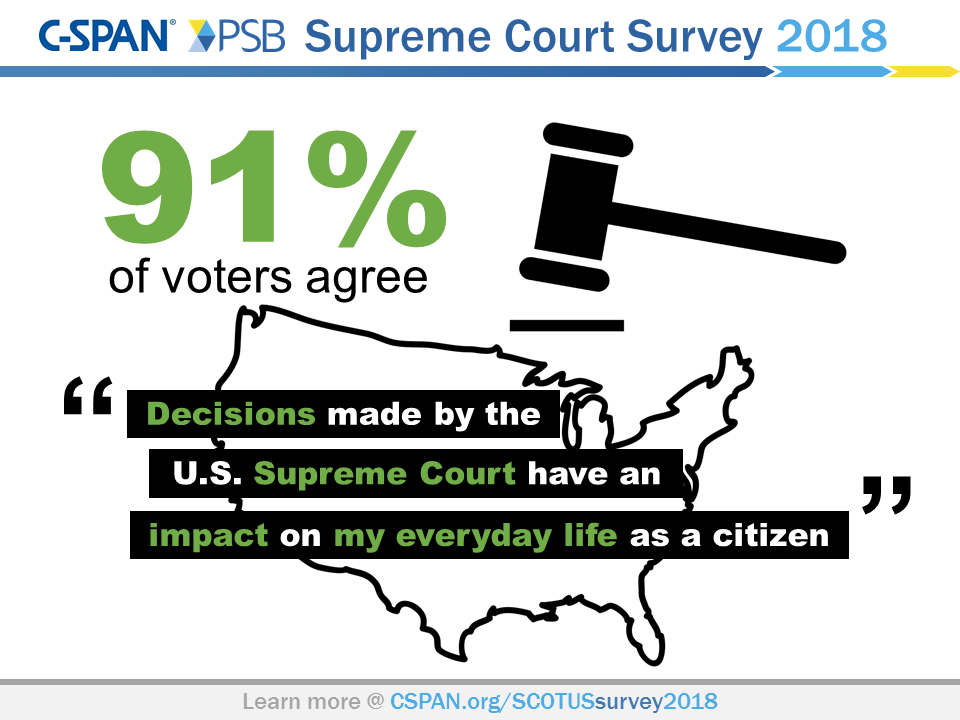
The C-SPAN survey, which again found wide support for televised oral arguments, said that 91 percent answered “Yes” when asked if, “Decisions made by the U.S. Supreme Court have an impact on my everyday life as a citizen.”
What’s more, the survey said that seven of 10 are plugged in and paying attention to President Trump’s nomination of Appeals Court Judge Brett Kavanaugh to replace retiring Justice Anthony Kennedy.

But when it comes to knowing the name of a justice, the public falls short, with 52 percent unable to name one of the nine justices.
The most well-known is liberal justice Ruth Bader Ginsburg. She was the focus of the documentary “RBG.” Some 25 percent could name her.
Next up were Justice Clarence Thomas and Chief Justice John Roberts, at 14 percent.
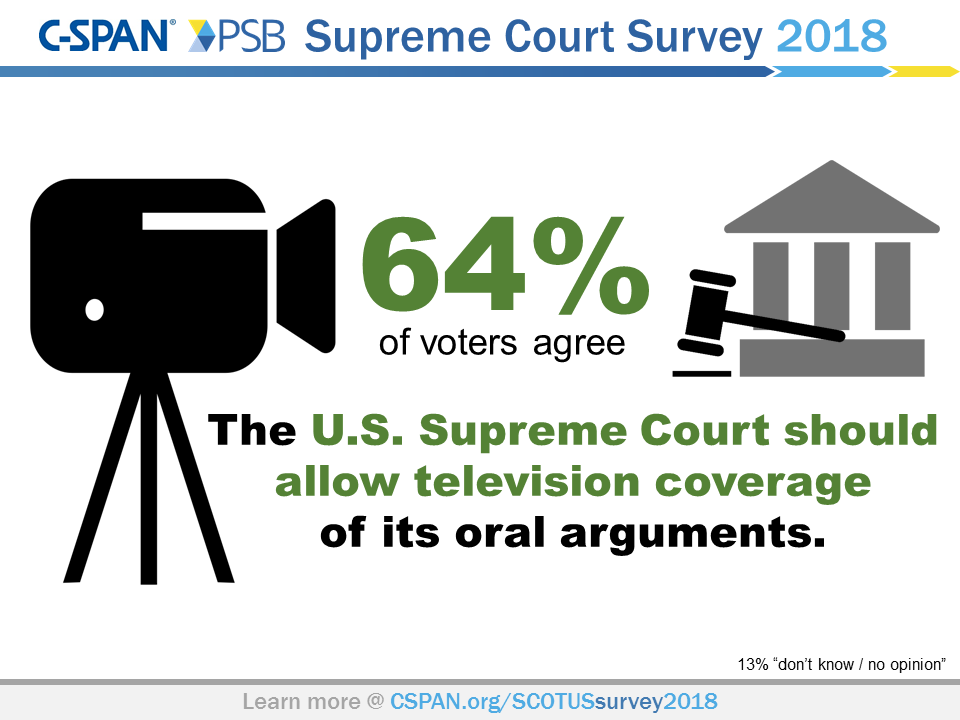
C-SPAN’s survey, done by PSB Research, said that 64 percent support televised arguments. The TV-supported public affairs outlet has long pushed to put TV cameras in the court. The finding showed less support than in 2015 when the last poll on the subject found that 76 percent backed TV cameras.
“Two in three American citizens who have an opinion think the U.S. Supreme Court is a partisan political body similar to Congress and those numbers are rising,” said Robert Green, of PSB. “More Americans get their information on the high court from TV and online media today than ever before. The easiest way to convey to the public that the Supreme Court takes its responsibilities seriously as a constitutional court would be to permit Americans to view the Court oral arguments unfiltered through TV or online,” he added.
The drop might be attributed to the feeling among voters that the court is too political and doesn’t act in a sound or serious manner.
The survey analysis said that 56 percent of voters believe that are split on political grounds like Congress.
And just 28 percent said that the court “acts in a serious and constitutionally sound manner.”
