

A new report outlines grave weaknesses in Britain’s military capability and readiness.
But this report isn’t from a think tank or advocacy group. It’s from the House of Commons armed services committee. And the fact that members of parliament from all parties are so concerned about Britain’s defense situation is striking. The report’s title: “Beyond 2 per cent: A preliminary report on the Modernizing Defense Program” speaks to its overriding theme. Namely, that “Defense spending is far too low… [Britain] must begin moving the level of defense expenditure back towards 3 percent of GDP, as it was in the mid-1990s.”
Recommended Stories


So what are the key weaknesses in Britain’s defense?
Well, to start, the report identifies that “the most serious maritime issue which has been recognized by [government] ministers, and in the evidence we have taken, is the need for greater anti-submarine warfare (ASW) capacity.” But while Russian activity against transatlantic communication cables is the driving force behind Britain’s ASW concern, it goes deeper than that. Britain has realized that it currently lacks the ability to deny the Russian navy access to the Atlantic during a major conflict in Europe. And that matters because were the Russians able to constrain transatlantic passage they could degrade and possibly even deter U.S. reinforcement of the European continent. That threatens NATO’s underlying deterrent credibility.
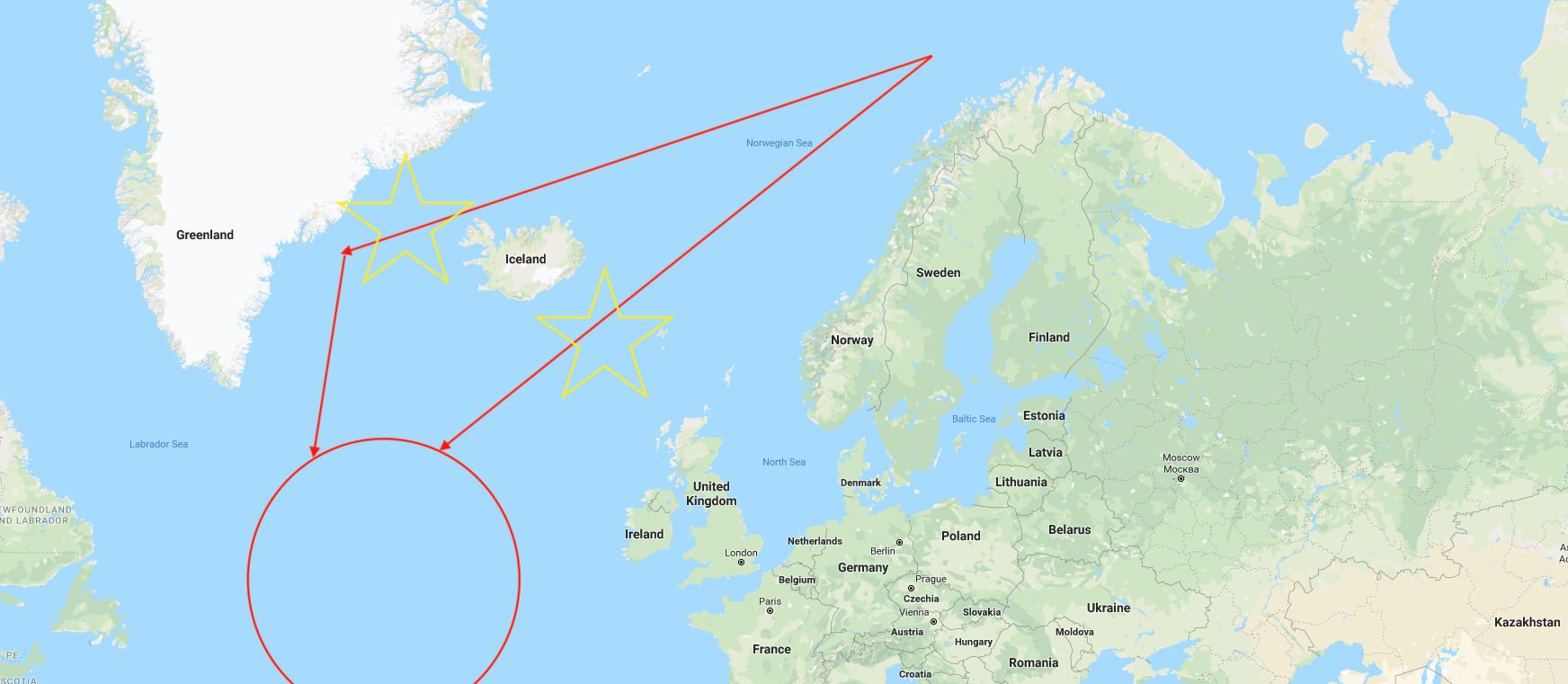
Fortunately, the report also outlines where additional spending could strengthen the U.K.’s ASW capability. It focuses on the need for more maritime patrol aircraft and an expanded fleet of attack submarines. In my view the submarines should be the priority. The Royal Navy’s Astute-class attack submarines are world leading but only three boats are currently in service and only four more are planned. It’s an insufficient high-end force to effectively challenge Russian naval forces at the choke point Greenland-Iceland-U.K gap (GIUK gap). As my annotated map below shows, the GIUK gap is a longstanding NATO focus in that it offers the wartime prospect of fixing and killing (yellow stars) intruding Russian forces (red lines) before they can attack NATO sea lines of communication (red circle).
The report also identifies another area of Royal Navy weakness: protection of the aircraft carrier fleet. It’s a relevant concern because although the U.K. will shortly have two new aircraft carriers, it does not have a large enough fleet of escort destroyers, frigates, and submarines to defend the carriers at sea. As the report notes:
“Generating [a complete carrier group] for any length of time is likely to put considerable strain on the Royal Navy, given the current size of the Fleet. The carriers are likely to be operating within larger allied groups in the future, but we disagree with the National Security Adviser that we should proceed on the basis this is inevitable. Operating aircraft carriers without the sovereign ability to protect them is complacent at best and potentially dangerous at worst. The UK should be able to sustain this capacity without recourse to other states.”
The report is right and the national security adviser, Mark Sedwill, is wrong.
Unfortunately the report points out that the British armed forces face problems beyond the navy. The army now has only 227 main battle tanks and only two front line armored units. To put that in comparison, the U.S. army has roughly 8,000 tanks and the Russians have around 18,000.
The parliamentarians also lament the army’s lack of a credible air-defense capability which it says is a “major weakness in the army’s current [capability] and should be addressed as a matter of high priority.” And they point out that the army — and NATO at large — continue to lack redundant backups to survive Russian efforts to defeat allied command and control systems. To his credit the new head of the British military is focused on addressing these vulnerabilities and Russia’s area denial strategy.
Finally, there’s the air force vulnerability. The report notes that Britain lacks sufficient maritime patrol aircraft, has inadequate anti-radar and electronic warfare capabilities, no significant missile defense, and a weak airborne warning and command force. These deficiencies mean that the U.K., like the rest of Europe, would have to rely on the U.S. air force in the event of a major conflict with Russia.
But that speaks to the ultimate issue here: burden sharing. Because while Britain is currently spending the NATO target of 2 percent of GDP on defense, the report outlines why that expenditure is insufficient. In that sense it’s also a rejoinder to those who wrongly accuse President Trump of degrading the international liberal order. Indeed, the parliamentarians explicitly welcome the British defense secretary’s intent to use this summer’s NATO summit toward “ensuring that the burden of defense expenditure and capability is shared more evenly across [NATO].” That sounds a lot like Trump’s message to German Chancellor Angela Merkel and Canadian Prime Minister Justin Trudeau.
The one-line takeaway: In 2018, military power requires significant investment.
