

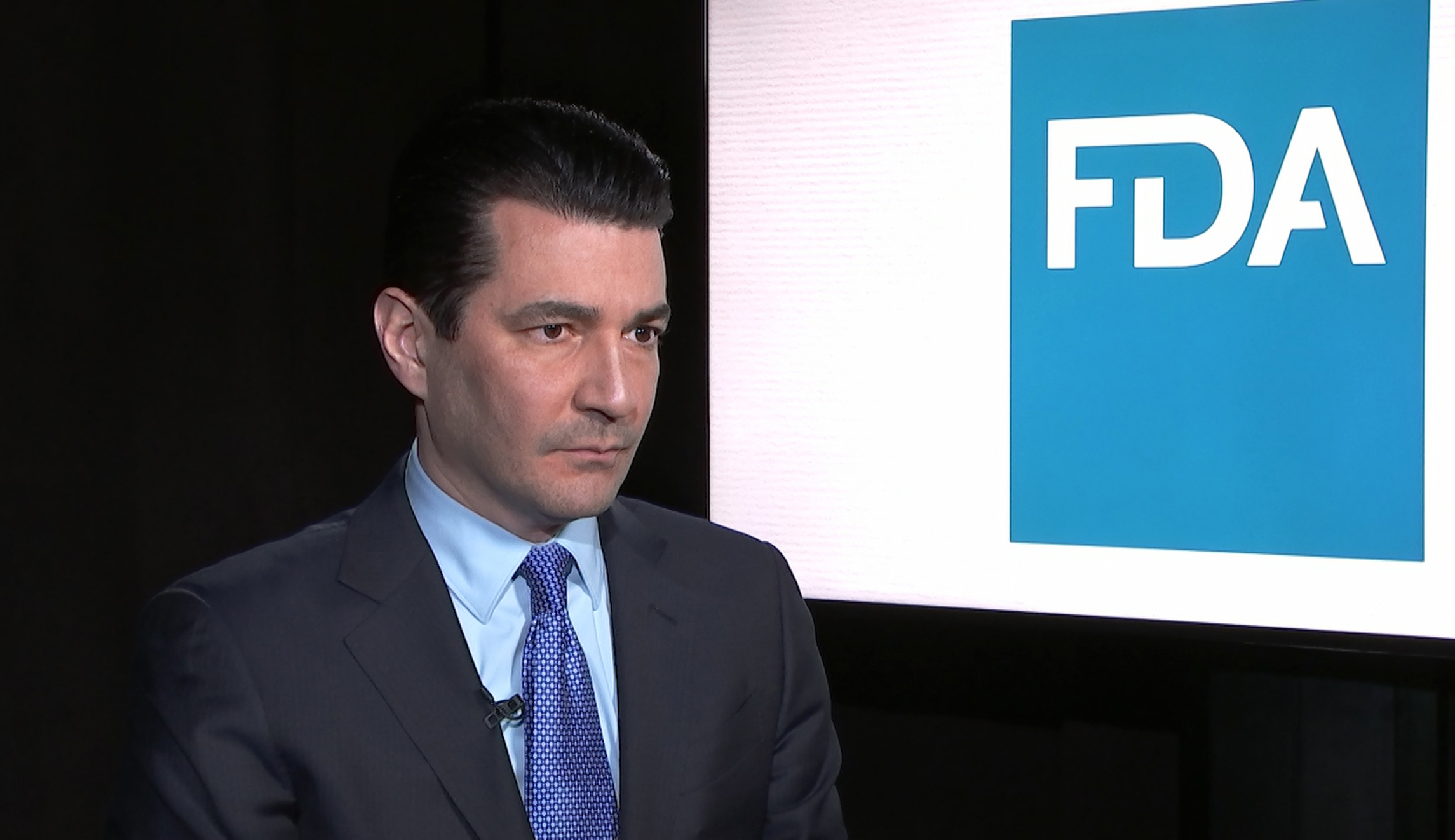
The head of the Food and Drug Administration lamented that drug companies may abandon making cheaper versions of high-cost specialty drugs because the market is too hard to penetrate.
FDA Commissioner Scott Gottlieb said during a Wednesday event sponsored by the Atlantic that it is hard for drugs called biosimilars to get covered by drug plans and insurers. A biosimilar is a drug that is similar to a tissue-based drug called a biologic but is usually cheaper.
Recommended Stories


“Because the market is hard for a biosimilar to penetrate, I worry that companies are going to pull out and not develop new biosimilars,” he said.
The FDA has approved 10 biosimilars after a 2010 law created a new regulatory pathway for the agency. But Gottlieb notes that only a few biosimilars have actually made it to the market. as the current rebate system makes it harder for insurers to cover the drugs.
[Related: Big Pharma largely unscathed by Trump’s drug-price crackdown]
A biologic manufacturer is typically paying a big rebate to an insurer or a drug middleman called a pharmacy benefit manager who manages drug plans for employer and union health insurance plans. That large rebate is the problem, Gottlieb said.
“If the health plan takes up your biosimilar then they lose all those rebates,” he explained. “Now you have to discount your biosimilar to a point where you offset the loss of the rebates to the health plan.”
A PBM or insurer typically wants to cover drugs with the highest list price because they provide a larger rebate, which PBMs and insurers get a cut of. Critics and Trump administration officials contend that PBMs and insurers create a perverse incentive for higher list prices so they can get a larger rebate and subsequently a larger cut.
Gottlieb said that because of this current system, there could be fewer companies who want to make biosimilars.
[Also read: FDA to call out brand name drug companies that block generics]
The Trump administration has bashed rebate agreements recently. Part of its blueprint to tackle high drug prices includes a move from rebates to fixed price discounts, which reduce the price of the drug by a certain amount at the point of sale as opposed to after the sale in the case of a rebate.
But experts caution that it is too soon to tell whether such a move will actually lead to lower drug prices.
