

The Chinese Communist Party remains the “absolutely unparalleled” long-term priority for the U.S. intelligence community.
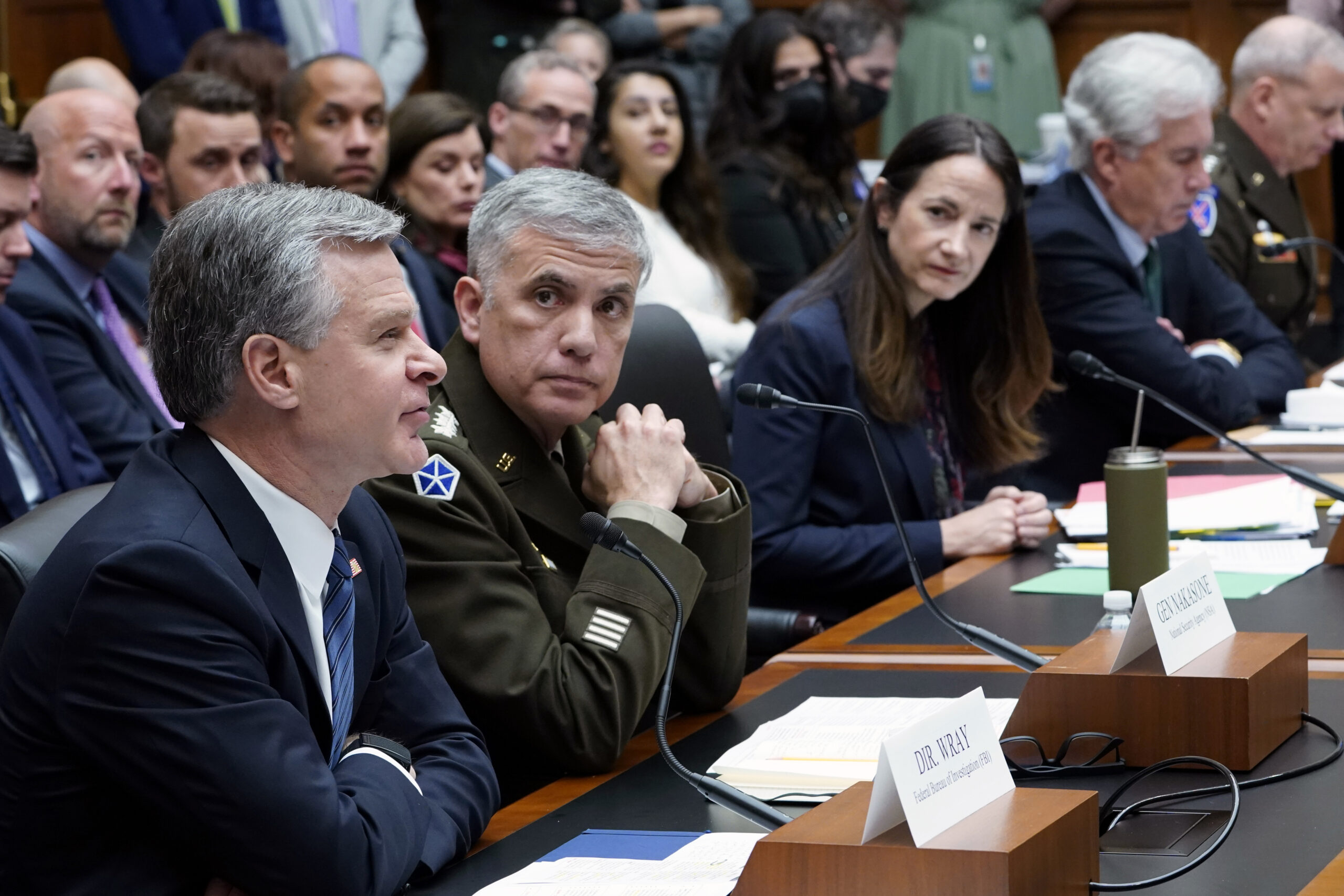
Director of National Intelligence Avril Haines made the comment to Congress on Tuesday following the release of the annual threat assessment report at a time when Russia’s invasion of Ukraine has become a leading point of national security distress for the United States and the rest of the world.
Recommended Stories


The Office of the Director of National Intelligence’s report, released to the public late Monday, warned that “China increasingly is a near-peer competitor, challenging the United States in multiple arenas — especially economically, militarily, and technologically — and is pushing to change global norms and potentially threatening its neighbors.”
China, the report said, “will remain the top threat to U.S. technological competitiveness as Beijing targets key sectors and proprietary commercial and military technology from U.S. and allied companies.”
The intelligence report, which is dated February, said information available as of Jan. 21 was used to prepare the assessment, meaning it was compiled before Russian leader Vladimir Putin’s attack on Ukraine. Despite the conflict between Russia and Ukraine, Haines told the House Intelligence Committee that China remains the top point of concentration for U.S. spy agencies.
“So, if some would see this catastrophic decision by the Russian government as a storm, but China is more like the climate, right?” Republican Rep. Sean Maloney asked. “And it remains the persistent existential long-term threat. So Director Haines, how are we going to stay focused on China as we work this emergency in Ukraine?”
Haines, the leader of an office overseeing all 18 U.S. intelligence agencies and elements, said the CCP remains a key focus.
“Unquestionably, we are going to stay focused on China,” she said. “And I agree with you — it is one of those things where the urgent crowds out the important on some level, and we are working very hard to ensure that that does not happen, because we recognize the long-term priority is China for us. Absolutely unparalleled.” She said that U.S. intelligence community resources would reflect the China threat.
RUSSIA AND CHINA ARE CLOSE, CIA SAYS, BUT CCP MAY BE UNSETTLED BY UKRAINE
“The Chinese Communist Party will continue efforts to achieve President’s Xi Jinping’s vision of making China the preeminent power in East Asia and a major power on the world stage. The CCP will work to press Taiwan on unification, undercut U.S. influence, drive wedges between Washington and its partners, and foster some norms that favor its authoritarian system,” the intelligence assessment said. “Beijing sees increasingly competitive U.S.–China relations as part of an epochal geopolitical shift and views Washington’s diplomatic, economic, and military measures against Beijing as part of a broader U.S. effort to prevent China’s rise and undermine CCP rule.”
The ODNI report added: “Beijing is increasingly combining growing military power with its economic, technological, and diplomatic clout to strengthen CCP rule, secure what it views as its sovereign territory and regional preeminence, and pursue global influence.” But the intelligence community also noted, “China faces myriad — and in some cases growing — domestic and international challenges that probably will hinder CCP leaders’ ambitions,” including “an aging population, high levels of corporate debt, economic inequality, and growing resistance to China’s heavy-handed tactics in Taiwan and other countries.”
FBI Director Christopher Wray said last month the growing economic and national security threat posed by the CCP is graver than ever. Likening the danger to a more technologically sophisticated Soviet Union, Wray argued, “there is just no country that presents a broader threat to our ideas, our innovation, and our economic security than China.” China is “like the surveillance nightmare of East Germany combined with the tech of Silicon Valley,” Wray added.
The ODNI report also shared alarming assessments about China’s military prowess.
“China will continue pursuing its goal of building a world-class military that will enable it to secure what it views as its sovereign territory, establish its preeminence in regional affairs, and project power globally while offsetting perceived U.S. military superiority,” the ODNI report said, adding, “Beijing will continue the largest ever nuclear force expansion and arsenal diversification in its history.”
“We assess that China presents the broadest, most active, and persistent cyber espionage threat to U.S. Government and private sector networks,” the Tuesday assessment said, adding, “China will continue expanding its global intelligence and covert influence posture to better support the CCP’s political, economic, and security goals.”
CLICK HERE TO READ MORE FROM THE WASHINGTON EXAMINER
Also addressed in the ODNI report was the coronavirus pandemic.
“China will continue spreading COVID-19 misinformation and downplaying its early failures while casting blame on the West. Its misinformation includes claims that the United States created COVID-19,” the report said.
ODNI released another assessment in the summer stating that one U.S. intelligence agency assessed with “moderate confidence” that COVID-19 most likely emerged from a Chinese government lab in Wuhan, while four U.S. spy agencies and the National Intelligence Council believe with “low confidence” COVID-19 most likely has a natural origin.
The release of ODNI’s latest assessment comes after the Justice Department shut down the Trump-era China Initiative in February. The DOJ unveiled a domestic terrorism unit in January and announced a special task force to target Russian oligarchs in March.
In addition to China, the ODNI report also focused on Russia, Iran, and North Korea.
The report said the Kremlin “is pushing back against Washington where it can — locally and globally — employing techniques up to and including the use of force.” The Iranian regime “will remain a regional menace with broader malign influence activities,” the report said, adding that North Korea “will expand its WMD capabilities while being a disruptive player on the regional and world stages.”
