Brian Frosh: We need regional plans to clear the air

There?s a growing health problem in the United States and Canada today. It?s costing millions of dollars, harming our health and damaging both our nations? productivity.

This particular health challenge isn?t contagious, like HIV and the avian flu. You won?t hear about it on the national news tonight, or from friends and neighbors. But it should be ? and that?s why I decided to participate in the Shared Air Summit hosted by Ontario Premier Dalton McGuinty in Toronto this week.

Maryland has many things in common with Ontario, including a strong economy and a history of co-operation and prosperity. Unfortunately, we also share dirty air.

The American Lung Association?s State of the Air 2006 report documents some of the air quality challenges facing our region. The report gives 12 jurisdictions in Maryland, including Carroll, Anne Arundel and Harford counties, “F” grades due to the alarming number of high ozone days. Baltimore scored an “F” for high ozone days and for elevated levels of particle pollution.

More than 50 percent of Ontario?s air pollution comes from the United States ? carried by the prevailing southwesterly winds from the Midwest. Canada?s industry and transportation emissions likewise cross the border into New York, the Mid-Atlantic states and New England. Ontario?s environment ministry is gearing up to combat this problem, and is asking us to recognize that we all have a responsibility and a role to play.

A significant portion of Maryland?s smog also drifts across state boundaries. Acting alone, Maryland lacks sufficient political or economic clout to force out-of-state emissions reductions. That?s why we, like Ontario, know that only a regional approach to reducing interstate smog transport has proven effective.

The Province of Ontario has documented the health, economic and environmental effects of cross-boundary air pollution. “Dirty air” kills thousands of people, hospitalizes countless others, damages the environment and costs the economy billions of dollars each year. It is a big reason why even small towns have smog alerts and why more children than ever suffer from respiratory problems. In Ontario in 2005, the negative health effects of 53 smog days contributed to 5,800 premature deaths.

Air pollution costs the U.S. and Canada billions of dollars every year. With sick days, medical costs and environmental damages, the economies of both nations are impacted. And the cost of doing nothing about this problem ? in disease, death and environmental degradation ? is staggering. We can and must act.

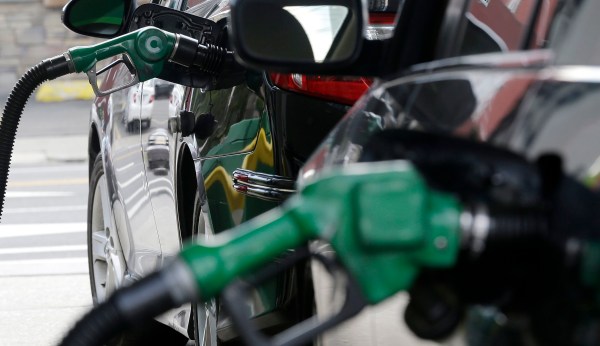
Ontario has recently taken some very good steps to protect the air we all share. By 2007, gasoline sold in Ontario will be required to contain an average of 5 percent ethanol. Additionally, Ontario?s investments in renewable energy will help this developing industry on both sides of our border. These and other initiatives already under way under the leadership of Ontario Premier Dalton McGuinty will promote innovation and the more widespread use of emerging, eco-friendly technologies.

In Maryland, we recently enacted the Healthy Air Act, which caps industry smog and climate change causing emissions and brings them down over time. With the Healthy Air Act, Maryland has targeted seven power plants that are some of our state?s largest air polluters. We hope that Maryland?s leadership will spur neighboring statesto implement stronger pollution controls on their power plants, and begin to clean up the air we share in the mid-Atlantic region.

Together, we need to push for change to protect the health of our people and our shared environment. We call upon others from both sides of the border to join us. We are asking every state and province, and both sovereign governments, to commit to clearing our shared air.

The Shared Air Summit brings state officials, public health professionals, business leaders and environmental advocates together to consider the ongoing and unacceptable impacts of air pollution on Canadians and Americans. It is a great opportunity to meet like-minded champions of cleaner air.

Maryland?s bountiful and beautiful natural resources have made our state a popular tourist destination and a terrific place to live. Our public policy has traditionally reflected a strong ethic of conservation and a commitment to environmental protection. Marylanders should expect and demand steadfast, trustworthy political leadership on environmental issues.

Brian E. Frosh, a Democrat from Bethesda, represents District 16 in the Maryland state senate where he chairs the Senate Judicial Proceedings Committee.

Related Content