2017 was third-warmest year on record, NOAA-led international study finds

An international study released Wednesday found that 2017 was the third-warmest year on record.

Only 2016 and 2015 were warmer, according to the 28th annual State of the Climate Report, dubbed the annual “checkup for the planet” by the National Oceanic and Atmospheric Administration.

A wide array of environmental data, including global climate indicators and extreme weather events, were examined for the 300-page study spearheaded by NOAA scientists and published by the Bulletin of the American Meteorology Society. More than 500 scientists in 65 countries were involved in the effort.

[Also read: Study suggests more people could die in heatwaves by 2080, encourages policies to decrease greenhouse gas emissions]


Among its findings was record-high greenhouse gas concentrations and a rise in sea level — three inches above the measurement in 1993 — as glaciers melt away.

“I think of the oceans like a freight train,” Gregory Johnson, an oceanographer with NOAA’s Pacific Marine Environmental Laboratory, told reporters, according to Yahoo News. “If we were to freeze greenhouse gases at the level they are today, the oceans would continue to warm and seas would continue to rise for centuries to millennia.”

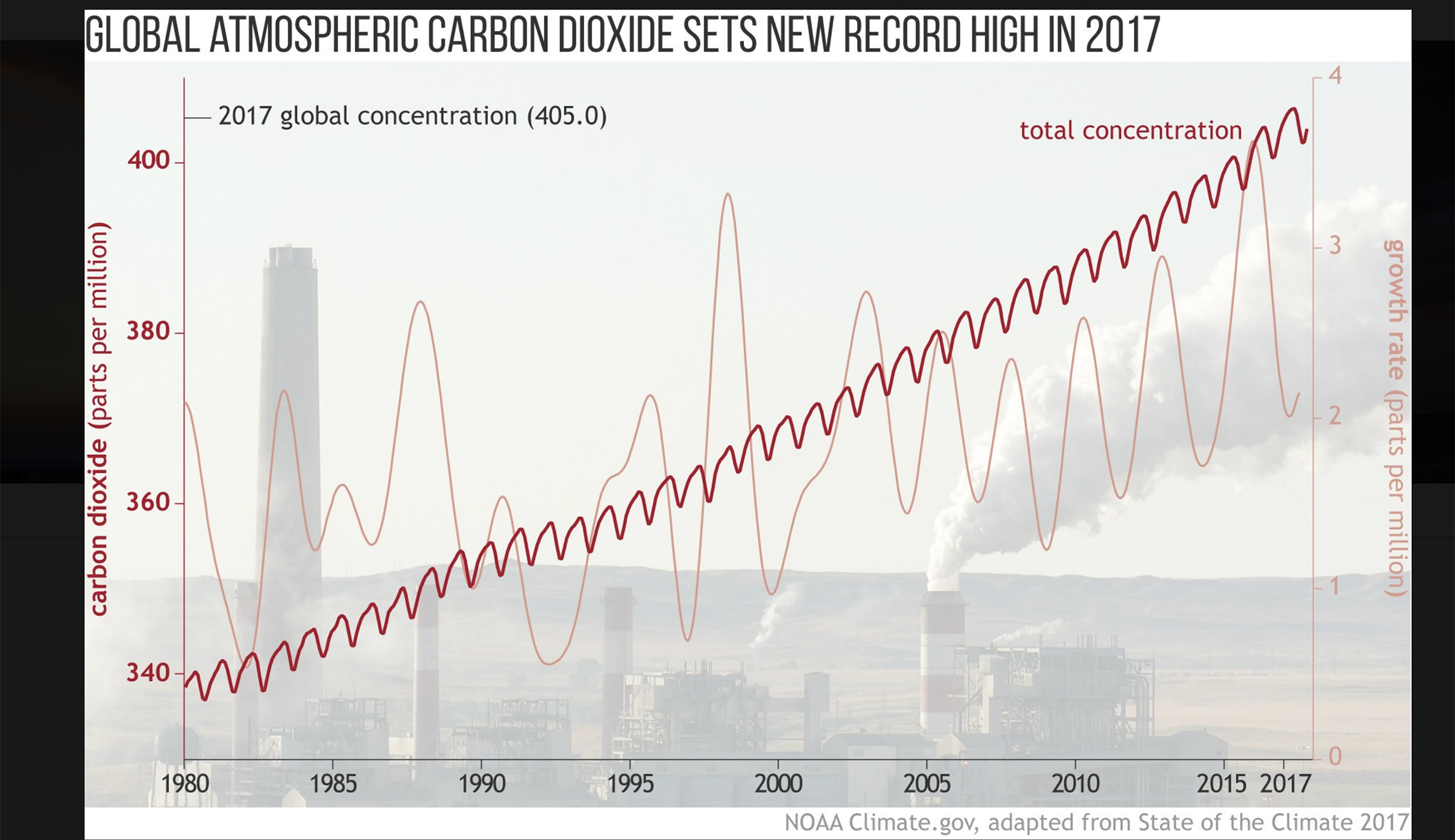
Many climate scientists blame greenhouse gas emissions from fossil fuels for driving man-made climate change. Concentrations of carbon dioxide reached 405 parts per million in the atmosphere in 2017 — a bump of 2.2 ppm above what was observed in 2016 — making for the highest concentration found in modern atmospheric measurement records and in ice core records dating back as far as 800,000 years.

Global surface temperatures were 0.68 to 0.86 degrees Fahrenheit above the 1981 to 2010 average, depending on the dataset used, making 2017 the warmest non-El Nino year on record. Translating to “the Little Boy” in Spanish, El Nino refers to a periodic warming of the ocean surface in the Pacific Ocean.

The report also found the number of tropical cyclones — including hurricanes which occur in the Atlantic Ocean and northeastern Pacific Ocean — was slightly above average: 85 named tropical cyclones, a hair above the 1981-2010 average of 82 storms. Meanwhile, after reaching a peak in global drought area in 2016, scientists saw the drought area dip in 2017 before rising to above-average values later in the year.

While Mexico and other countries experienced their warmest year on record, the U.S. only saw it’s third-warmest year since records began in 1895.

[Opinion: Frivolous climate change lawsuits could leave cities in ruin]

Related Content
