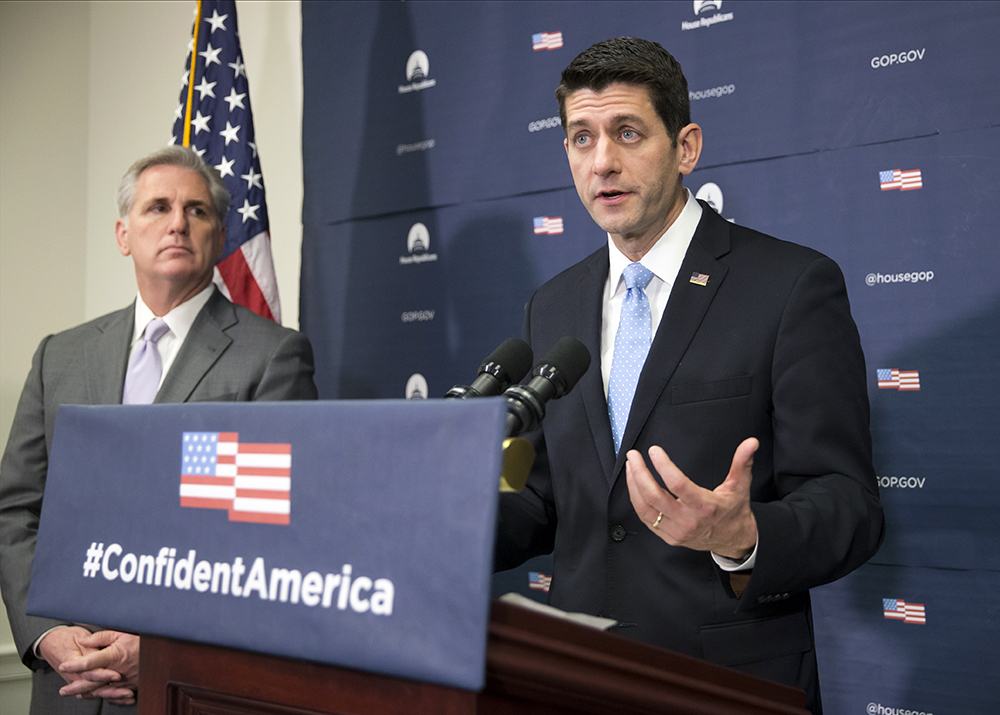
Paul Ryan’s new, more inclusive course will help the GOP

Republicans have long been branded the party of the rich, and in the past have struggled to communicate their views on poverty and solutions to fix it. During his 2012 vice presidential run, now-House Speaker Paul Ryan wanted to focus some of his outreach efforts in inner cities. The campaign initially resisted, but ultimately acquiesced.

Nearly four years later, Ryan has had the opportunity to inject the issue into the 2016 presidential election. Last weekend, Ryan, along with Sen. Tim Scott (R-SC), moderated the Kemp Forum on Expanding Opportunity, featuring a large cross section of the GOP field to discuss poverty and solutions for tackling it.

Thanks in part to Ryan’s rise, the issue of poverty has moved beyond the pet project of a few Members of Congress and non-profits — to become a top priority for the GOP. The fight to change hearts and minds, however, will likely not be as swift.

For decades, progressives have assumed de facto inequality of opportunity, and focused their efforts on controlling the equality of outcomes. They’ve elevated Tammany Hall to a national level. A large swath of the electorate votes Democratic because politicians trade on division politics, pitting “have nots” against the “haves,” all the while establishing an elite, noble class of “haves” that look out for those less fortunate. Through a series of handouts that get renewed with every election cycle, they’ve turned poverty into an industry that supports their political machine. Yet, ironically, they’ve been largely credited as being the party doing more to help those in need.

Frankly, it’s hard to blame those less fortunate for falling into the “us vs. them” trap and taking short-term relief when the GOP has struggled to engage on the issue by offering relatable solutions. Republicans are excellent at sticking to talking points about “job creators” and “take home pay,” but when it comes to long-term solutions to poverty, most are mum at best, and in some less fortunate cases, extremely tone deaf in their delivery.

Ryan has been willing to do what few others in his party have: Engage on an issue where conservatives traditionally don’t appear to have the upper hand. Furthermore, intentionally or not, he’s forcing the debate at the top level of his party. Ryan certainly isn’t advocating for the “compassionate conservatism” of the Bush years. Rather he’s reinventing the party’s message by elevating the notion that creating opportunity will foster success and renewed promise in America. He impresses on his colleagues that if the American idea and promise is not there for everyone, it’s not there at all.

An Irish Catholic, Ryan grew up in the blue collar town of Janesville, WI. It is an area that most wouldn’t think of as traditionally Republican. Ryan was forced to grow up quickly after losing his father at 16. He was raised to appreciate hard work, the value of family and the spiritual commitment to help those around you. After losing his father, Ryan continued to work at McDonald’s while he finished high school. His mom went back to school, and Ryan helped care for his live-in grandmother who suffered from Alzheimer’s. He learned that sometimes in life, folks need a helping hand.

Ryan isn’t a traditional Republican. His rise isn’t just a positive step in restoring order in Congress, it’s indicative of the need for leaders who can effectively communicate conservative ideas to non-traditional audiences, and have the policy chops to renew the American idea for all.

Leslie Belcher is managing director at Steptoe & Johnson LLP.  Thinking of submitting an op-ed to the Washington Examiner? Be sure to read our guidelines on submissions.

Related Content
