House panel advances children’s insurance program bill after tense hearing

A House committee advanced a bill to extend the Children’s Health Insurance Program for another five years, but not until after a contentious clash over how it should be funded.

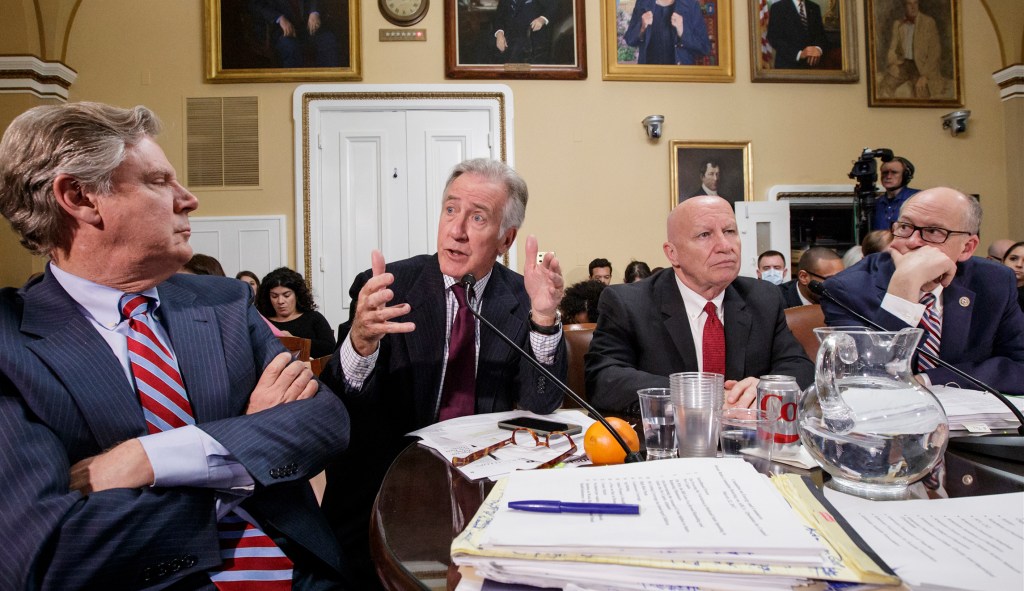
The House Energy and Commerce Committee passed by a 28 to 23 party-line vote Wednesday a bill to extend CHIP and fund community health centers for two years, moving it to the full House floor. The traditionally bipartisan affair broke down into partisan skirmishes Wednesday after Democrats objected to the methods Republicans adopted to fund the program.

The bill would raise Medicare premiums on seniors who make more than $500,000 a year. It also would shorten the grace period on when to shut out people who don’t pay their Obamacare premiums and take money from an Obamacare prevention and wellness fund.

Democrats vociferously objected to those funding decisions and opened old wounds over the bitter fight on Obamacare repeal. The GOP-controlled House passed a repeal bill in May but repeal efforts died in the Senate.

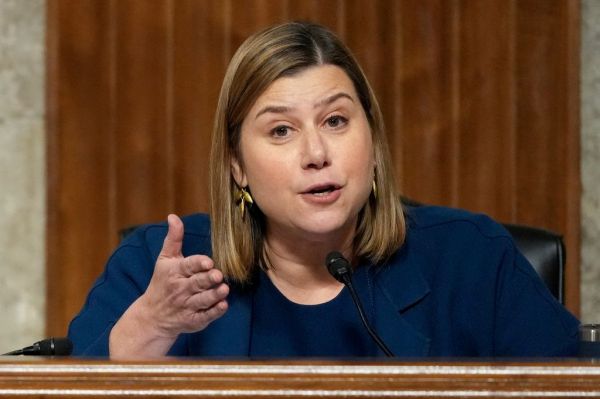
“The Republican Party is not trusted on healthcare,” said Rep. Anna Eshoo, D-Calif. “You are not trusted on healthcare because of what you have done.”

Rep. Kathy Castor, D-Fla., said the bill was slapped together “because for the first nine months of the year the Republican Party was consumed with taking coverage away from millions.”

Republicans countered that the reason the House panel didn’t approve the legislation before the Sept. 30 deadline is because of Democrats dragging their feet on their requests.

Some Democrats said it was hypocritical for Republicans to call on funding sources for CHIP when they are pushing a tax reform package that does not include offsets for corporate and individual tax cuts. They also point to a bill to repeal Obamacare’s Independent Payment Advisory Board that could add $17 billion to the deficit.

“When we talk about [a] $17 billion loss that has no pay-for, almost the same as what we are paying for the CHIP and the community health centers, why does that not have to be paid for and the other two have to be paid for?” asked Rep. Frank Pallone, of New Jersey, the committee’s top Democrat.

Pallone said seniors in Medicare who make more than $500,000 already pay much more than others for their premiums.

“My concern is you get to 100 percent a lot of those people will drop out of the program and self-insure and then that will harm other people,” he said.

Castor said it wasn’t logical for Republicans to take funding from the prevention and public health fund in Obamacare, which Republicans have derided as a slush fund.

The fund was created to pay for Obamacare health initiatives that include screenings, immunizations, and public health research.

Rep. Jerry McNerney, D-Calif., said taking money from the prevention fund was a nonstarter for him.

“I’ve got an outbreak of tuberculosis in my district and we need that prevention fund to help make sure this doesn’t become a crisis,” he said.

Another heated exchange occurred over Medicaid relief for Puerto Rico. The bill includes an additional $1 billion over two years in Medicaid funding for the island territory, which was recently devastated by Hurricane Maria.

Rep. Ben Ray Lujan, D-N.M., asked if the federal government would continue to match 55 percent of the Medicaid spending for Puerto Rico and the Virgin Islands, which was also devastated by hurricanes. He wanted a 100 percent matching rate.

“The question that I have is why would we treat Puerto Rico different with Hurricane Maria in this case with the money than we treated [Hurricane] Katrina?” said Lujan, referring to the hurricane that hit Louisiana in August 2005. The state got a 100 percent matching rate soon after the devastating storm that caused massive flooding.

Lujan introduced an amendment, which was voted down 22-28, that would have given Puerto Rico and Virgin Islands $6.5 billion over the next two years and a 100 percent federal matching rate.

Rep. Michael Burgess, R-Texas, chairman of the health subcommittee, said Puerto Rico’s representative made the request for $1 billion before the hurricane hit the U.S. territory late last month.

“This was to fix a problem that was identified and we agreed to be fixed,” Burgess said. “This is not as a result of any damage assessment or disaster assistance. We all know that is going to happen. It may happen as soon as next week.”

White House Budget Director Mick Mulvaney announced Wednesday during the hearing a $29 billion supplemental request for aid to hurricane-ravaged areas and wildfire-stricken areas in the West.

Lujan objected that it did not include any relief for Medicaid for Puerto Rico.

It is not clear if any of the funding offsets will be in the final package.

The Senate Finance Committee passed its own version of CHIP reauthorization Wednesday that does not include funding offsets.

The CHIP program expired on Sept. 30, but states won’t start running out of funding until late November or early 2018.

Related Content