
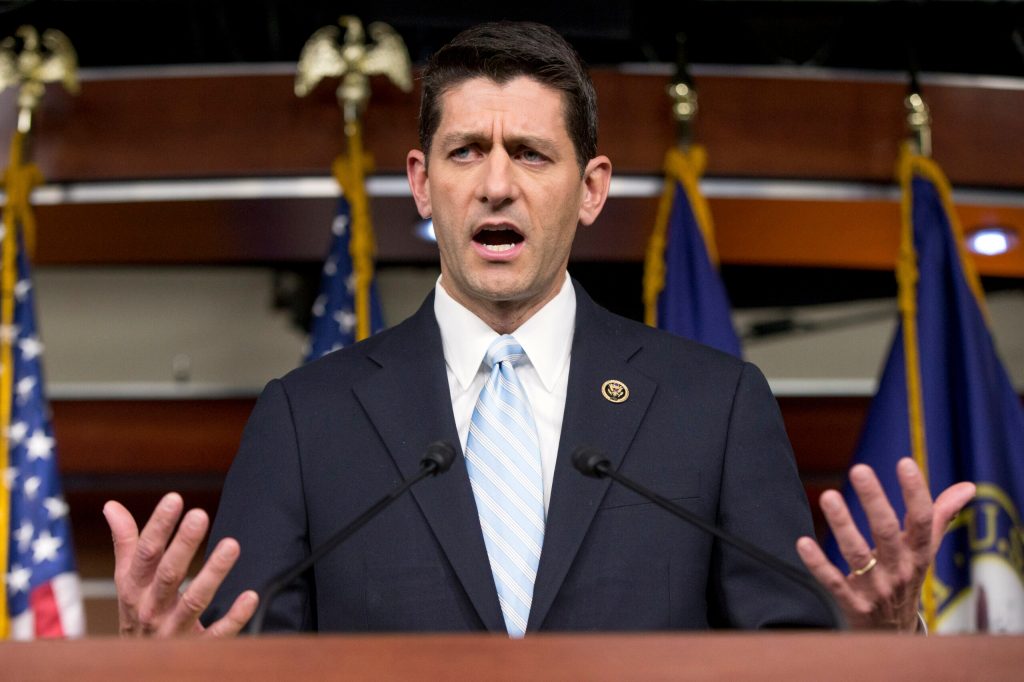
When Majority Leader Kevin McCarthy, R-Calif., withdrew from the race for speaker of the House, some people wondered whether it signaled the approaching death of the Republican Party. It was indeed a potent moment, for the majority leader, backed by a massive majority of his congressional party colleagues, was derailed by an intransigent and habitually disruptive minority.
Yet the exit of McCarthy may end up being the party’s lifeline. For Republicans now have the opportunity instead to elect Rep. Paul Ryan, R-Wis., who is both less inclined to seek power and, we think, more likely to use it effectively. GOP members should back him strongly and should feel delighted at having the opportunity to do so. The House GOP now has a year in which to rack up some wins, some conservative achievements, and show it deserves to be given the chance to govern. Ryan is the man to lead them to those wins.
On Wednesday evening, a “supermajority” of the Freedom Caucus voted to support him, according to a statement from the conservative group. This is a promising sign, even if the tally fell short of the 80 percent required for a formal endorsement. “Paul is a policy entrepreneur who has developed conservative reforms dealing with a wide variety of subjects,” the statement read, “and he has promised to be an ideas-focused Speaker who will advance limited government principles and devolve power to the membership.”
Related Story: http://www.washingtonexaminer.com/article/2574118/
Ryan is a principled conservative, a conscientious policy thinker and a good man. It is absurd that some conservatives have talked themselves into believing that he is not conservative enough. This reveals a problem with their litmus test rather than with the man being tested. It is a symptom of malaise within a party which seem unclear about exactly what it is, and what it is for.
Ronald Reagan’s fusionist conservative movement still exists and still holds sway within the Republican Party, but it has been threatened of late. A small minority seems willing to convert this great movement into its political opposite — an inward-looking and backward-looking laager of nativists and anti-trade protectionists.
Overlapping with this group in Congress is another small cluster of demagogues who see advantage in internecine warfare over differences in legislative tactics. These have used their public platforms to convince Republican voters that the Congress they elected has been acting as President Obama’s handmaiden. This is an absurd charge, even granting that the GOP conference under Speaker John Boehner, R-Ohio, could have done more to advance the conservative cause.
But neither of these two groups represents, or should represent, the future of the GOP. If they continue to fray the party apart they will consign it to indefinite executive powerlessness, and guarantee Democratic dominance of Washington. This would defeat the ostensible purpose of the Republican Party — to govern for the common good according to conservative principles.
In Ryan, Republicans have the opportunity for a fresh start. His sincere reluctance to take the speaker’s gavel has a Platonic gravitas and humility to it. But he is the right man at the right moment. He is not pandering or making unrealistic promises, as power-hungry politicians often do. Rather, from principle and clear-sighted pragmatism, he is demanding the full commitment of those who would have him lead. This means Republicans would have to recommit to the legislative caucus system, under which party members retain their differences on issues, but elect and follow leaders specifically to make the decisions about legislative tactics. Ryan will serve, but he will not be served up as the next sacrificial lamb.
Ryan deserves House Republicans’ vote of confidence, not just because no one else can lead them at this moment, but also because conservatives have everything to gain from a Ryan speakership.
He is principled, tactically smart, well-liked, and capable of persuading his peers. After the Bush years, no one thought House Republicans could persuasively press the case for entitlement reform. But Ryan, who began work on this matter in 2008 with very little support from his fellow Republicans, had persuaded all of them by 2011 to vote for a revolutionary budget that reforms Medicare and balances the federal budget.
Some version of the Ryan Budget has passed year after year ever since, and it is now the closest thing Republicans have to a consensus fiscal agenda in Washington. This is a clear example of moving the conversation rightward.
Ryan understands that in addition to making demands, he must make certain commitments in order to unify the House GOP. Most importantly, he has promised not to address the divisive issue of comprehensive immigration reform under President Obama. This should resolve his detractors’ biggest objection. As the House Freedom Caucus statement hints, the rest of the issues “can be resolved within our Conference in due time.”
Once all of the other details have been hammered out, we hope Republicans take this moment to find objectives upon which they can agree, and to commit to working toward those objectives as a team behind Ryan’s leadership.
