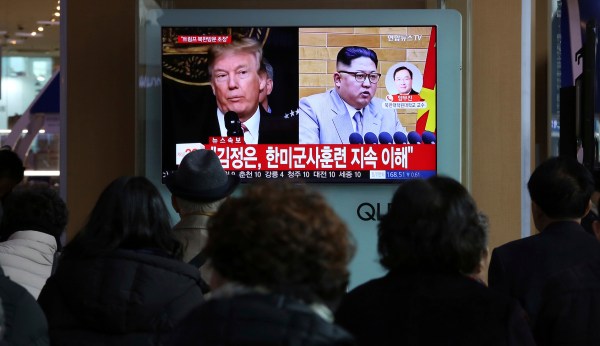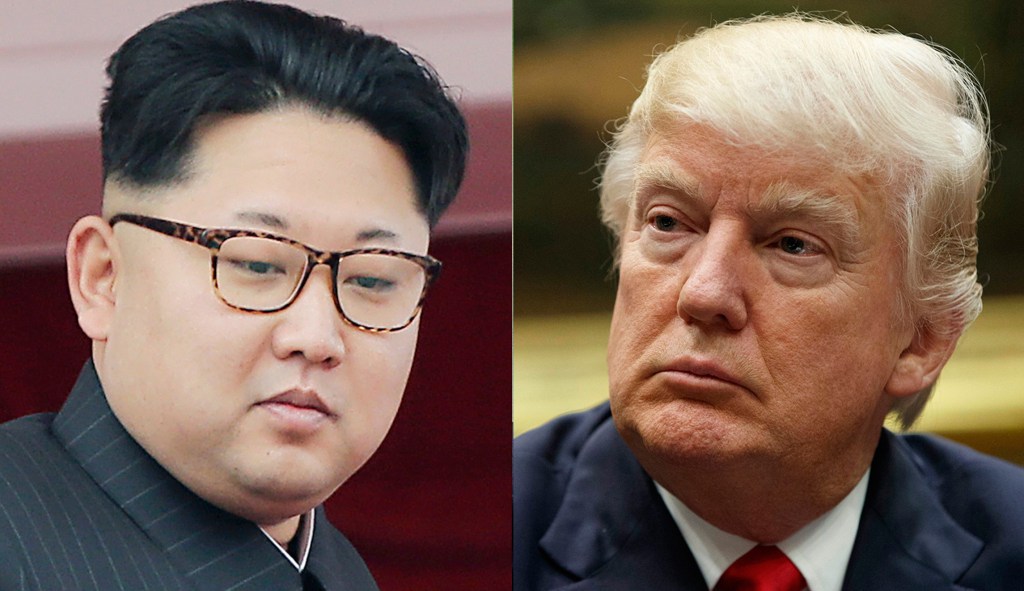
President Trump is leaving the door open to a sit-down meeting with North Korean leader Kim Jong Un, despite abruptly canceling their previously planned summit this week over the authoritarian regime’s latest threat of nuclear war.
But resurrecting a meeting between the two leaders will take a major show of good faith by the Kim regime, according to White House officials and people close to the administration, who worry that North Korea’s provocations are being ignored amid the excessive focus on whether a summit will occur.
“I think we’re all sort of obsessed with this idea of a summit when the bottom line is this all boils down to one thing: Is Kim Jong Un committed to giving up his nuclear weapons and will he agree to a plan to do just that before meeting with Trump?” said Harry Kazianis, director of defense studies at the Center for the National Interest.
Trump’s decision to withdraw from his June 12 meeting with Kim in Singapore came 24 hours after North Korea escalated its criticism of the Trump administration, lobbing insults at Vice President Mike Pence and warning of a “nuclear showdown” with the U.S. in place of diplomatic talks and a nuclear summit.
“The threat in the statement was the final straw because the summit can’t work under those circumstances,” a senior White House official told the Washington Examiner.
Administration officials began to grow wary of Kim’s commitment to denuclearization long before the isolated nation’s vice minister of foreign minister made the threat in a statement Wednesday night. White House officials revealed to reporters on Thursday that President Trump had sent Joe Hagin, his deputy chief of staff for operations, to Singapore last week along with other senior White House officials to appropriately prepare for the president’s upcoming meeting with Kim. Upon arriving, they learned the North Korean officials who were supposed to join them for planning would no longer be showing up.
“I have a feeling the North Koreans probably got cold feet because they’ve had the same tactics for decades; they are notorious for standing up diplomats,” Kazianis said.
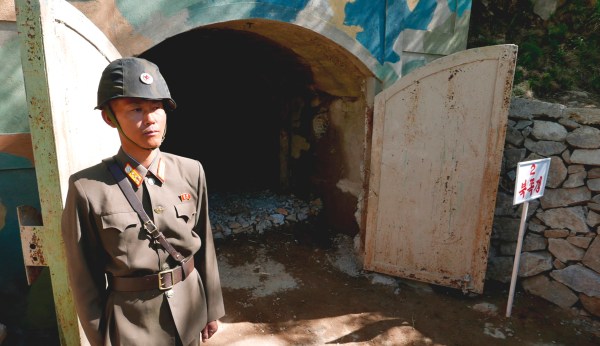
North Korean officials also failed to deliver on their promise to invite security experts to witness Thursday’s demolition of Kim’s main nuclear test site, according to White House officials. Instead, foreign journalists were summoned to view a series of explosions that destroyed tunnels and facilities in a mountainous area outside Pyongyang.
One of those journalists became the first person to inform several high-ranking North Korean officials that Trump had pulled out of his upcoming meeting with Kim.
“I can tell you there was a real sense of shock,” CNN’s Will Ripley later recounted. “They immediately got up and left.”
Hours later, North Korea said it would give Trump the “time and opportunity” to resume planning for the June 12 summit, according to a statement run by the Korean Central News Agency.
Trump has repeatedly stated he remains willing to meet with Kim as planned, though the administration and its allies are unlikely to proceed without seeing the regime take “concrete and verifiable” actions toward dismantling its nuclear weapons program. Or before senior officials like Secretary of State Mike Pompeo have had a chance to communicate with Kim about those actions.
“They need something on paper that says Kim is going to do x, y, and z, where all the deliverables are figured out in advance,” Kazianis explained, saying he “wouldn’t be shocked if Pompeo went over there over the [Memorial Day] holiday weekend to get to the bottom of this.”
Making the summit less aspirational is a primary goal within the administration, where officials realize the hazard of sending Trump to snap photographs with Kim and discuss the contours of a nuclear agreement without any terms agreed upon in advance.
“There’s no way Trump can go and give Kim photos that he can put on every billboard in Pyongyang to legitimize his regime for decades without some evidence that North Korea is willing to make, and capable of keeping promises,” Kazianis said, adding that the hostage release was a positive step but “not nearly enough.”
“We have to get certain concessions,” he continued, claiming the administration would be in an ideal position if it knew “exactly what [the U.S.] was going to get North Korea to agree to” before Trump even steps foot in Singapore.
But determining which route to take with North Korea, whether complete denuclearization is the only condition for sanction relief and economic aid or Kim can gradually dismantle his weapons program, has yet to be decided upon within the administration.
On the one hand, Trump’s national security adviser John Bolton has repeatedly invoked the “Libya model” of disarmament as something the U.S. should look to in its talks with North Korea. Libya fully abandoned its nuclear weapons program in 2003 in exchange for various economic incentives and an opportunity to rejoin the international community. The Libyan regime under which the deal was struck was later toppled by NATO and rebel forces in 2011.
A contrasting approach that has been pushed by Pompeo, and which Trump appeared to embrace earlier this week, would allow North Korea to give up its nuclear program gradually in exchange for a slow rollback of international sanctions.
“North Korea would give up a few nuclear weapons. We would verify it had been done and lift some sanctions. And we would go back and forth on that until Kim has given up all of his weapons. If they cheated, the beauty of it is that we would just reimpose our sanctions,” Kazianis said, dismissing comparisons to the Iran nuclear deal because in that scenario “the Obama administration gave [Iran] a lot of goodies up front.”
Trump told Fox News’ “Fox & Friends” on Thursday morning a “phase-in may be a little bit necessary” in order to get North Korea to commit to denuclearization.
“We are going to see. I would like to have it done immediately,” he said, adding that a “rapid phase-in” would be preferred.