

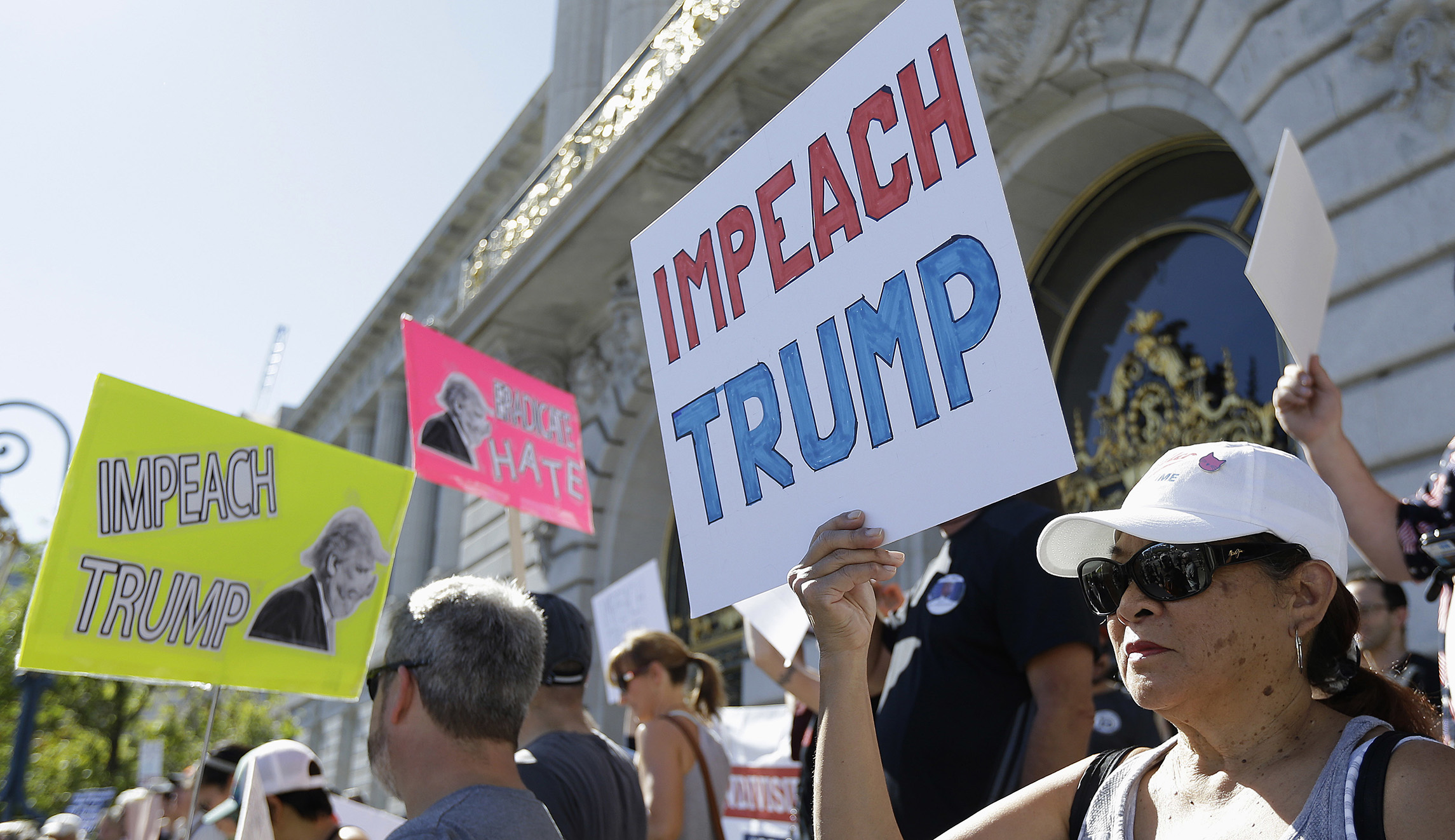
If House Democrats want to undermine the seriousness of our constitutional system while also sabotaging their own political prospects, they can do nothing more effective than to vote to open impeachment proceedings against President Trump today.
Democratic Rep. Al Green of Texas has introduced articles of impeachment based not on any specific crime and not on any major (but non-criminal) abuse of presidential power. Instead, his resolution says Trump should be impeached for generally being “unfit” to carry out his constitutional duties because of his “racist comments that have legitimatized and increased fear and hatred of new Americans and people of color.” Thus, the resolution says, Trump has “brought the high office of the President of the United States in contempt, ridiculed, disgraced and disrepute (sic).”
Recommended Stories


The lack of grammar only adds to the general inanity. Even to those of us who dream of and pray for the day Trump will leave office and be replaced by President Mike Pence, this is just plain stupid.
Green is making a silly political plaything out of one of the most serious acts Congress can take under our Constitution: an act that would undo an election and remove an official chosen by voters in all 50 states. To negate the results of a national election is such a momentous step that it has been seriously attempted only three times in the nation’s history and never successfully.
To be sure, our founders did not design impeachment and removal as a process reserved only for criminal acts. As former top federal prosecutor Andrew McCarthy lucidly explained in his 2013 book Faithless Execution, gross abuses of power that amount to “a systematic undermining of our governing framework” also are intended to be impeachable by the House, and then the basis for removal by the Senate.
Still, a series of what the same McCarthy rightly described as “abjectly stupid” tweets hardly qualifies as either a high crime or a systematic abuse of governmental power. American voters need not be constitutional scholars to understand, viscerally, that removing a duly elected president because of nasty tweets would be an affront to small-‘r’ republican government.
In discussing the predicate for impeachable offenses, McCarthy explained an important danger inherent in frivolous attempts at impeachment: “Moving ahead with articles of impeachment without strong public support for the president’s removal would not just guarantee the defeat of impeachment in the Senate. It would be spun as a public endorsement of presidential lawlessness. Ironically, it would guarantee more abuses of power.”
In this case, the rampant overuse of the word “racist,” yelled hundreds and hundreds of times in the past few days by cable news shows, has had the effect of catalyzing a predictable (but wrongheaded) backlash in Trump’s favor. According to at least one poll, after the last few days of media caterwauling, “the percentage of those who think he’s a racist have shrunk.”
If Democrats go forward with official impeachment proceedings based on such shaky grounds constitutionally and politically, they will be committing self-abusive political malpractice. Rather than chasten Trump, they will embolden him. Rather than make a majority of American voters think Democrats are trustworthy stewards of the public weal, it will make voters even more convinced they are political hacks.
Trump’s tweets were offensive. They were quite arguably nativist, perhaps bigoted. He should pay for them — and he might, if only the media would stop overplaying its hand — but in the court of public opinion, not in a congressional impeachment trial.
