
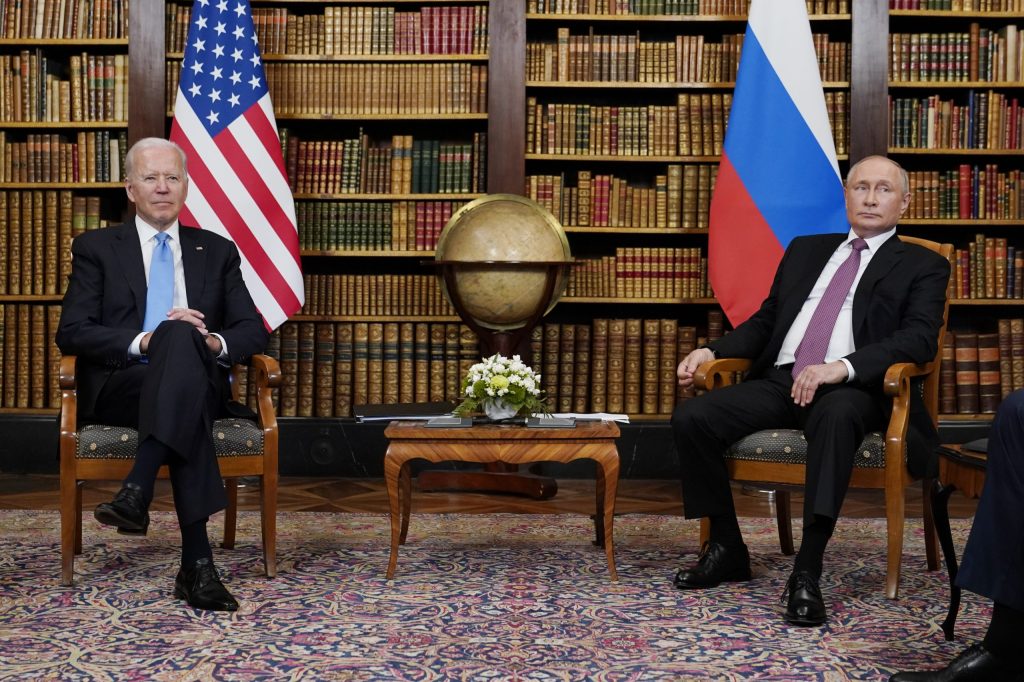
Biden warns Putin: ‘Don’t’ use nuclear weapons in Ukraine


President Joe Biden cautioned Russian President Vladimir Putin against using tactical nuclear or chemical weapons in response to military losses in his war to retake Ukraine in an interview set to air Sunday.

The commander in chief issued the warning while speaking to CBS’s 60 Minutes after correspondent Scott Pelley asked about Ukraine’s recent successes on the battlefield against Russia and what kind of a reaction such setbacks could prompt Putin to have. Biden declined to say with specificity how the United States would respond if Russia took such unprecedented action, but his comments come as the Kremlin faces pressure from nationalists at home to double down after Ukraine drove Russian forces into retreat and began a counteroffensive in the northeast.

RUSSIA ABANDONED ‘HIGH-VALUE EQUIPMENT’ DURING RETREAT FROM KHARKIV AREA

“Don’t. Don’t. Don’t,” Biden responded when asked what he would say to Putin if he were considering using chemical or tactical nuclear weapons. “You will change the face of war unlike anything since World War II.”

Asked what specific consequences Russia would face for deploying such means, the president demurred, asking Pelley: “You think I would tell you if I knew exactly what it would be? Of course, I’m not gonna tell you,” before adding, “It’ll be consequential. They’ll become more of a pariah in the world than they ever have been. And depending on the extent of what they do will determine what response would occur.”

As Ukraine has made military gains in recent days, Putin has warned that Moscow would respond more aggressively if its troops faced continued resistance. Despite those threats, the U.S. said on Thursday that it would send another $600 million in military aid to Ukraine.

Kremlin officials have repeatedly rejected claims from the West that Russia would use nuclear or chemical weapons in Ukraine, though that has not quelled many concerns.

While Putin’s next moves in Ukraine are currently unknown, he recently announced his decision to withhold much-needed energy exports from Europe this winter. That effort aims to force those countries into pushing a peace deal on Ukraine in exchange for energy access and price relief. Most Western leaders have said that Putin’s antics would not pressure them to force a truce on Ukraine if it does not want such a deal, to which many Putin experts have replied that the Russian leader is playing a long game, expecting European and American citizens to tire of high energy prices over the war and pressure their representatives to bring it to an end.

Ukraine has stood firm in its resolve to defend its sovereignty since the war began in February and has surpassed expectations in holding back one of the world’s largest military powers. It is unclear, though, if the country will be able to keep Russian forces from taking any major cities.

CLICK HERE TO READ MORE FROM THE WASHINGTON EXAMINER

Putin withdrew his forces from the Ukrainian capital of Kyiv toward the end of May in order to concentrate on taking the Donbas, which is located in the southeastern part of Ukraine and controlled by Russian-backed separatist groups. However, this did not stop the Russian leader from resuming missile strikes on civilian areas of Kyiv over the summer.

Over the course of September, Ukraine launched two counteroffensives, one in the south and one in the northeast. The latter was so successful that it resulted in the recapturing of more land than Russia had taken over from April through the end of August. Its success in the Kharkiv region also significantly altered the landscape of the war, though Russia still occupies significant portions of the south.

Related Content