
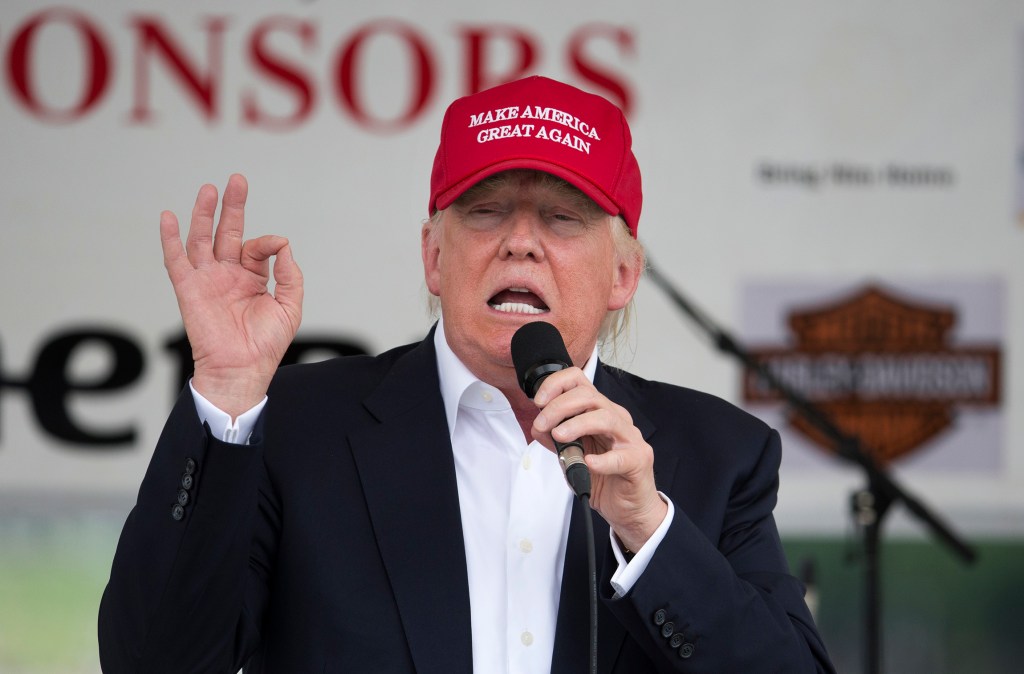
Trump controversies becoming big headache for GOP

Donald Trump is proving to be a major dilemma for the Republican Party.

The GOP standard-bearer is forcing fellow Republicans to answer uncomfortable questions about his racially tinged attack on U.S. District Judge Gonzalo Curiel. Trump is accusing the U.S.-born jurist of being a “Mexican” who is treating him unfairly in a court case involving Trump University because of his hawkish immigration policies.

Trump’s attacks on Curiel turned the spotlight on the Republicans’ political problem with minority voters, whose overwhelming allegiance to the Democratic Party threaten GOP viability in presidential elections. Trump’s own party chairman criticized his comments on Curiel and said he hopes the New York businessman “evolves.”

The controversy also put Republicans on the defensive just as they were hoping to capitalize on Trump’s rise in public opinion polls, while shielding Hillary Clinton from having to discuss the awful May jobs report and damaging revelations about her use of private email during her tenure as secretary of state.

Trump is a unique political talent who might defeat Clinton in spite of his provocations. But for Republican leaders and candidates who must balance support for their presumptive nominee with opposition to his insensitive remarks, the challenge he poses could be politically insurmountable.

“I don’t think it reflects well on the Republican Party,” Sen. Marco Rubio, R-Fla., said Monday during a local television interview, when asked to respond to Trump’s attacks on Curiel. “I don’t defend what he says.”

Rubio, who ran against Trump in the GOP presidential primary, had resisted backing him on substantive and moral grounds. But 10 days ago, Rubio acquiesced and said he would be “honored” to speak on the nominee’s behalf at the convention. On Monday, he backtracked, saying that if he speaks in Cleveland, it would only be to promote the party and principles that he believes in.

Trump is no stranger to controversy. The real estate mogul rose to the top of a competitive Republican primary field by using provocative rhetoric to control the media cycle and drown out the other, more established candidates, such as Rubio.

But with the general election now effectively underway and Clinton expected on Tuesday to become the Democratic Party’s presumptive presidential nominee, the stakes are higher and the political risks graver — both to Trump and the Republican Party.

For starters, Trump’s attacks on Curiel that some Republicans and high-profile conservatives are bluntly calling “racist” have overwhelmed a spate of potentially bad news for Clinton and spoiled a chance to undercut her momentum just as she appears to be hitting her stride.

A State Department inspector general’s report highlighting Clinton’s problematic use of a private email server is still fresh, and just Friday the Labor Department revealed that May was the worst month for job creation in five years (just 38,000 new jobs plus downward revisions in March and April.)

“If Donald Trump was not our nominee, Hillary Clinton would be the most unpopular nominee in American history,” a Republican strategist said.

Trump continues to insist that Curiel can’t rule fairly in a lawsuit alleging fraud against Trump University, one of his companies that has since ceased operations, because he has a conflict of interest.

That conflict, Trump maintains, is Curiel’s Mexican heritage. Trump is vowing to build a wall along the southern border and forcibly roundup and deport the 11-12 million mostly Hispanic illegal immigrants, and he says those proposals make Curiel, who was born in Indiana, predisposed to rule against him in court.

Trump went so far as to say in an interview on Sunday that a judge who practices Islam also would be conflicted out of presiding over a court case he was involved in because he has proposed a temporary halt to all Muslim immigration to the U.S.

“You know, we have to stop being so politically correct in this country,” Trump said Sunday on CBS’ “Face the Nation.”

Republicans see nothing but trouble in this approach, for themselves if not for Trump. That was evident in how they responded to his hits on Curiel. Indeed, none defended him, not even most in his usual crowd of prominent supporters.

Senate Majority Whip John Cornyn, R-Texas, didn’t even want to talk about the matter when reporters caught up with him Monday afternoon, although he conceded that he disapproved of Trump’s comments.

Senate Majority Leader Mitch McConnell, R-Ky., indicated concern that Trump could cost the Republicans a chance to grow their already dismal support among Hispanics, who happen to be the fastest growing ethnic group in the U.S., which is less white by percentage every four years. In 2012, GOP nominee Mitt Romney earned a paltry 27 percent of the Hispanic vote.

Republican insiders say that their party’s elected officials, none of whom have Trump’s fame or detachment from the GOP brand, have reason to worry. Endorsing Trump, which most have done, makes them responsible for everything he says.

That might not be fair, let alone the fact that it’s not true. But politically, voters tend to associate down ballot candidates with the top of the ticket. And no down-ticket candidate will ever get as much air time and attention as a presidential nominee, especially one such as Trump.

Republicans in swing House districts and competitive Senate races are going to have a difficult time finessing their endorsements, which is why their best option when Trump utters something provocative might be to just stay silent.

Amy Walter, a nonpartisan analyst with the Cook Political Report said Trump has Republicans in a pickle. Trump’s statements, she said are making it almost impossible for his party to focus on the issues that would benefit them, such jobs and Clinton’s flaws as a candidate.

Trump’s fellow Republicans also are likely to have a tougher time eradicating the stain of his controversies than he will. “It impacts the people on the ballot with him even more so than him,” she said.

“He’s going to be Trump,” Walter continued. “But these other candidates who believe they can some how find this balance between supporting and distancing from him is going to be super challenging.”

Related Content