

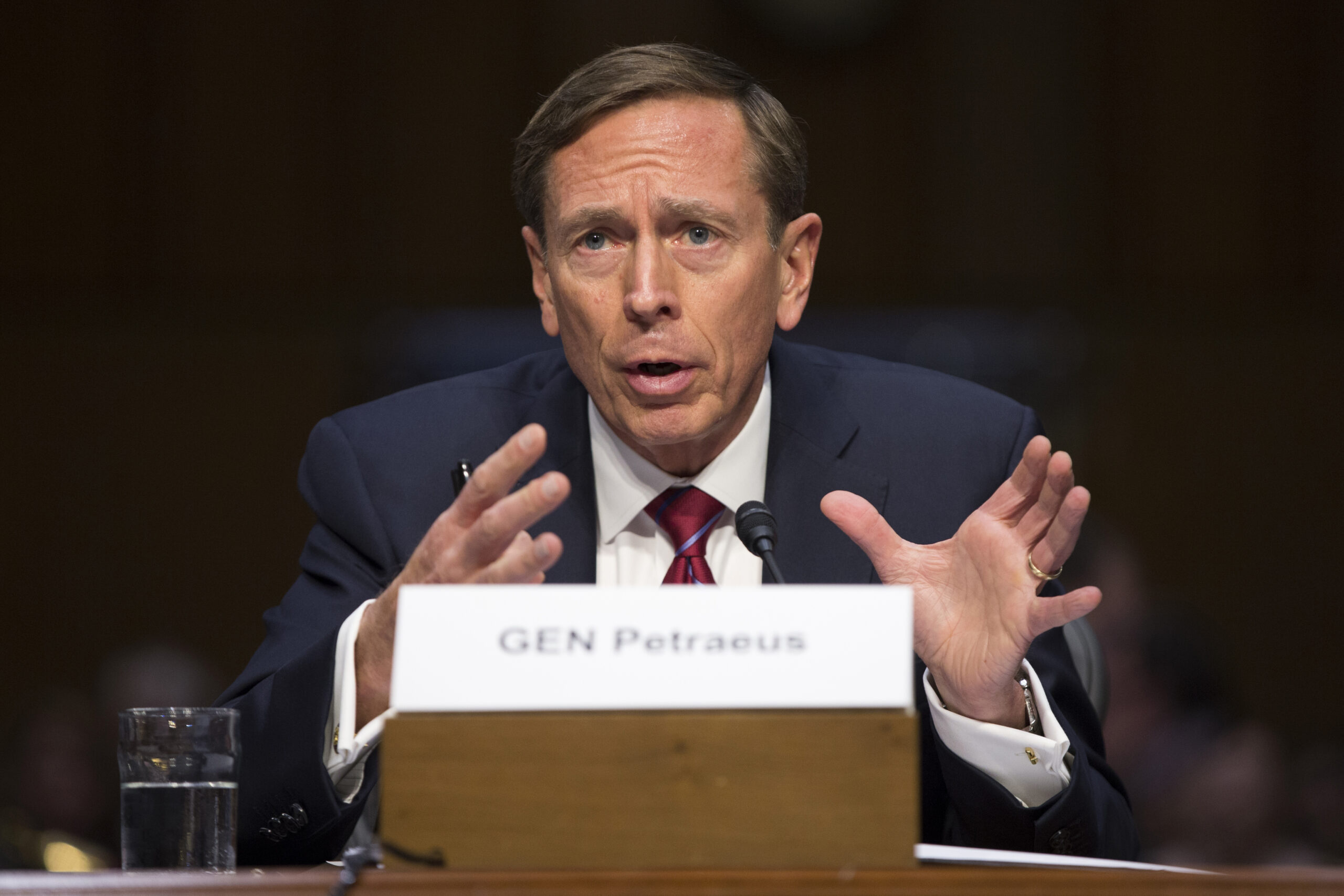
Members of the House Select Committee on Benghazi announced on Thursday plans to question five new witnesses in their investigation of the 2012 attack, including former CIA Director David Petraeus and a handful of former aides to Hillary Clinton.
“Since its public hearing with the former Secretary of State on October 22, [the committee] has privately interviewed four witnesses – one from the State Department, one from the Department of Defense, and two from the national security community – for a total of 59 witnesses, including 50 who had never been interviewed by a congressional committee,” committee spokesman Jamal Ware said Thursday.
Ware noted the panel has reviewed roughly 100,000 documents, many of which were never before seen by the committees that looked into Benghazi in the past.
Lawmakers still plan to interview former Defense Secretary Leon Panetta and Patrick Kennedy, the State Department’s top records official, but have not yet set dates for those sessions.
All five of the new witnesses will be interviewed behind closed doors, as have almost all of the witnesses the panel has questioned, although Clinton’s high-profile hearing was a notable exception.
Petraeus will submit to questioning on Jan. 6, the committee said, but others will be interviewed earlier than that.
Jeffrey Feltman, former assistant secretary of state for Near Eastern Affairs, will appear before the committee Tuesday in what will be his first interview as a witness in the investigation of Benghazi. Feltman appears frequently in Clinton’s private emails, which were uncovered by the select committee earlier this year.
Charlene Lamb, former deputy assistant secretary of state for International Programs for Diplomatic Security, and Thomas Nides, former deputy secretary of state for Management and Resources, will both appear the following week. Another unidentified State Department official is scheduled to appear on Dec. 17.
Paul Bell, spokesman for Democrats on the committee, said the spate of new interviews was an attempt by panel Republicans to “save face” and drag the investigation “unnecessarily into an election year.”
