

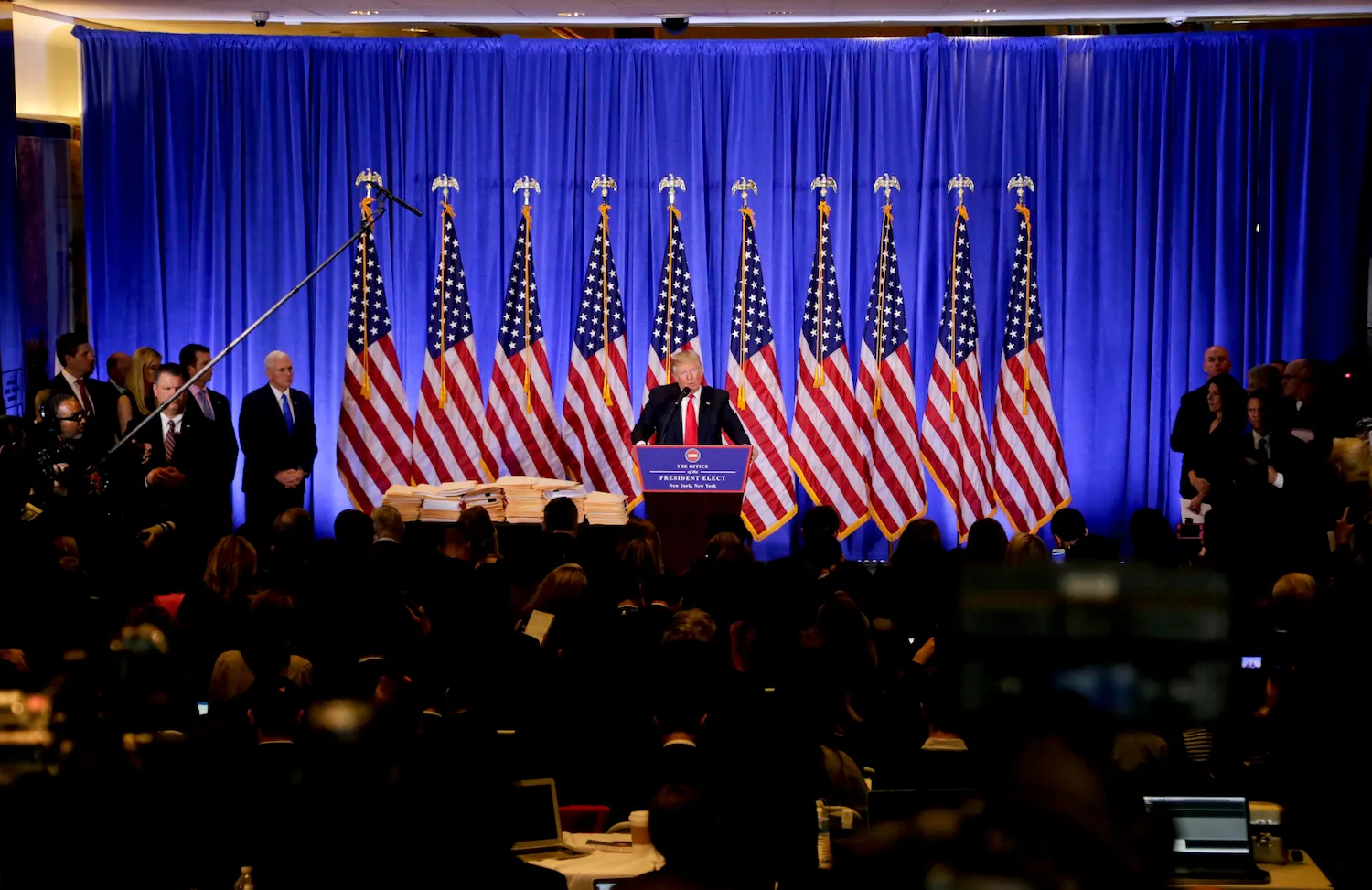
After months of urging President-elect Trump to hold a press conference, members of the national press seemed to instantly regret it after Trump attacked CNN and BuzzFeed when he met with reporters in New York.
The press conference was initially slated for Dec. 15, with the intent of using it to address how he would diminish conflicts of interests with his business before he’s sworn into office. But it was postponed, and political reporters accused Trump of attempting to evade scrutiny.
Stay informed.Stay ahead.
Join Washington Examiner for unlimited access to the news, analysis, and commentary that matter most.
Already a member? Log in
“Still no news conference from President-elect Trump,” read a CNN headline, just a little over a week after Election Day.
A Dec. 20 headline at The Hill asked, “When will Trump hold a press conference?”
Washington Post blogger Philip Bump put together a post titled, “Why you should want Donald Trump to do press conferences, regardless of how you feel about him.”
Wednesday’s conference, however, spurned a different round of complaints from the press.
At the conference, Trump opened by thanking news outlets which hadn’t published an unconfirmed story — otherwise run by both CNN and BuzzFeed, with BuzzFeed going into far greater detail — containing allegations that the Russian government held compromising personal and financial information on Trump.
But from there, it frequently turned combative. At one point, Trump forbid a CNN reporter from asking him a question and told him that his network is “fake news.”
“It was all part of a show in which he used news organizations as props in their own lampooning while he played them off each other with labels of good and bad and selectively answered their policy questions,” wrote New York Times media columnist Jim Rutenberg of the meeting.
McKay Coppins of The Atlantic said Trump “manhandle[d] the media” and “took full advantage of a weakened and divided press corps in his first news conference as president-elect.”
The Associated Press called the near-hour long conference “a 58-minute display of how some of the old rules of journalism will be tested in the Trump era.”
Trump did make news in the conference, which is the point of them. He nominated David Shulkin to lead the Department of Veterans Affairs; he for the first time publicly admitted Russia was likely behind the election email hackings; and he had his lawyer lay out the terms under which he will attempt to diminish any conflicts of interests his business could create while he is president.
But the many in the news industry were crestfallen at how the event turned out.
“If anyone still held out hope that the awesome responsibilities and dignity of the presidency might temper or even humble Donald Trump, there was a shock from his first news conference as president-elect, on Wednesday,” said the New York Times editorial board. “Bombastic, vain and slippery, Mr. Trump played the same small-screen character he has offered the viewing public for years.”
New York magazine’s Gabriel Sherman said Trump “turned what should have been a serious examination of his incoming administration into a debate over journalistic practices and Michael Cohen’s travel itinerary.” Cohen was identified in the unconfirmed report as having traveled to Russia to receive negative information about Democrats; he has since said he’s never been to Russia.
The conference “quickly put to rest the idea that his rapidly approaching presidency would fundamentally change his tone, style or basic approach to issues and the media,” wrote Washington Post politics blogger Chris Cillizza.
It’s true that Trump’s press conference is an indication that he won’t let up on the media he campaigned so effectively against before the election.
Even a day after the conference, he said on Twitter that “CNN is in a total meltdown with their FAKE NEWS because their ratings are tanking since election and their credibility will soon be gone!”
