
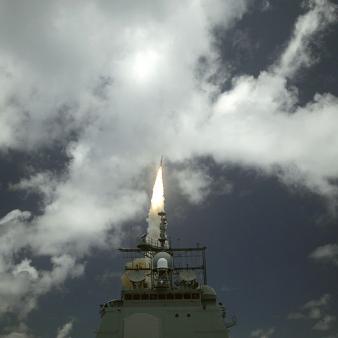
For those of us who have been arguing against cutting the U.S. defense budget and, indeed, arguing instead that it’s too low as is, we’re used to our critics saying that we never have met a defense expenditure we don’t like, that we have no ideas for how defense monies can be better utilized, or that we never seem to find a program that ought to be cut.
None of that is true, of course. For example, many of us have argued that savings can be found in cutting back the rate of growth in military health and personnel benefits. It’s just a fact that personnel costs associated with the all-volunteer force continue to rise exponentially and are eating up an ever-increasing share of the Pentagon’s budget. Although no one should object to giving those who serve in the military and their families their due, especially in a time of war, there is broad agreement that recent increases mandated by Congress may have been generous to a fault. Or, to take another example, few would argue with the decision to end procurement of the new multi-mission destroyer, the DDG-1000 (Zumwalt class), at three ships. As impressive a vessel as the DDG-1000 is in its ability to deliver fire-support for land operations, further buys no longer made sense from the perspective of the Navy’s changing mission requirements—in particular, in the face of the growing air and missile threat from China. Moreover, the high cost of procuring additional Zumwalt-class destroyers would have precluded building new Aegis-enabled destroyers needed to address those threats. Ending the program was a tough decision to make but, ultimately, it was the right one. Again, where savings can be made without undermining the military’s ability to meet key threats, they should be.
Real journalism.Trusted by millions.
Unlimited access to in-depth reporting, expert analysis, and the stories that shape our country.
Already a member? Log in