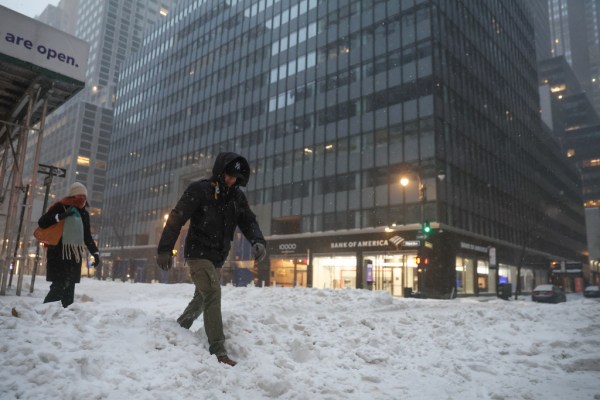
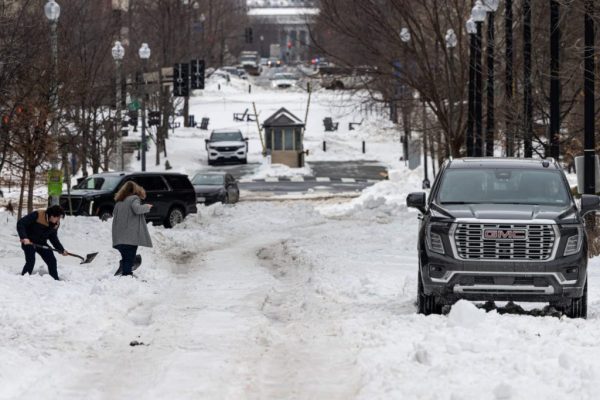
ON THE FIRST semi-drivable day of the mid-February snowstorm here in Washington, I got a reminder of how membrane-thin can be the line that divides private property from public. My neighbor, Otto Snowden, called to complain that our babysitter was parked in his space. By “his space,” Mr. Snowden meant the one on the street right in front of his house. In ordinary weather, one would have told him the street was public property and that he should go find an unfrozen lake to jump in.
But under blizzard conditions, he was in the right. I had seen Mr. Snowden clearing that space from under 27 inches of snow, and then attacking with a pick-axe the frozen-over four-foot-high snow-battlement the plows had left. It had taken him six hours. Essentially, what he had done was build an emergency egress from the house in which he was trapped, in the only way possible and at great expense. (Only a half-dozen houses made the effort; we paid $60 to get a gang of teenagers to clear out one of our cars.) Anyone with the tiniest scrap of fairness would recognize that, for the time being, Mr. Snowden had a legitimate property claim to his parking space, even if it was on the street. In blithely parking there, our babysitter had committed an act of theft as surely as if she’d loaded all his silverware into a laundry bag and stashed it in her trunk.