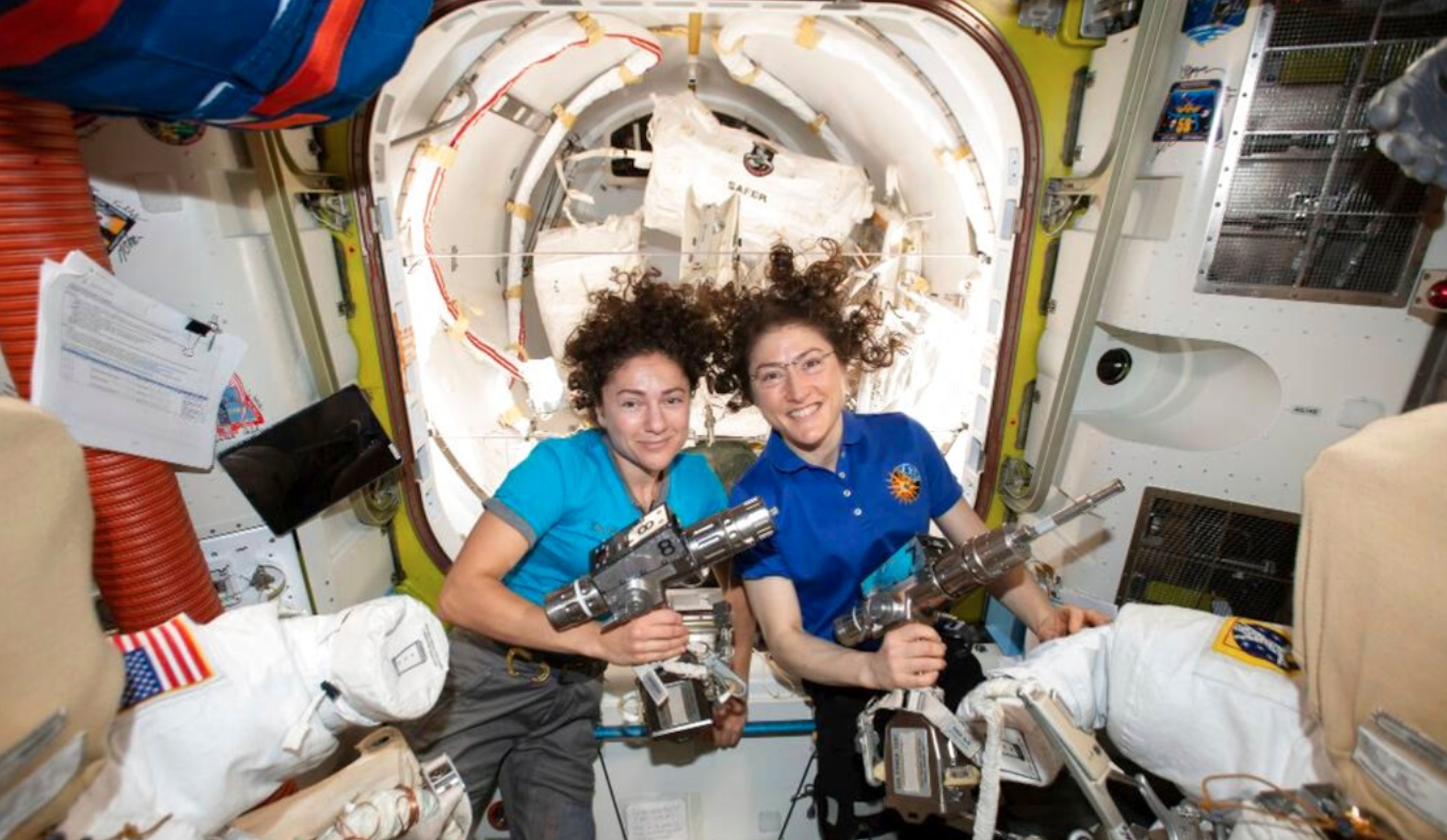
One small step for NASA, one giant leap for women

With the Earth beneath their feet, NASA astronauts Jessica Meir and Christina Koch conducted the first ever all-female spacewalk.

The walk lasted for about seven hours, but it represented decades of progress. Meir and Koch are the 14th and 15th women to spacewalk. This was Koch’s fourth time tethered to the International Space Station’s exterior, but Meir’s first.

Meir and Koch replaced a battery component on the outside of the station — an uneventful task that seems to be the space equivalent of changing a lightbulb. But what’s remarkable about Meir and Koch’s seemingly mundane task is how long it’s taken women to do it.

The space industry isn’t easy to break into for females, for both physical and psychological reasons. Spacewalks, in particular, present a unique challenge for women, according to Ken Bowersox, the acting associate administrator for NASA’s division of human exploration and operations.

“There are some physical reasons that make it harder sometimes for women to do spacewalks,” Bowersox said. “It’s a little bit like playing in the NBA. I’m too short to play in the NBA, and sometimes physical characteristics make a difference in certain activities, and spacewalks are one of those areas where just how your body is built in shape, it makes a difference in how well you can work the suit.”

The United States attempted an all-female spacewalk back in March, but it was canceled at the last minute because the space station didn’t have enough spacesuits in the sizes they needed. These are the kinds of basic hurdles female astronauts have worked to overcome for the past few decades.

This is just the beginning. Koch and Meir have proven that it is indeed possible for women to overcome their physical limitations and accomplish just as much, if not more, than male astronauts. What’s more, they tend to think about things the men don’t, according to Bowersox.

“We’ve brought women into the crews because of their brains,” he said. “They come in, they bring different skills, they think of things differently. And by using their brains, they can overcome a lot of those physical challenges.”

There is much more NASA can and should do to accommodate its female astronauts. Basic necessities like spacesuits should not be a barrier, and equipment problems should not hold women back from doing simple tasks outside the space station. But women should take Meir and Koch’s spacewalk for what it is: a tremendous accomplishment that speaks to the ingenuity and courage of women.

There are more female astronauts today than ever before. As long as the space industry continues to accept and promote them, women will continue to succeed and NASA will thrive as a result.

Related Content
