
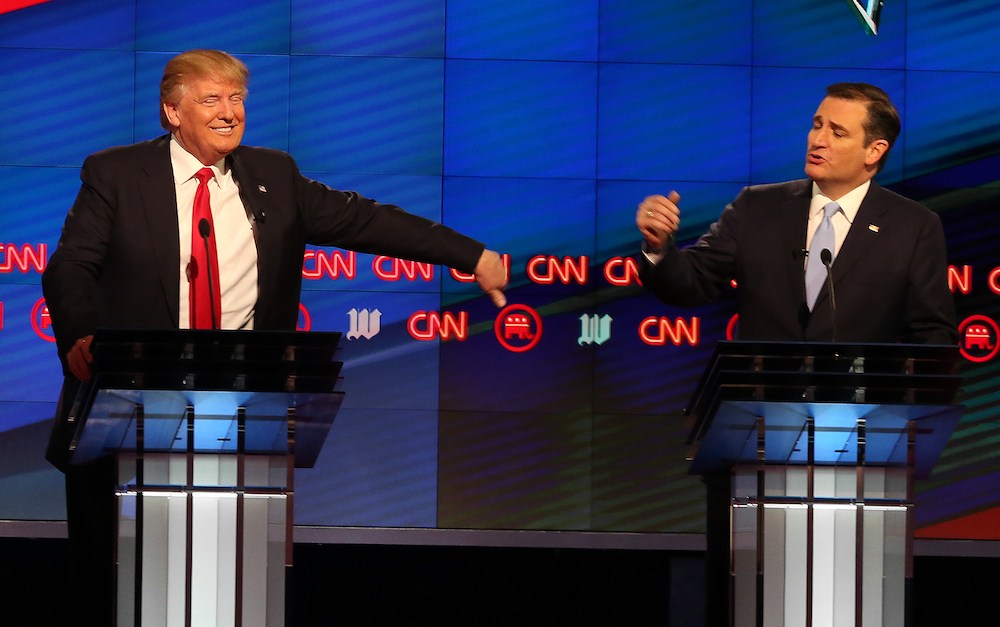
Ted Cruz on Tuesday called Donald Trump a “hopelessly naïve” isolationist whose foreign policy is “too liberal for Nancy Pelosi” and would put U.S. national security at grave risk.
It was among the harshest criticism the Texas senator has directed toward the New York celebrity businessman in their competition for the Republican presidential nomination. Cruz was reacting to the Islamic State’s deadly terrorist attacks in Brussels in the context of his competition for the Republican crown with Trump, just one day after the front-runner declared his support for reducing U.S. involvement in NATO and diminishing Washington’s role as a global super power.
Recommended Stories
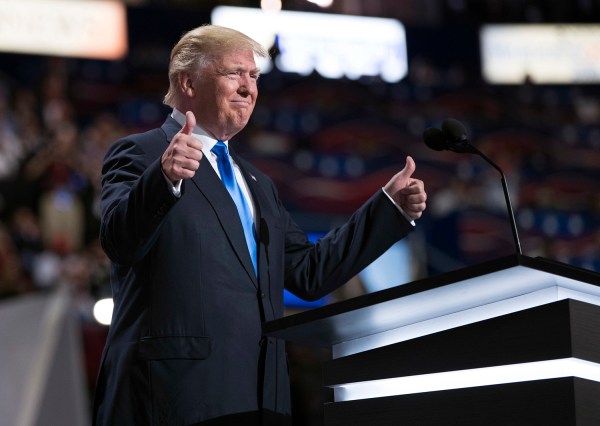

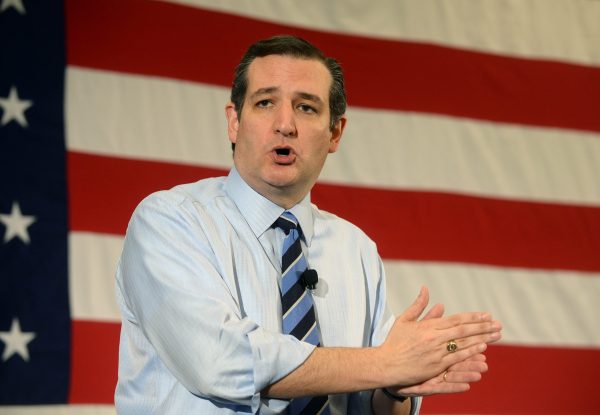
“When Donald Trump’s foreign policy is too liberal for Nancy Pelosi, that says something,” Cruz said, during a breakfast with reporters at Bistro Bis, a popular restaurant near Capitol Hill. The senator was comparing the real estate mogul and reality television star to the liberal House Democratic leader from San Francisco.
“Donald often uses volume and insult as a substitute for strength. Yes, he is an angry voice, often insulting, often cursing and vulgar. But to the extent he ever discusses substance, the substance on foreign policy is consistently a policy of weakness and retreat,” Cruz added. “His repeated call, just like [President] Barack Obama, is to lead from behind — to withdraw from the world.”
It’s unclear that the senator is positioned to drive home with Republican voters his message that Trump doesn’t represent their foreign policy outlook, assuming that is the case.
Trump, who is now skipping presidential debates, has demonstrated a unique ability to control the campaign narrative by saturating the news media, through telephone interviews and television appearances that afforded to him in greater numbers than they are to his competitors. Cruz didn’t appear to have an answer to this conundrum when asked about it Tuesday morning.
“Of course Donald Trump doesn’t want to debate. He’s afraid of having his views challenged. When he calls into the media, he gets powder puff interviews that allow him to read his talking points,” Cruz said. “Running away from debates is not a sign of strength; it is a sign of weakness and fear. And Donald Trump has reason to be afraid. He doesn’t have the minimal knowledge one would expect from a staffer at the State Department.”
Trump months ago surged into the lead in the race for the Republican nomination. He has held the No. 1 spot despite expressing a range of views on domestic and foreign policy that are unorthodox for a Republican and would presumably cost him votes in the primary. Sen. Rand Paul of Kentucky holds libertarian positions on foreign policy that caused him fits with GOP primary voters until he dropped his presidential bid.
But Trump in some cases is more leftwing on national security issues than Obama, often criticized by Republicans as “leading from behind.” In an interview with the Washington Post on Monday, Trump expressed unequivocally views on foreign policy that he has hinted at for months — that the U.S. is overextended abroad and needs to refocus inward.
Trump’s proposals to remove the U.S. from its leadership role in maintaining the peace in Europe and the Middle East, and his preference not to check rising Chinese hegemony in the Asian Pacific theater, are more dovish than anything pushed by Obama. Trump’s approach would topple the bipartisan consensus on U.S. foreign policy that has existed since World War II.
Yet the billionaire populist has won more votes in the primary than any other candidate. He leads Cruz in the hunt for delegates to the Republican nominating convention in Cleveland (680 to 424, out of 1,237 needed) and was expected to add to that total with a win Tuesday in Arizona’s winner-take-all primary.
Cruz was expected to win handily in Utah, which also votes Tuesday. Ohio Gov. John Kasich, the only other Republican candidate left, was expected to experience another round of losses.