
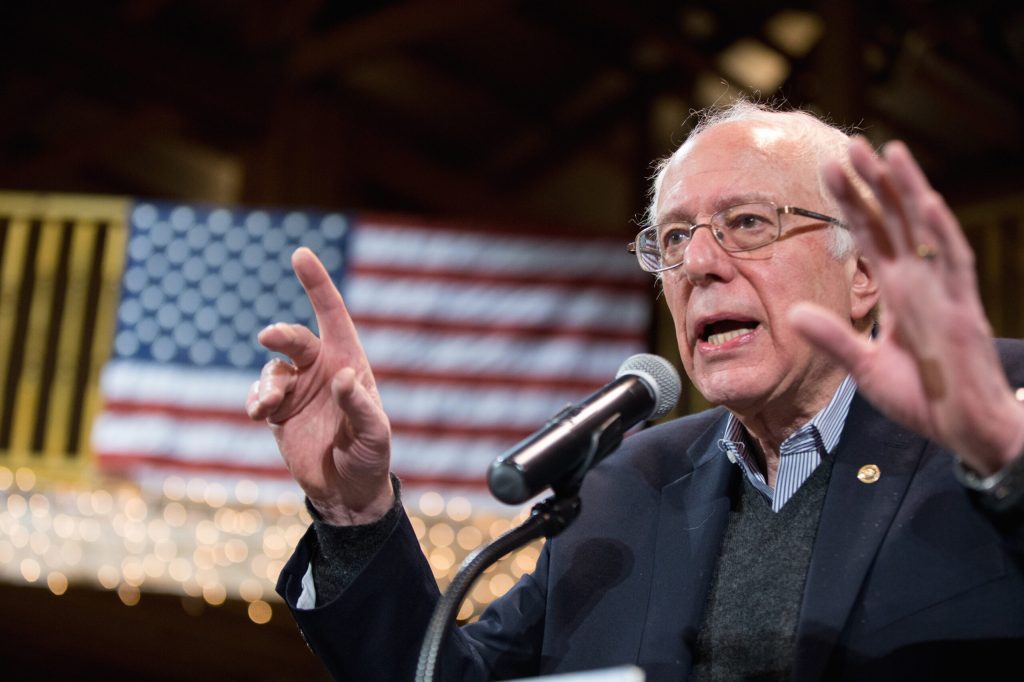
Major media outlets and liberal columnists are heavily criticizing Sen. Bernie Sanders’ plan to expand Medicare to everyone, calling it too vague and unworkable.
The Vermont senator released the plan Sunday hours before the Democratic debate in South Carolina. The plan would end employer-sponsored health insurance and calls for new taxes on payrolls, capital gains and more to fund it.
Recommended Stories


A key criticism is that Sanders’ plan is not clear about how the overhaul of healthcare would work.
“Sanders says he has a plan, but doesn’t answer the most important questions about how his plan would work or what it would mean for most Americans,” Vox columnist Ezra Klein wrote earlier this week.
Klein said the plan is essentially an answer to attacks from his primary opponent, former Secretary of State Hillary Clinton, who has said Sanders wants single payer but hasn’t released a plan. Clinton also said that Sanders wants states to manage healthcare, which could lead to rollbacks in coverage.
Sanders said his plan would be federally run, but there are certain discrepancies over what it would cover.
Sanders promised that under his plan patients wouldn’t have to fight with insurance companies about what to cover, “and he’s probably right; those fights would move to Congress and the bureaucracy,” according to a Washington Post editorial released Tuesday.
The New Yorker wrote on Tuesday that Sanders’ plan would be much more generous than Medicare, as it would give Americans dental, vision, hearing and long-term care that is currently unavailable in the federal program.
“Yet the plan also calls for trillions of dollars less to be spent on health care over the next 10 years,” according to a story from James Surowiecki. “In other words, Sanders is promising more coverage and more treatment, for a dramatically lower cost. How would he pull this off?”
Sanders hints that moving to a single-payer model will lead to a drop in administrative costs and allow the government to get lower prices for drugs and medical devices through better negotiating power.
“The truth is, that if you want to save a trillion dollars a year in health-care spending, you can’t do it solely by cutting administrative costs and drug prices,” Surowiecki wrote. “You have to be willing to spend far less on medical procedures and services, and to be far more rigorous about expenditures for new medical technology.”
That could lead to less money for doctors and hospitals, he added.
Klein and the Post both noted that Sanders’ plan getting enacted would be far from a sure thing with a Republican-controlled Congress.
But the political reality of the Sanders plan may not matter, as Democrats want a single-payer system for healthcare. A recent Morning Consult poll found that more than half of all Democrats, 52 percent, and people who identify as liberals, 52 percent, want a single-payer system instead of the current private insurance system.
The poll was of 9,654 responses to questions on healthcare from October through January, Morning Consult said.
Sanders’ campaign did not return a request for comment.
The RealClearPolitics polling average currently has Sanders up by 12 points in New Hampshire and Clinton only up by about three points in Iowa.