
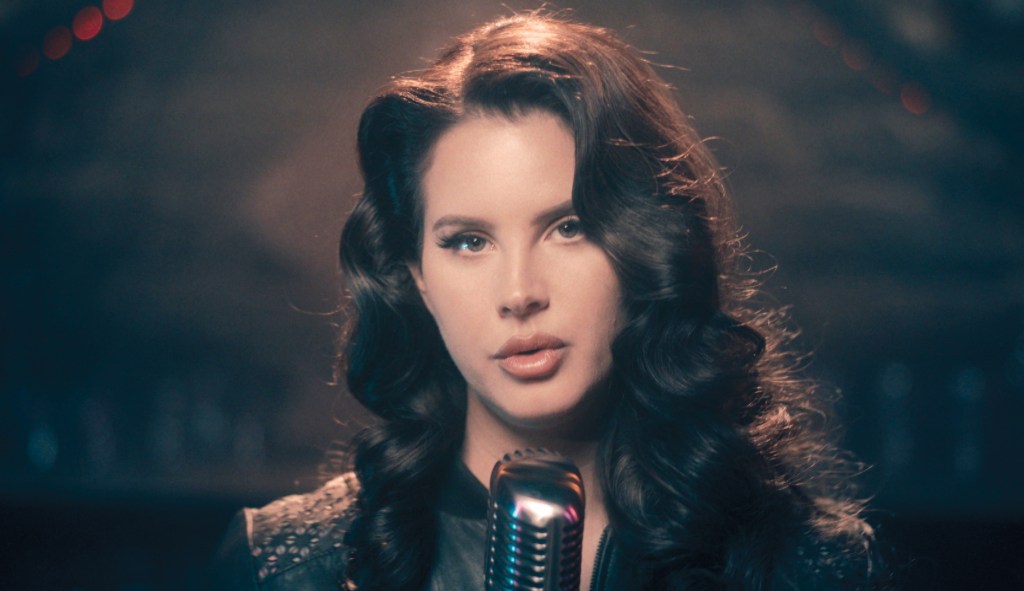
How Lana Del Rey translates Norman Rockwell

When Lana Del Rey sings, “your poetry’s bad and you blame the news,” is she talking to other artists, those who have subordinated art to bland political protest? It’s doubtful, but the phrase still seems so pointed.

In her latest album, Norman F—ing Rockwell, Del Rey draws listeners in, as is her custom, to the dark side of Americana. Yet she manages to do it without getting too political.

During a recent interview with the New York Times, she said, “I’m grateful to be in a country where everyone can have their own political views. I’m really not more of a liberal than I am a Republican — I’m in the middle.”

Del Rey was responding to the claim that she was looking for a reaction when she sang, “Kanye West is blonde and gone.” After West publicly supported President Trump, Del Rey, who sang at his wedding, wasn’t the only fan who was confused. She said the lyric “was more like the mood and the vibe around: Yo, this man is the greatest! Really? The greatest?”

Rather than making statements, Del Rey prefers to ask questions.

On NFR, she maintains her commitment to apoliticism, leaving off a song she wrote in the aftermath of the recent shootings in Dayton, Ohio, and El Paso, Texas. Besides the line “I’m still looking for my own version of America / One without the gun,” the song sounds like a haunting, modern-day “American Pie”: “Pulled over to watch the children in the park,” she sings. “We used to only worry about them after dark.”

Her latest album has no such political aim, and it views bits of American culture through the lens of dysfunctional love. This has been Del Rey’s go-to for some time; her breakout hit, “Video Games,” describes a codependent relationship.

Pitchfork, the online music magazine that rated Del Rey’s latest album a 9.4 out of 10, called her “a woman whose songs are like miniature syllabi in American Studies — saturated in references to jazz, girl groups, heavy metal, Springsteen; Hemingway and Fitzgerald; money, power, glory; excess and loss; Whitmanian multitudes.”

Among other artists, NFR name-drops Sylvia Plath, the Rolling Stones, and, of course, Norman Rockwell.

The title of the album, Norman F—ing Rockwell, recalls a nuanced version of America. Rockwell painted not just of everyday life in America, but also scenes of war and racial discrimination. One of his most famous paintings, “The Problem We All Live With,” became an iconic image in the civil rights movement for depicting 6-year-old Ruby Bridges, who was harassed on the way to an all-white school during desegregation.

Bridges walks resolutely past the tomato thrown at her, while the viewer watches from the perspective of a protester. Rockwell’s social commentary here, as in his other works, is subtle but powerful. With NFR, does Del Rey attempt a similar perspective? Perhaps.

She’s willing to share scenes of disillusionment without overly politicizing them, and she knows how to make a statement without trapping it within the confines of 2019. Del Rey turns Ella Fitzgerald’s “dream a little dream of me” into a plea on “F— It I Love You”: “Dream a little dream of me / Turn this into something sweet.” If she hoped moving across the country would solve her relational anxiety, it didn’t. “So I moved to California‚ but it’s just a state of mind/ It turns out everywhere you go‚ you take yourself‚ that’s not a lie,” she sings.

Of course, her rendition of Sublime’s “Doin’ Time” removes the gusto while retaining a sense of unease. In the summertime, it turns out, living is anything but easy. When she sings to the “man-child” on the title track, Del Rey could be singing to all of us. She’s not looking to change anyone’s mind. As she responded to a critic on Twitter, she may not “have made bold political or cultural statements before,” and her real gift is “self reflection.”

When she sings on “Norman F—ing Rockwell,” she simply presents her art for us either to enjoy or ignore: “Your poetry’s bad and you blame the news / But I can’t change that, and I can’t change your mood.”

Related Content