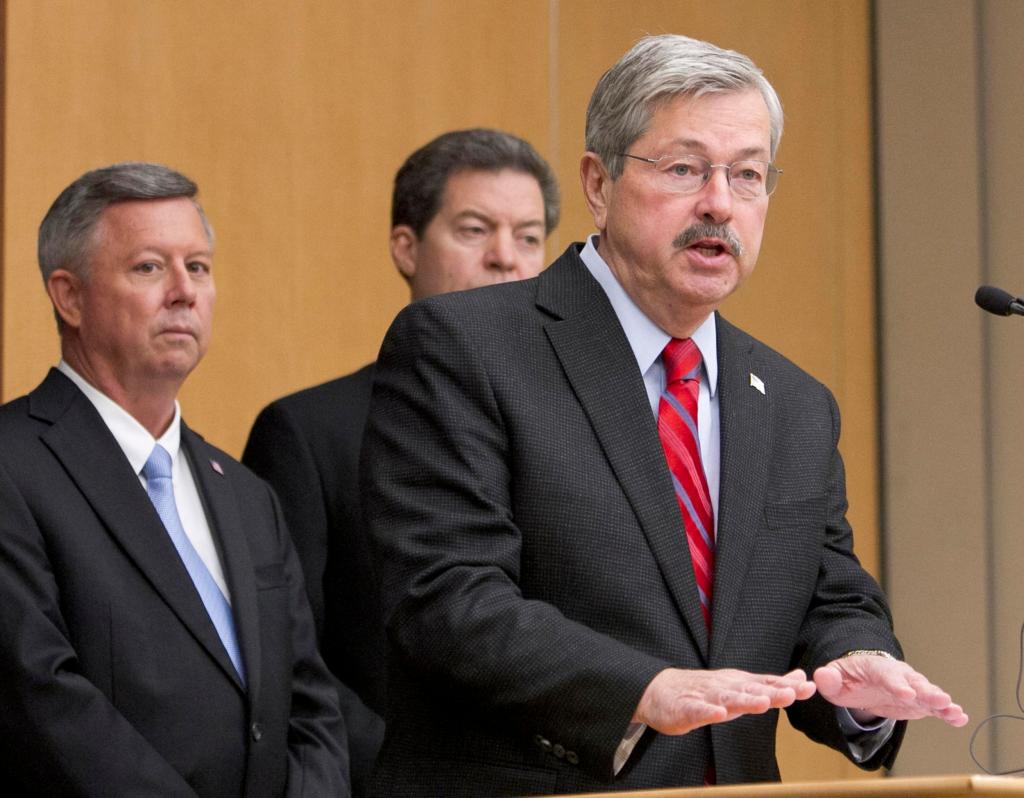
A national movement aimed at sidelining the Electoral College has drawn criticism from Iowa Gov. Terry Branstad and leaders of both political parties in the state.
Iowa awards its six electoral votes to the presidential candidate who wins the most votes in the state, but under a plan being pushed in television and newspaper ads statewide, the state’s electoral votes would be pledged to the candidate who wins the most votes nationwide in November 2012.
Calling this plan “deeply flawed,” Branstad said Iowa’s first-in-the nation influence would be “diminished” because presidential hopefuls would focus on mega-population centers and cities with large media markets, instead of practicing retail politics and answering Iowans’ tough questions.
“We need to be relevant to the process, so candidates go to places like New Vienna and New Hampton, and not just New York City,” said Republican Party of Iowa Chairman Matt Strawn.
Supporters of a national popular vote system, including former Democratic Gov. Chet Culver, argue that it gives every vote equal weight.
They point to the 2000 election as evidence that the Electoral College is broken. That year, the system handed George W. Bush the presidency, despite former Vice President Al Gore having won the popular vote.
The group pushing states, including Iowa, to adopt legislation to change the Electoral College system is National Popular Vote, a bipartisan group seeking to reduce the influence of the Electoral College on elections. Nine states, representing 132 electoral votes, have passed the legislation, but they are not implementing it because winning the presidency takes 270 electoral votes.
California, Illinois, New Jersey and others will begin awarding their electoral votes based on the national vote when states representing 270 electors have approved the plan — effectively dismantling the Electoral College system and guaranteeing that the winner of the national popular vote secures the presidency.
Drake University political science professor Dennis Goldford said the issue is not about partisanship, but clout.
“Whichever party is preferred by people in those states gets an advantage,” said Goldford.
On Thursday, Iowa Democratic Party Chairwoman Sue Dvorsky agreed with Strawn and the Republican governor.
The national popular vote movement may be a greater threat to the independent vote, said Branstad. Rather than trying to capture the independent swing voters, candidates could cater to well-organized groups and the party base, he said.
He quoted the Center for Competitive Politics, a First Amendment group advocating for freedom in political speech, and said the movement was “a scheme that creates more problems than it purports to solve.”
State Sen. Joe Bolkcom, D-Iowa City, has proposed a national popular vote bill in Iowa, but the movement faces opposition.
Iowa also considered the proposal in 2009, but it did not gain traction.
Hannah Hess covers government and politics for IowaPolitics.com, which is owned by the Franklin Center for Government and Public Integrity.