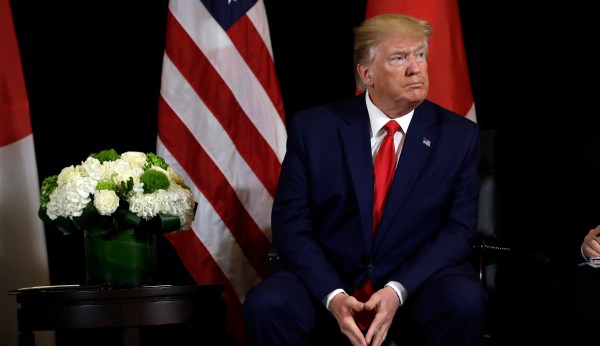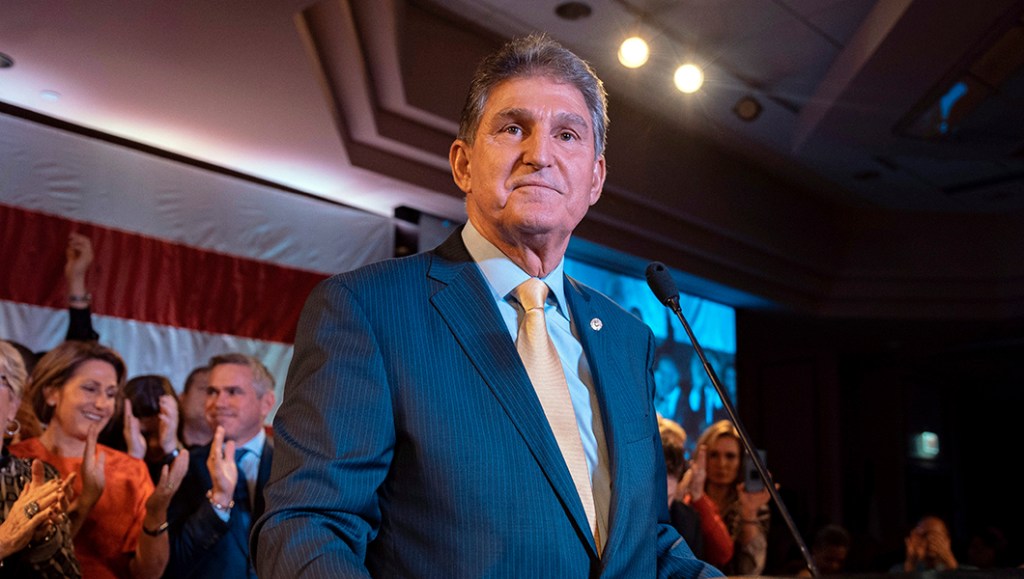
Sen. Joe Manchin insists his approach to the Senate impeachment trial of President Trump will be one void of political leanings and heavy on objectivity.
“I want to be fair,” the West Virginia Democrat told the Washington Examiner ahead of the impeachment trial, which will begin in earnest on Tuesday. “I take this extremely serious. This is the serious-most thing I could ever do as a senator.”
He continued, “They’re asking us to be a juror and decide whether the president, who’s been elected, whether you like him or not, whether he’s from the same party you’re from, they’re asking us to make a judgment on whether we should remove him from an office that he’s been elected to represent by the people of the United States.”
Manchin has been long respected by voters in his deeply reddening state for his political independence from both parties. A poll conducted by the Club for Growth PAC, a conservative advocacy group, shows nearly 7 in 10 West Virginia voters say they oppose the senate removing Trump, who remains robustly popular in a state that gave him his second-highest margin of victory behind Wyoming in 2016.
“That’s the most challenging and difficult thing you can do,” he said. “And you have to make a decision, is it egregious enough that he should be removed? That’s what we have to look at.”
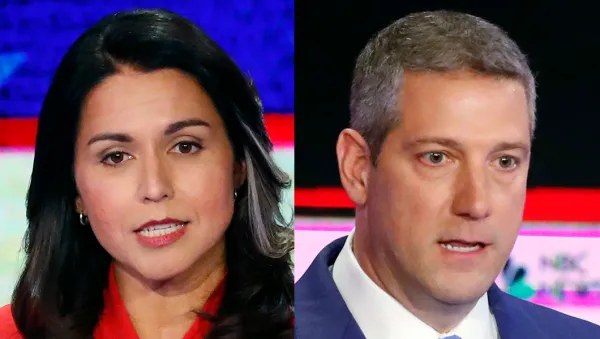
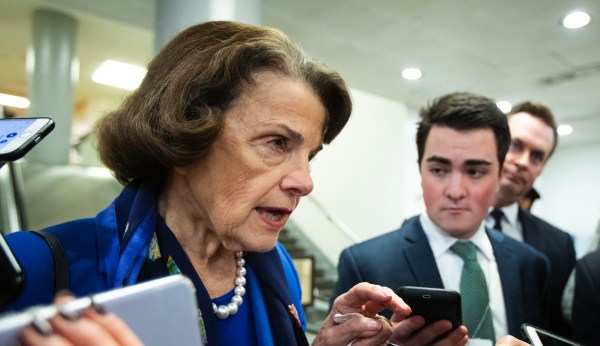
While reporters have focused mostly on the Republicans either up for election this year, such as Sens. Susan Collins of Maine, Cory Gardner of Colorado, and Martha McSally of Arizona, or Trump’s harshest in-party critics, such as Utah’s Mitt Romney, as to where their votes will go, there are centrist Democrats, including Manchin, Sens. Kyrsten Sinema of Arizona, and Doug Jones of Alabama who also may vote based on evidence and not party.
[Read more: Romney loses GOP support in Utah after challenging Trump on impeachment]
Sinema said in a statement Thursday she too takes the process solemnly and also wants to keep her role void of political bias. “The Senate has a job to do that demands our serious, careful consideration of the facts — free from partisanship or political soundbites,” Sinema said, adding she would treat the process with “the gravity and impartiality that our oaths demand.”
Jones, who won in an off-year special election against Roy Moore as the Republican nominee faced multiple allegations of sexual misconduct involving minors, is looking at a much tougher fight in 2020 when Republican voters are expected to turn out in large numbers to vote for Trump and former U.S. attorney general and Alabama Sen. Jeff Sessions, who is running for his old seat. Jones has previously said he has a duty to be fair and impartial in this process.
It takes two-thirds of the U.S. Senate to convict a president on charges filed by the U.S. House to have him removed from office. That means at least 20 Republicans would need to join a completely united front of Democratic senators to remove Trump. Barring a significant revelation, there will not be anywhere close to enough votes. While centrist Democrats, thus, are unlikely to affect the outcome, if they vote against removal it would be of symbolic importance in that Trump can claim bipartisan rejection of the articles of impeachment. Manchin, Sinema, and Jones claim their ultimate decision won’t be based on political officiation.
“I will make a decision based on the facts I have in front of me,” Manchin said. “But when push comes to shove, and you’ve got to vote either to impeach, or to basically convict and to enforce the impeachment, you better make sure you’ve had all your T’s crossed and your I’s dotted, and all of your ducks in order because that’s the greatest and most difficult decision you will ever make.”
G. Terry Madonna, political science professor at Franklin and Marshall College, who has taught the presidency for years, says he is not at all surprised to hear Manchin and the other more pragmatic Democrats voice their allegiance to fairness and not party. “The fact of the matter is that they have no choice but to go to sort of benign neutrality, put politics aside and access the facts,” he said. “I mean, to do otherwise would be to impugn their integrity.”
The final House impeachment vote had 227 Democrats (and independent Justin Amash) supporting the resolution and 192 Republicans (and one Democrat, Collin Peterson of Minnesota) opposing it.
Manchin, who describes himself as a “West Virginia Democrat not a D.C. Democrat,” also remains popular among voters across his home state. The state’s former governor crossed party lines for both of Trump’s Supreme Court nominees, Neil Gorsuch and Brett Kavanaugh, a path that cleared the latter’s place on the bench after one of the most volatile spectacles in modern American politics.