

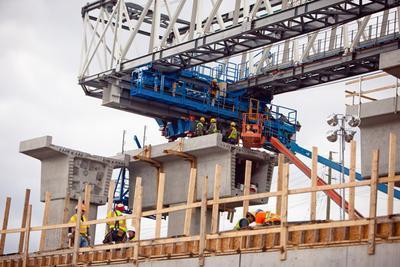
Verification that the Dulles Rail Phase II is a costly mistake comes from an unlikely source — a member of the same Metropolitan Washington Airports Authority Board that is managing the $2.8 billion transit project. A major component of the excessive cost is a result of the required Project Labor Agreement that guarantees jobs to union labor, even though Virginia is a Right-to-Work state. Last week, presidential appointee Robert Brown suggested eliminating the Metrorail airport station altogether to shave $70 million off the beleaguered project’s current price tag. Dulles Rail never made sense financially, but Almost-To-Dulles Rail flunks on both practical and economic grounds. According to the environmental impact study, the airport station would have the lowest passenger volume of all Metrorail stations, which is why the Federal Transit Administration declined to fund Phase II in 2002. Since then, the local housing market imploded, Loudoun County down-zoned, and George Mason’s Stephen Fuller predicts that Northern Virginia will lose some 90,000 defense jobs in coming years. If heavy rail to Washington Dulles International Airport wasn’t cost-effective 10 years ago, it certainly isn’t today.
Various attempts to save this boondoggle have created more problems that they solved. For example, MWAA reluctantly agreed to scrap a $300 million underground station at the airport’s iconic Saarinen terminal. The current plan is for luggage-laden travelers to exit Metrorail at an elevated station near the airport’s north garage, walk a long distance to reach the terminal, navigate through the security labyrinth, wait for an underground “people mover,” and then walk hundreds of feet more before finally arriving at their gates. It’s faster and easier to drive.
Stay informed.Stay ahead.
Join Washington Examiner for unlimited access to the news, analysis, and commentary that matter most.
Already a member? Log in
