
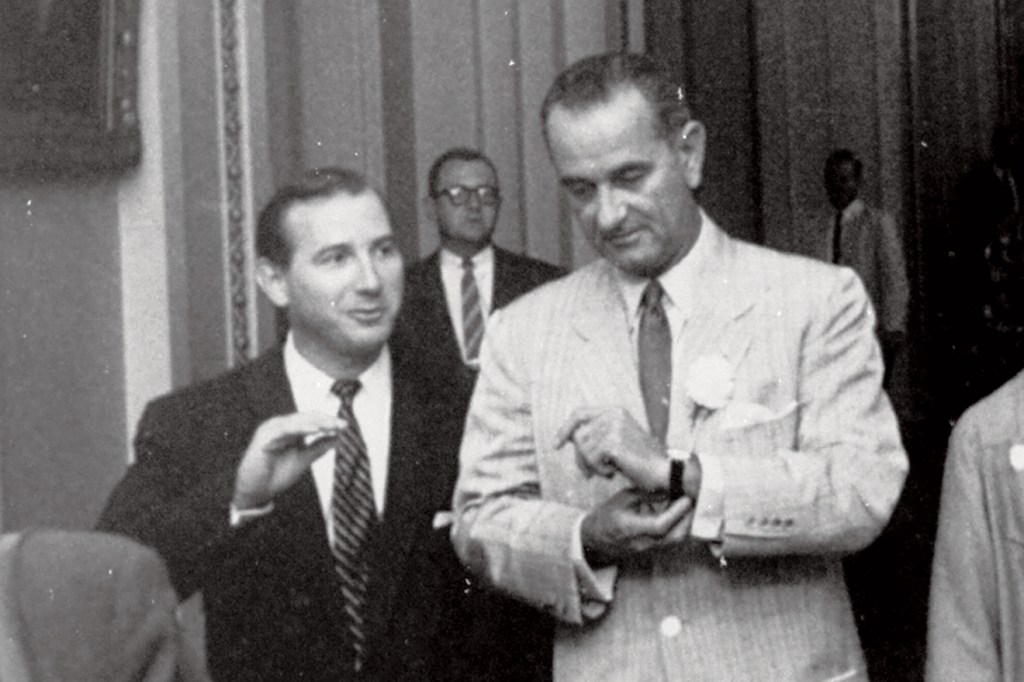
We were genuinely surprised one morning last week to open the pages of the Washington Post and find an obituary for Bobby Baker, who had just died on his 89th birthday. We were surprised that his obituary was on the obituary page and not the front page, where stories about Baker usually used to run.
Who was Bobby Baker, you ask? An ambitious young man from small-town South Carolina who came to Washington, D.C., in the late 1940s to become a Senate page. Within the next decade he had become a powerful Capitol Hill staffer and close confidant and fixer for several prominent Democrats, including (and perhaps especially) then-majority leader Lyndon Johnson.
Recommended Stories



But Baker’s portfolio was impressively diversified. In October 1963, a lawsuit revealed that he also had extensive business interests—in vending machines, motels, and real estate, among other ventures. Questions were asked how a Capitol Hill staffer could afford such investments on a modest federal salary. The Senate undertook an investigation and conducted hearings. But the Kennedy assassination interrupted its momentum, and Democrats, who in those days enjoyed a prohibitive majority in the Senate, were reluctant to pursue a trail of corruption that might lead to the new president.
Baker was ultimately tried and convicted of tax evasion and served a brief term in prison. But our point is slightly wider than this brief outline of the now-forgotten Bobby Baker Scandal. At its height, during 1963-64, it would have been difficult to read any major American newspaper and not find some story about the latest developments in that unfolding saga of money, sex, influence, and Congress. Yet, in the course of a half-century, news about political corruption, and the self-protective culture of power in the nation’s capital, has become so ubiquitous that the death of Bobby Baker, who personified the problem a generation ago, caused scarcely a ripple.