

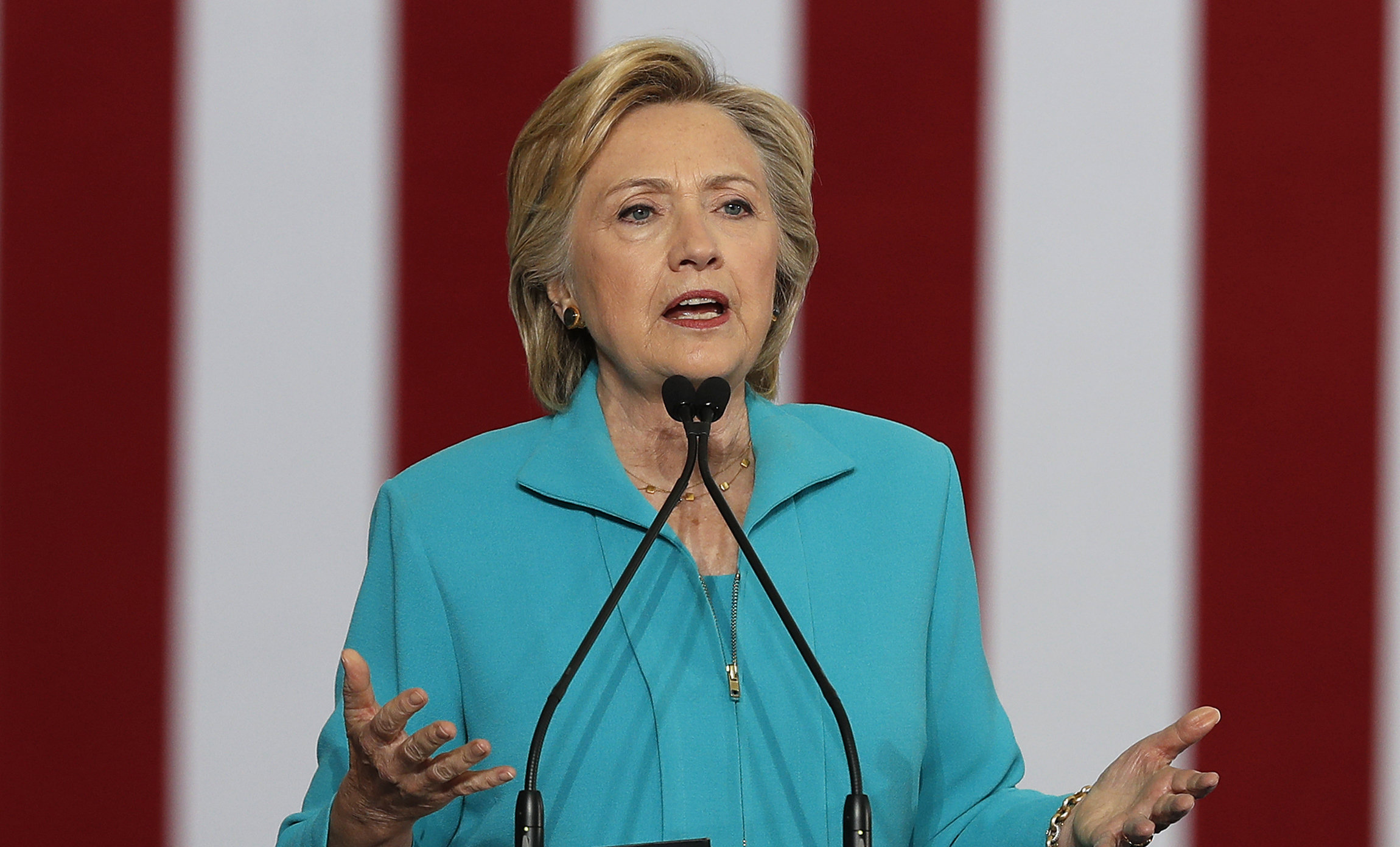
Hillary Clinton on Thursday made a deft appeal for Republican crossover voters in a speech that doubled as a scathing attack on Donald Trump’s character.
Recommended Stories


The Democratic nominee effectively called Trump a racist, charging during a 30-minute speech from Reno, Nev., that the Republican is a bigot who has practiced discrimination as a businessman and presidential candidate.
But rather than condemn all Republicans by association and make a broader case for putting Democrats in charge of government, to be expected in a speech like this, Clinton defended them — from their nominee.
Clinton said that Trump’s brand of “alternative” right-wing politics doesn’t resemble the mainstream “conservatism” or “Republicanism” of traditional GOP leaders like House Speaker Paul Ryan and President George W. Bush.
It was a message intended to stoke the insecurities many Republicans still harbor about Trump, and give soft partisans and conservative-leaning swing voters permission to back Clinton or sit out the election out.
“Her logo may be ‘I’m With Her,’ but it makes all the sense in the world to ask moderate and more mainstream conservative Republicans if they’re with him. And, in the case of the alt-right, if they’re with them,” said Bill Whalen, a political analyst at the conservative Hoover Institution think tank.
“The partisan temptation is always to vanquish your opponents when they’re down. This, instead, amounts to strategically attempting to ‘otherize’ Trump. Psychologically, this is vital if your goal is to win Republicans,” added Daily Caller conservative columnist Matt Lewis. “Hillary is doing exactly what she should.”
In Clinton’s address, which came amid heightened scrutiny of her tenure as secretary of state, she attempted to link Trump directly with the racist fringe movement of right-wing politics referred to as the “alternative right,” or as it’s commonly known: the “alt-right.”
Though not exclusively a racist haven, the “alt-right” is a budding populist movement that is skeptical of global institutions, opposes immigration and free trade, and has welcomed, or at least, tolerated, white nationalists and anti-Semites in its midst.
Breitbart News has become the headquarters for reporting and opinion sympathetic to the alt-right. So it probably wasn’t a coincidence that Clinton chose this week for her speech, since last week Trump hired Breitbart executive chairman Steve Bannon to run his campaign after firing the previous leadership.
“Bannon has nasty things to say about pretty much everyone. This spring, he railed against Paul Ryan for, quote ‘rubbing his social-justice Catholicism in my nose every second.’ No wonder he’s gone to work for Trump,” Clinton said.
“Twenty years ago, when Bob Dole accepted the Republican nomination, he pointed to the exits and told any racists in the party to get out,” she added. “We need that kind of leadership again.”
Trump, responding beforehand from in prepared speech from Manchester, N.H., (Clinton had promoted the speech for a few days) said that his Democratic opponent was trying delegitimize the valid concerns voters have about jobs, crime and national security.
“Hillary Clinton isn’t just attacking me, she’s attacking all of the people who support our movement,” Trump said. “To Hillary Clinton, and her donors and advisors, pushing her to spread her smears and lies about decent people, I have the three words for you … Shame on you.”
Trump has proposed to ban all Muslims from entering the United States and roundup and deport the 11-12 million mostly Hispanic illegal immigrants — although he might or might not be “softening” on that.
Trump in June had questioned whether an American-born judge of Mexican dissent could fairly judge a case involving one of his businesses because of his position on immigration enforcement, and few months earlier declined to immediately disavow the support of a well-known white supremacist group — he eventually did.
Tens of millions of dollars in Democratic attacks ads have ensured that general election voters are well aware of all of this.
Now, just weeks before early and absentee voting begins in the battleground states, Trump is struggling in the polls as moderate Republicans and suburban swing voters inclined to vote GOP waver over concerns about the billionaire’s temperament.
Trump can’t win the election without them, especially in states that make up his narrow path to victory, like Florida, North Carolina and Pennsylvania. Political strategists in both parties believe Clinton is smart to exploit this dynamic.
“She’s making case that you can be a Republican and dislike trump at the same time,” Democratic pollster Margie Omero said. “We are in an increasingly divided country. But we don’t want to be — we want to feel that we can come together — that’s what voters want.”
Clinton is an unlikely candidate to profit from this approach.
There are few Democrats that Republicans generally loath more than the former first lady and New York senator, particularly despised on the right during the administration of her husband, President Bill Clinton.
Clinton is further hampered by unusually poor approval numbers, although Trump’s are worse.
She is burdened by scandal from her use of a private server during his time at the State Department and now over suggestions that donors to her family’s charitable foundation were granted special access to her while she served as the nation’s top diplomat.
That’s why some Republicans say her ploy to steer GOP voters away from Trump will fall flat, even as they concede that Trump’s challenges might have made it viable if the Democrats had nominated someone else.
“I don’t think it is possible for someone as liberal and crooked as Hillary Clinton to fake bipartisanship at the 11th hour of her political career. She has neither the centrist credentials nor the personal good will to pull it off,” GOP strategist Brad Todd said. “It would be good strategy in a textbook but not for someone as flawed as she is.”
