

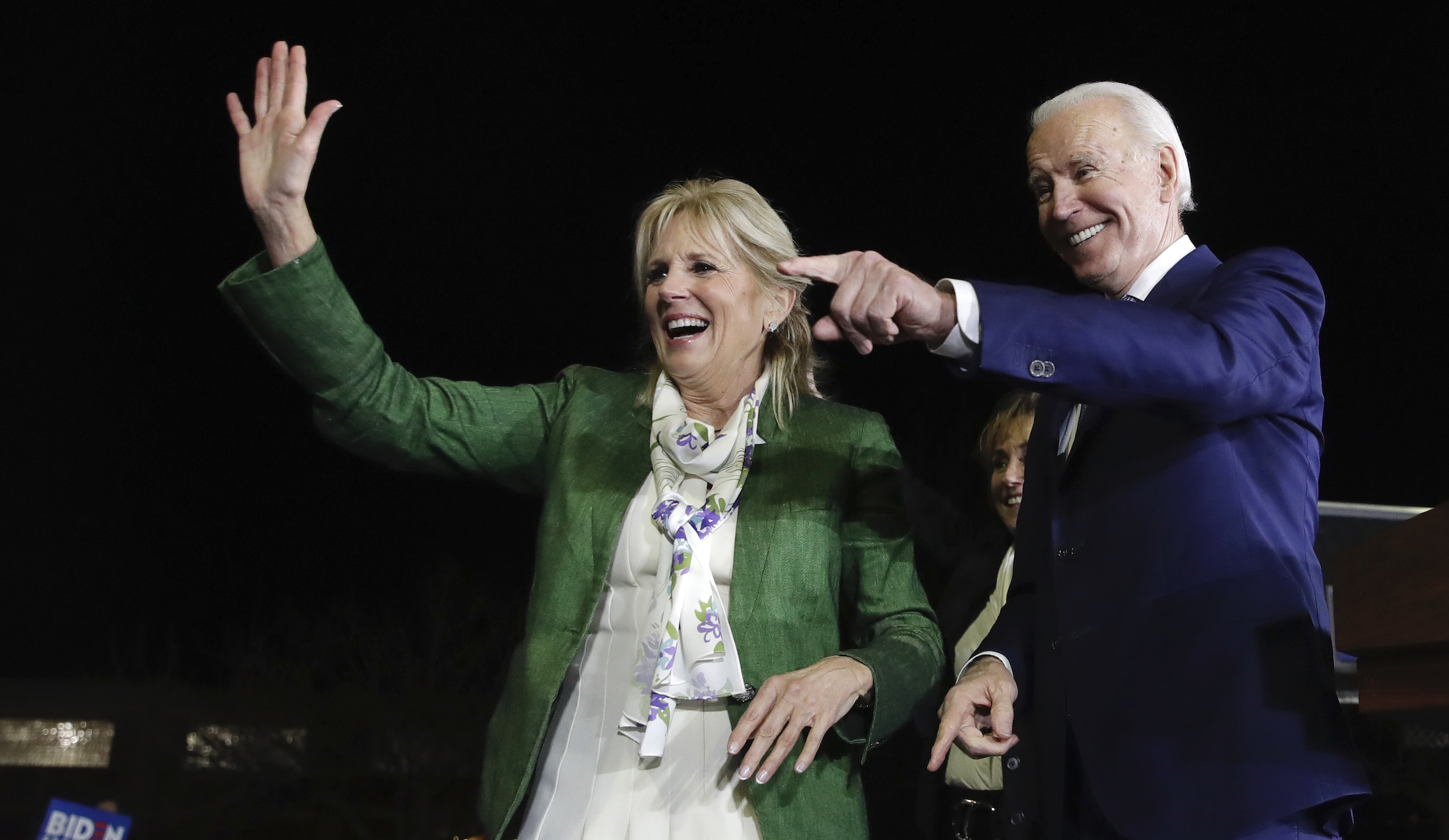
HOUSTON — Joe Biden didn’t really plan on winning Texas.
Heading into the second-most lucrative Super Tuesday state for 2020 Democratic presidential candidates hoping to raid the Tuesday map for its 1,357 pledged delegates, the two-term vice president’s strategy hinged on preventing Bernie Sanders from running up the score ahead of California.
Recommended Stories


Texas Democrat after Texas Democrat, amid the odd independent and Republican, admitted they had very little contact with the Biden campaign on the ground this cycle, whether via a volunteer calling them on their cellphone or knocking on their front door. That was an unsurprising trend, reflecting his skeletal get-out-the-vote organization infrastructure that already failed stress tests in the first four early-nominating states except South Carolina.
Cash-strapped Biden, compared to small-donor juggernaut Sanders and billionaire former New York City Mayor Michael Bloomberg, also lost the messaging battle waged over Texas’s airwaves. Before receiving a financial boost after the South Carolina debate and primary, his team stretched a late six-figure, multichannel ad buy about his accomplishments during President Barack Obama’s administration across eight Super Tuesday states, not pushing a Spanish-speaking spot in Texas. Those efforts were bolstered after a fundraising surge both to the coffers of his campaign and that of his super PAC, Unite the Country, following the first-in-the-South contest.
Biden has long touted his belief he could win Texas not only in the primary, but in the general election against President Trump, despite several polls indicating otherwise. But the former scenario wasn’t foreseeable until a cascade of Democratic establishment support on Super Tuesday eve, including from El Paso’s favorite son Beto O’Rourke, as the party fears a hostile takeover from socialist Sanders.
“You know, just a few days ago, the pundits declared my campaign dead. Then, along came South Carolina. Tomorrow, Texas is going to speak,” he said in Houston.
While Sanders dominated with Latino Democrats, younger Democrats, and more liberal Democrats in Texas, Biden was buoyed by the high percentage of the base who decided on their preferred nominee in the three days prior to Super Tuesday, according to exit polls. The 36-year Delaware senator was additionally helped by his share of the vote among black Democrats. Although Latino Democrats represent a larger portion of the Texas primary electorate, Biden’s overwhelming appeal with the African American community propelled him over the line.
Janet Bashen, 63, predicted Super Tuesday’s Texas outcome days before, slamming Sanders’s platform of “offering free things” that he “will never be able to deliver.”
“Texans, we’re very pragmatic. We want results, just like Joe Biden says,” the Houston small business owner told the Washington Examiner, adding the same qualities were prevalent in her black community. “And I’m not a Democrat out of convenience.”
While Bashen was worried about the “Bernie or bust” phenomenon, she was more concerned about the “landslide” toward Trump and the GOP if Sanders were at the top of the ticket in November.
Victor Durojaiye, a naturalized citizen who was born in England to parents from the African continent, said he didn’t immigrate to the U.S. to “start a revolution.” He also knocked Sanders’s argument that only he can generate the turnout needed to defeat Trump later this year.
“If what Trump is doing right now doesn’t give you enough energy to go and vote or do something, then you’re crazy. I’m ready. We don’t need Michael Jackson, it’s not a concert,” the Sugarland fitness professional, 52, said.
On Super Tuesday, Biden won 33.7% of the vote and 56-plus pledged delegates of the 228 delegates available in Texas, with 95% of precincts reporting. Sanders earned 29.9% support and 47-plus delegates, in contrast to his 2016 loss against Hillary Clinton, who attracted 65.19% to his 33.19%. A total of 1,991 delegates are needed to become the 2020 Democratic standard-bearer.
