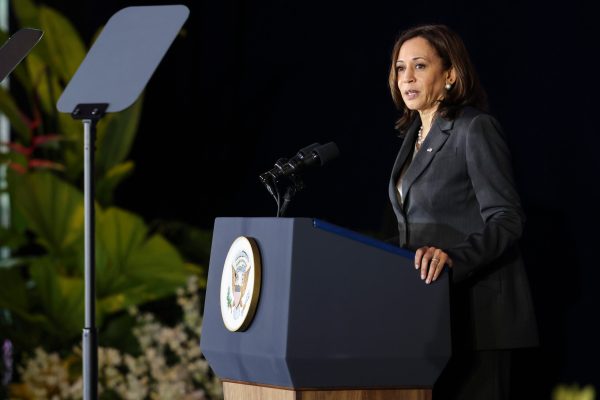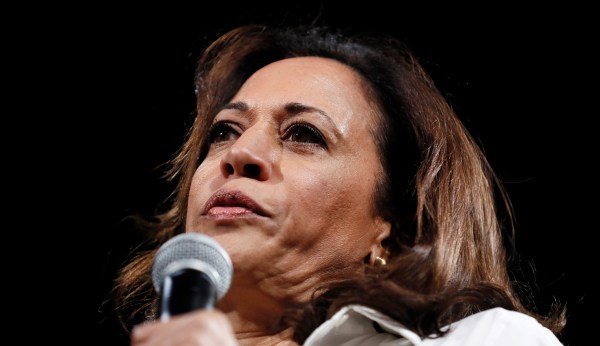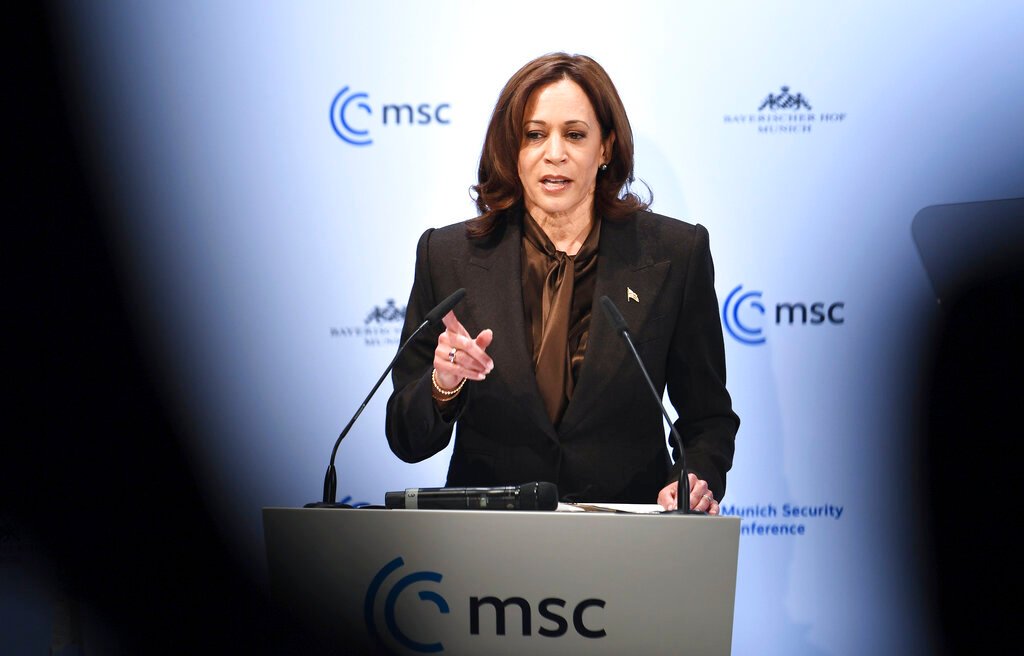
MUNICH — Vice President Kamala Harris used the pulpit of a defense conference where world leaders gathered to warn Russia that it will face dire economic consequences and an increased presence of Western forces if it attacks Ukraine.
Speaking before foreign officials at the storied Hotel Bayerischer Hof in the city’s old town, Harris said the economic costs to Moscow would be “significant and unprecedented” were it to attack Ukraine, with allies leveling a slate of penalties “that will be swift, severe, and united.”
“The foundation of European security is under direct threat in Ukraine,” Harris said, adding that “national borders should not be changed by force.”
KAMALA HARRIS NAVIGATES HIGH-STAKES DIPLOMATIC PATH IN MUNICH
The vice president said Washington would not back down from its promise of leveling onerous and far-reaching financial sanctions on Moscow, as well as export controls that target critical Russian industries.
“And we will target those who are complicit and those who aid and abet this unprovoked invasion,” she said.
“We are still open to a diplomatic resolution,” Harris continued. “If that diplomacy leads to a dead-end … we are also clear-eyed that there must be consequences.”
On Friday, President Joe Biden said he was persuaded that Russia would invade Ukraine, and tensions have soared amid reports of attacks inside Ukraine’s eastern territories and Russia moving more troops to Ukraine’s border.
“This playbook is familiar to us all,” Harris said. “Russia will plead ignorance and innocence. It will create false pretext for invasion, and it will amass troops and firepower in plain sight.”
She said the United States and its allies have worked “in good faith” to dial back tensions over Ukraine but suggested this was not true of Moscow.
“Russia continues to claim it is ready for talks, while at the same time it narrows the avenues for diplomacy. Their actions simply do not match their words,” she said, promising the U.S. would reinforce NATO’s eastern flank if Moscow attacks.
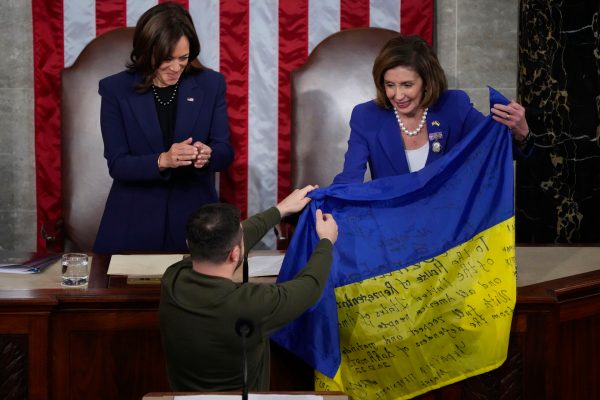
Fewer than 100 attendees filled the auditorium’s seats to hear the vice president’s remarks, with more in the balconies. Sitting in the first row were NATO Secretary-General Jens Stoltenberg and Secretary of State Antony Blinken, and behind them, members of the U.S. delegation, including House Speaker Nancy Pelosi, Democratic Sen. Amy Klobuchar of Minnesota, and Republican Sen. Joni Ernst of Iowa.
Like Harris, former Vice President Mike Pence attended the gathering in place of the president while he was in office, as Biden did under former President Barack Obama.
But the warm welcome from allies did not deter Pence’s successor from taking swipes at the Trump administration, saying fear that America’s commitment to European security had wavered under the last administration should be assuaged.
“Some have wondered whether this system can endure. Some have done so even on this very stage,” the vice president said. “Indeed, the theme of this conference two years ago questioned the staying power of the West, whether or not the trans-Atlantic community was losing its cohesion, its influence, its appeal.”
He continued, “So I will answer the skeptics and those seeking to test us: Today, the United States, our allies, and our partners are closer together.”
Harris again appeared to criticize Biden’s predecessor, later challenging that “it takes a lot more strength to build something up than it takes to tear something down.”
Under the Trump administration, the U.S. urged NATO’s European members to uphold their financial commitments to the alliance, with Trump personally pressing world leaders to take on more responsibility.
Russian leaders have also addressed international tension during remarks at public forums. Fifteen years ago, Russian President Vladimir Putin gave a historic speech rebuking America’s push for a Cold War order “in which there is one master, one sovereign,” raising objections to NATO’s expansion eastward, a subject that is at the root of the crisis over Ukraine.
Harris alluded to the historic tension, saying, “Not since the end of the Cold War has this forum convened under such dire circumstances.”
“And we should not lose sight of how rare it is in history to have a prolonged period of relative peace and stability,” she continued. “So, let the past few months be a reminder to us all: Defending the rules and norms, upholding our principles — this is the vital work of each generation.”
CLICK HERE TO READ MORE FROM THE WASHINGTON EXAMINER
Allies gathered in Munich have spent weeks preparing measures they hope will deter Putin from an invasion on Europe’s border, a conflict some fear could roil the region for generations. These efforts have included more than 200 discussions with partners and allies that Washington has conducted as it attempts to avert a war on Europe’s border.