

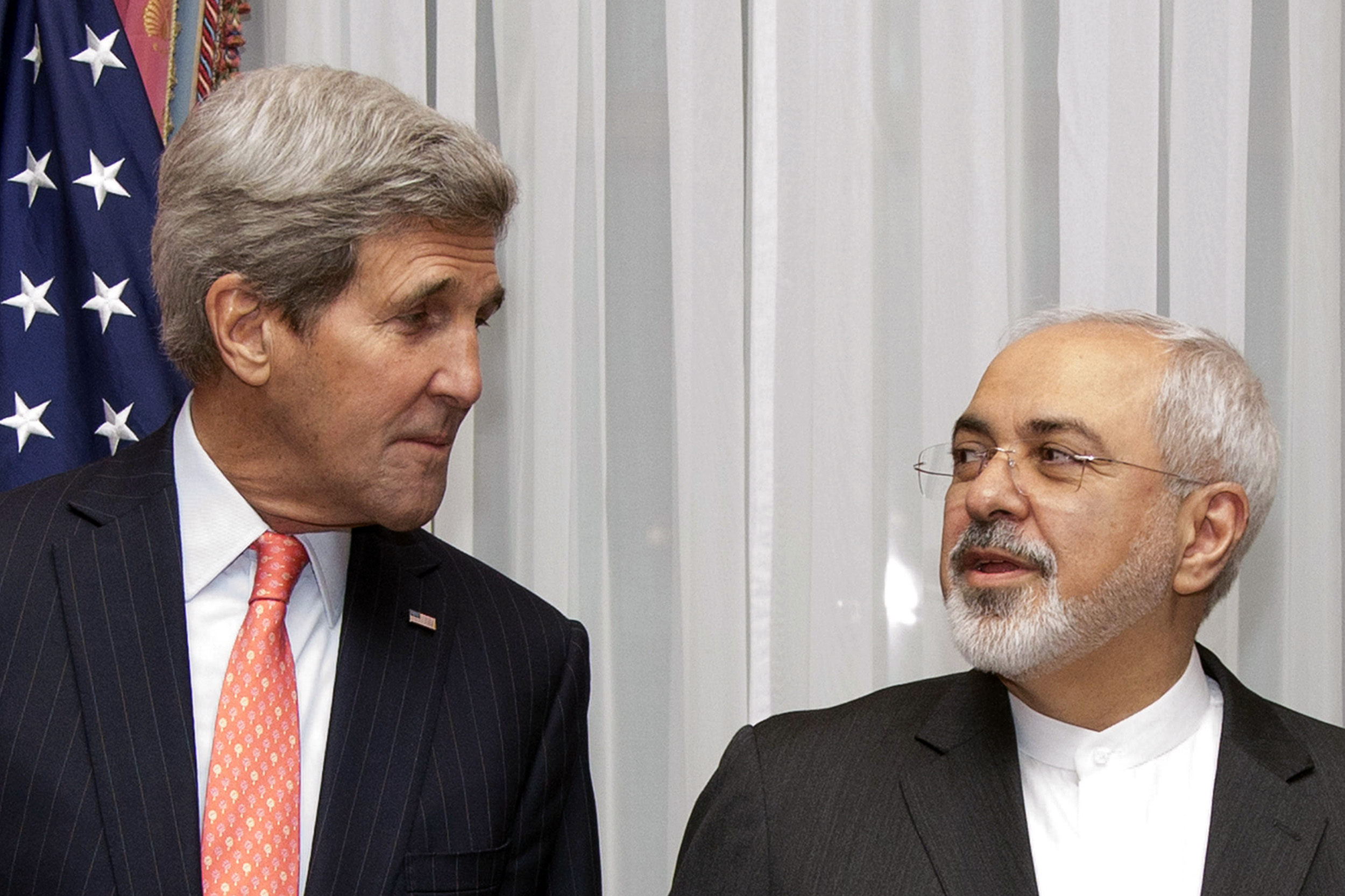
Secretary of State John Kerry’s admission that the United States might have to negotiate with Syrian President Bashar Assad is the latest sign of a years-long trend in the Obama administration’s shifting Middle East policy: Every shift brings that policy closer in line with Iran’s.
Recommended Stories


The administration insists there’s no attempt to link ongoing talks with Tehran on its nuclear program into a broader rapprochement, but the growing harmony between U.S. and Iranian goals in the region has fueled the belief that President Obama wants a “grand bargain” to resolve nearly 40 years of hostility between the two nations.
“Well, we have to negotiate in the end,” Kerry told CBS News in an interview broadcast Sunday, when asked if the United States would negotiate with Assad.
Though the State Department immediately went into damage control, insisting there was no change in policy, Kerry’s gaffe was just the latest in a long line of statements by the administration showing a progressive easing of attitudes toward Assad, whose principal backer is Iran’s Shiite Muslim theocracy.
The statement comes at a time when the administration appears increasingly more willing to at least tolerate a growing Iranian role in the fight against the Islamic State in Iraq, as Iranian-backed Shiite militias battle for the city of Tikrit, Saddam Hussein’s hometown.
Meanwhile, in Yemen, where a takeover of the U.S.-backed government by Iran-backed Shiite Houthi rebels has shattered U.S. counterterrorism efforts, Washington supports a “consensus political solution,” as Kerry said March 5 during a visit to Saudi Arabia.
Obama fueled the concern as well, saying in a Dec. 29 NPR interview that he would “never say never” to reopening a U.S. embassy in Tehran if the nuclear talks went well.
“If we can take that big first step, then my hope would be that that would serve as the basis for us trying to improve relations over time,” Obama said.
But administration officials deny the shifts add up to an attempt to forge a “grand bargain” with Iran, saying they are focused solely on limiting Tehran’s nuclear ambitions.
“There is no grand bargain here being discussed here in the context of this negotiation,” Kerry said in a testy exchange with Sen. Marco Rubio, R-Fla., on March 11 after Rubio suggested U.S. policy against the Islamic State was geared toward not offending Iran in the talks.
The exchange came just days after Kerry had to give U.S. Arab allies the same reassurance in Riyadh during his visit there for talks with officials from Saudi Arabia and other Gulf states.
“We are not seeking a grand bargain; nothing will be different the day after this agreement if we were to reach one with respect to all the other issues that challenge us in this region, except that we will have taken steps to guarantee that Iran will not have a nuclear weapon,” Kerry said.
But experts who have noticed the trend say that’s exactly the problem. The administration has so much wrapped into the talks that it is at best not addressing other problems in the region caused by Iran, and is at worst seeking a broader accommodation.
David Rothkopf, the top editor of Foreign Policy magazine, suggested in January that Iran could be the greatest beneficiary of Obama’s foreign policy by the time he leaves office.
Michael Doran, a former National Security Council official in the George W. Bush administration, said in a widely circulated essay in Mosaic magazine published Feb. 2 that rapprochement with Iran was Obama’s “secret” strategy.
“A broader deal with Iran is what matters,” Tony Badran, a research fellow at the Foundation for the Defense of Democracies who has written extensively on Iran’s role in the Middle East, told the Washington Examiner.
Not only has the Obama administration not done anything to roll back Iranian influence in the region, but it has forged tacit alliances with Iranian-backed and Iranian-influenced government structures — first in Lebanon, then in Iraq — to fight Sunni Muslim extremist groups such as the Islamic State, and the administration is hoping to do the same in Syria, he said.
The administration has supported and shared intelligence with Lebanese armed forces in spite of them being heavily under the influence of Hezbollah, an Iranian proxy that is considered a terrorist organization by Washington, he said.
“It has become the template that the Obama administration is following in the region,” Badran said.
