China praised a United Nations statement on Internet governance that was presented to the General Assembly this week.
“We found that the outcome document is in China’s interest,” a Chinese negotiator told the New York Times on the condition of anonymity. On the principles of state sovereignty and nonintervention that were expressed in the document, the negotiator said, “We think those principles apply to Internet communication technologies.”
China was expressing satisfaction with the U.N. for vaguely committing to staying out of China’s Internet regime, with a reference to “the leading role” that governments should play in Internet governance.
The document was the product of a 10-year review process by the U.N.’s “World Summit on the Information Society,” which convened in New York City Tuesday and Wednesday. The document generally reaffirmed the role of “multi-stakeholder” groups in Internet governance, which translates to public-private partnerships. China opposes that approach, preferring an exclusive role for governments.
Related Story: http://www.washingtonexaminer.com/article/2573844
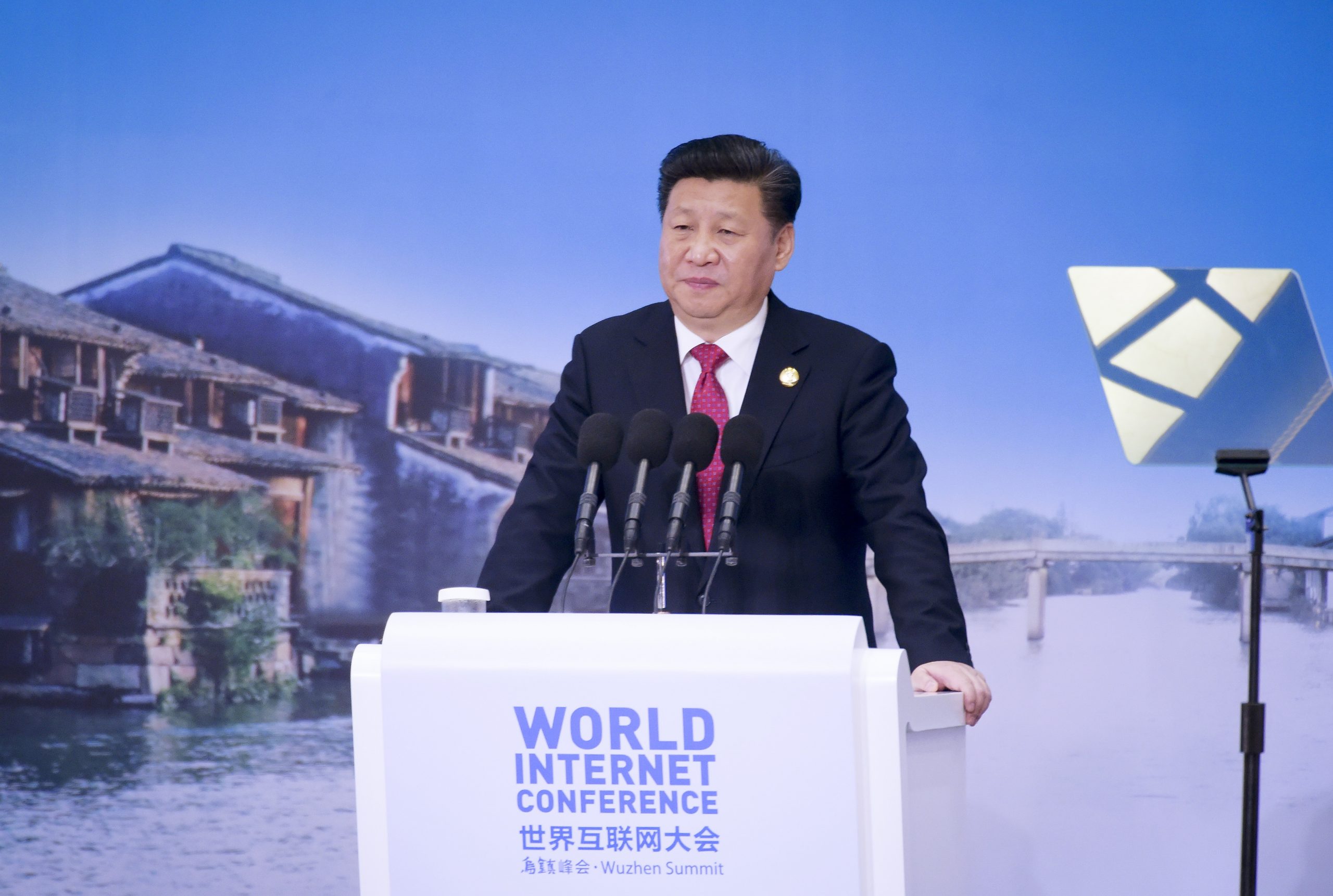
The meeting coincided with China’s own World Internet Conference, which is aimed at promoting the same concept of Internet sovereignty. That event was attended, ironically, by Wikipedia founder Jimmy Wales and Thomson Reuters CEO James Clifton Smith, though both companies are blocked by China’s Internet censorship regime.
In addition to dealing with Internet governance, the U.N.’s statement urged that action be taken toward getting more people online, and hinted that its definition of “online” may grow to include not just access, but a minimum level of service.
“We affirm our commitment to bridging digital and knowledge divides, and we recognize that our approach must be multidimensional and include an evolving understanding of what constitutes access, emphasizing the quality of that access,” the document states.
It adds, “We acknowledge that speed, stability, affordability, language, local content and accessibility for persons with disabilities are now core elements of quality, and that high-speed broadband is already an essential enabler of sustainable development.”
Catherine Novelli, the State Department’s undersecretary for economic growth, energy and the environment, made an appearance at the gathering to remark on the State Department’s “Global Initiative,” which aims to bring an additional 1.5 billion “online” by 2020.
“Through this effort, we will work with every stakeholder group that touches development — including national governments, development agencies, NGOs and the private sector — to mainstream the view that Internet connectivity is as fundamental to economic development as roads, ports, electricity and other traditional infrastructure,” Novelli said.
Related Story: http://www.washingtonexaminer.com/article/2578065
The initiative will likely involve China by necessity, where approximately 700 million of the country’s 1.3 billion citizens remain offline.
