
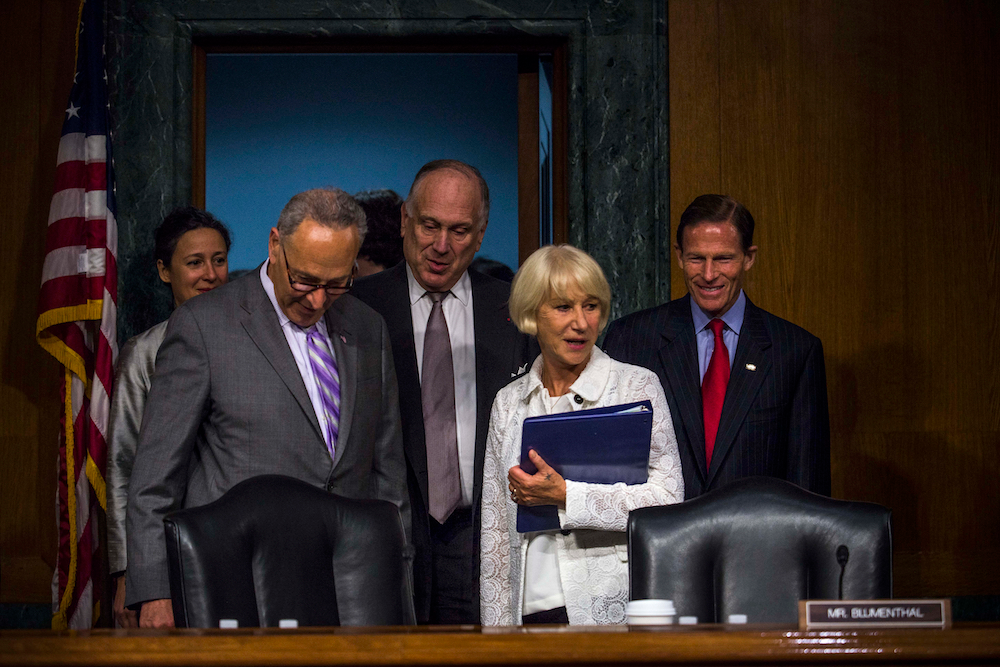
June 7 was big day for Ted Cruz. For one thing, he got back in the saddle: That morning, Cruz spoke on the Senate floor—about national security and flooding in Texas—for the first time since suspending his presidential campaign in May. And that very afternoon, when the Senate Judiciary Committee heard the bipartisan-backed Holocaust Expropriated Art Recovery (HEAR) Act, a bill to help ensure the heirs of Nazi-looted art their day in court, he got to meet Dame Helen Mirren.
The bill proposes a federal reset of statutes of limitation, which vary from state to state, to lift unfair restrictions from heirs’ claims. More than seventy years since the Holocaust, the generational withering of memory and dwindling number of Holocaust survivors, coupled with a fortuitous wave of publicity thanks to a recent Oscar-nominated movie, has re-upped the moral imperative to never forget. And so, the HEAR Act came to the Senate with an irrefutably just urgency: Judiciary chairman Senator Chuck Grassley promised to proceed expeditiously. And, as can only help matters, it also came to committee with a star-studded witness list, including lifelong advocate and patron of the cause Ambassador Ronald Lauder and actress Helen Mirren, who portrayed Maria Altmann, the claimant of five Nazi-looted Klimt paintings, in the Woman in Gold.
Real journalism.Trusted by millions.
Unlimited access to in-depth reporting, expert analysis, and the stories that shape our country.
Already a member? Log in