

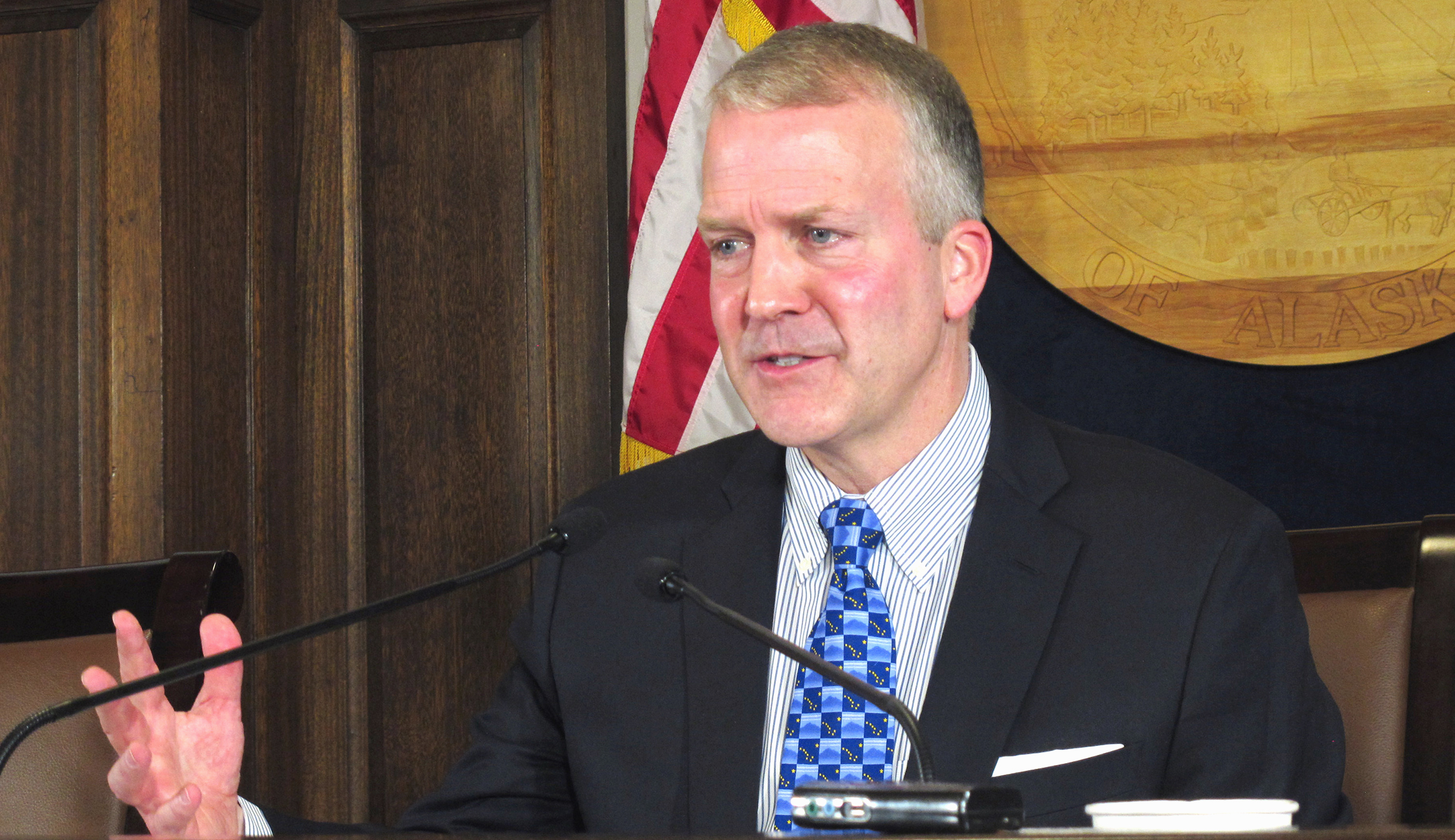
Top Republicans are suddenly paying close to attention to a sleepy Alaska Senate race after a little-known independent challenger with the state Democratic Party’s endorsement outraised incumbent Dan Sullivan in the third quarter.
Sullivan, part of the Republican wave that won control of the Senate in 2014, raised slightly more than $654,000 in the July to September fundraising period. That was less than the $1 million collected by Al Gross, even if you subtract the $200,000 in personal funds included in that total. Privately, that disparity is raising eyebrows among some Republicans, who worry Sullivan might be too complacent.
Recommended Stories


Lindsay Kavanaugh, a senior strategist for the Alaska Democratic Party, said Republican concerns are not misplaced. Sullivan, she said, “is not as in tune to what’s going on in this state as he should be.”
The National Republican Senatorial Committee, the Senate GOP campaign arm, told the Washington Examiner that suggestions Sullivan might be vulnerable in 2020 are unfounded.
“Sen. Sullivan continues to rack up big wins for his constituents in Alaska while his opponent can’t be bothered to do or say much of anything on the campaign trail. No amount of wishful thinking will give Democrats a shot at this seat,” NRSC spokesman Jesse Hunt said. Sullivan still leads in cash raised, reporting $3.4 million in cash on hand to spend on his campaign, compared to just $682,000 for Gross.
Independent candidates are typically at a disadvantage, and Alaska has voted Republican in White House races since 1968. President Trump won the state by 14.7 percentage points three years ago. But Alaska voters are independent-minded, a quality that is occasionally nettlesome for Republicans and has produced quirky results.
In 2010, Sen. Lisa Murkowski won reelection as a Republican write-in candidate after losing her GOP primary to Tea Party challenger Joe Miller. In doing so, she defeated Miller and a formidable Democratic nominee. Four years later, independent Bill Walker won the governor’s mansion, ousting the Republican incumbent with the help of Alaska Democrats. Gross, 57, is looking to replicate that formula.
By earning the early backing of the state Democratic Party, Gross should, at the very least, be able to field the sort of robust campaign infrastructure he needs to be competitive. Gross is pledging to affiliate with Senate Democrats if he beats Sullivan while simultaneously trying to convince voters that he would stand up to party leaders on key issues.
The Democrats are knocking Sullivan for being too loyal to Trump compared to Murkowski, who routinely opposes the president’s initiatives. She has twice voted on the Senate floor to override Trump’s executive action funneling billions of dollars in defense money to the construction of a border wall. Sullivan, sticking with the president, has opposed the resolution.
“Al Gross is a lifelong independent who isn’t registered with either major party. He doesn’t take his marching orders from party bosses, any corporate interest, or any foreign government,” said Brad Bauman, an adviser to the Gross campaign. “That stands in stark contrast to Sullivan, who sold out Alaskans when he voted to send millions of military construction dollars meant to create thousands of jobs for Alaskans back to Washington for a fake crisis on the southern border.”
This is not the first time Democrats have backed an independent candidate to gain an advantage in a red-state Senate race. In 2014, in Kansas, the Democratic Senatorial Campaign Committee pushed out the party’s nominee in favor of independent Greg Orman. After initially appearing competitive, Orman lost to Republican Sen. Pat Roberts by double digits.
There is no indication, as yet, that the DSCC is preparing to endorse Gross.
